The Experience of the Encounter with the Image of Aparecida
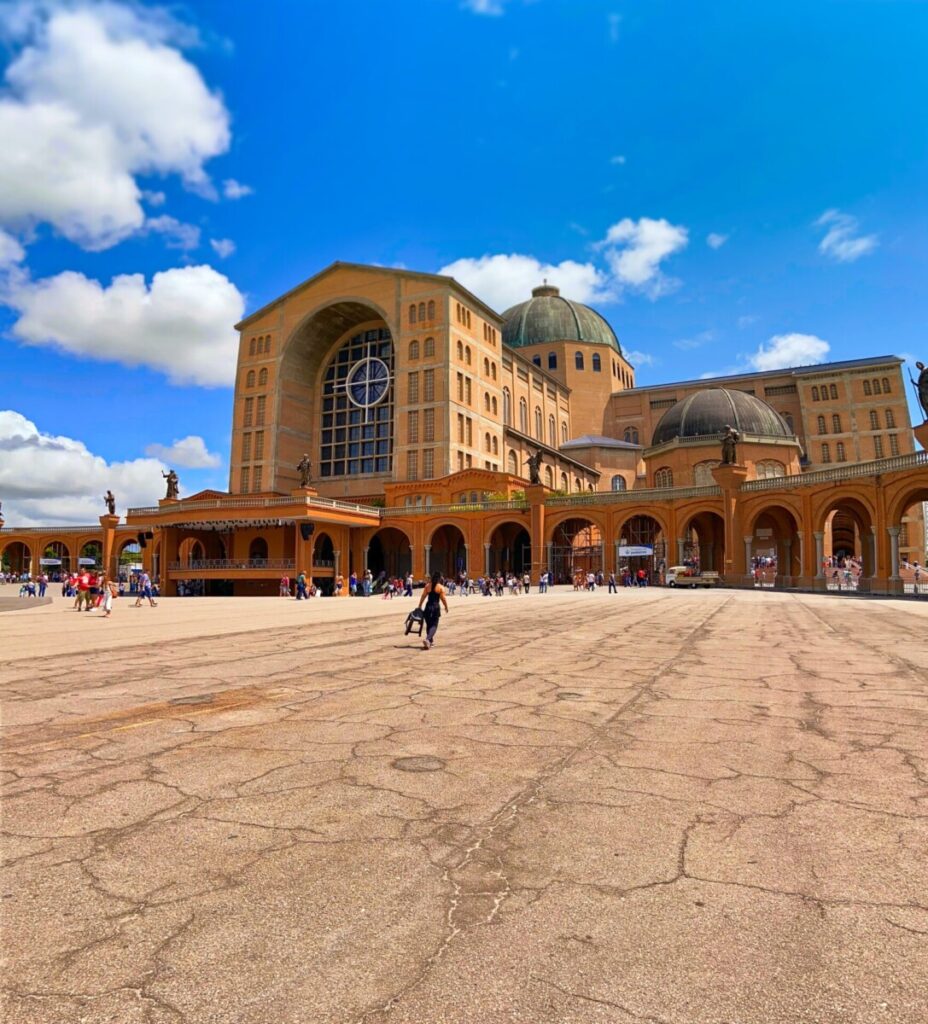
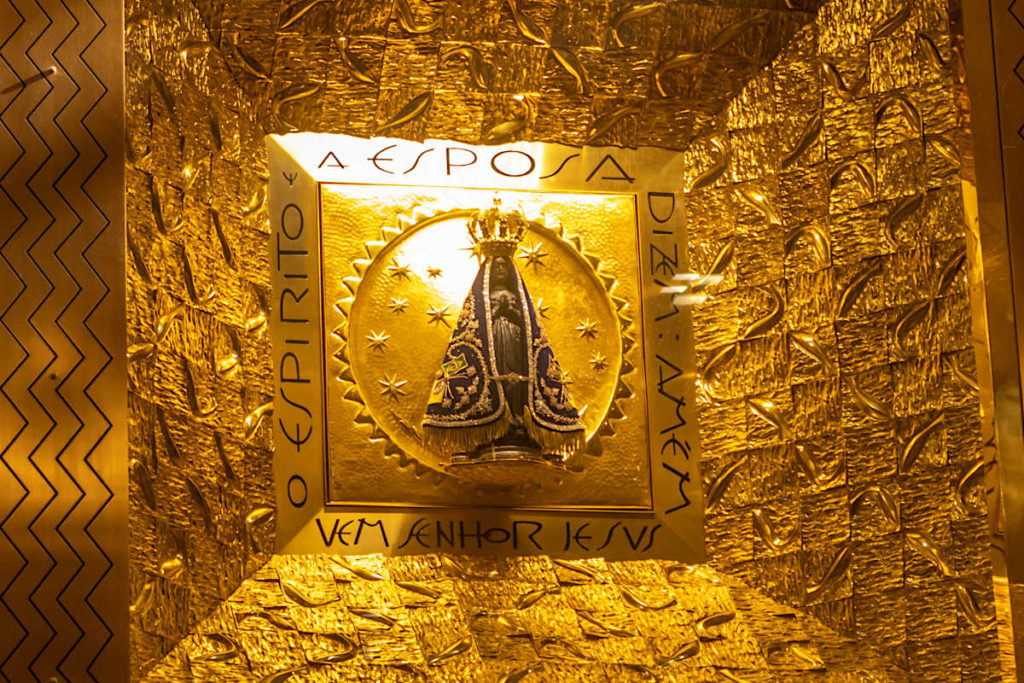
The experience of the encounter with the image of Our Lady of Aparecida is a privileged moment of Brazilian Marian spirituality. Our Lady of Aparecida, patroness of Brazil, met with fishermen in 1717 through the miraculous image from the Paraíba River. This experience of the encounter with Our Lady of Aparecida became a national devotion and an official Marian cult. The small image of Our Lady of Aparecida, found in the waters of the Paraíba River, symbolizes the spiritual motherhood of Mary for the Brazilian people.
The encounter with Mary: the experience of the image of Aparecida

Mariology, besides being an interdisciplinary reflection on Mary in Revelation and her influences on dogmatic and liturgical thought, is also devoted to the ‘Marian phenomenon’. Apparitions are certainly the best known, but there are other terms that designate in a general way the presence of Mary: Mariophanies and visions.
Beyond these terms, within the ‘Marian phenomenon’ there is a very well documented event, and one that has given rise to several shrines, which is the inventio. The translation of this term is not invention but rather finding. The experience of the encounter with the image of Aparecida is therefore a finding, given its particular features. Not wishing to recount here the story of Aparecida, known to all, I would simply like to place the importance of an inventio in Mariological perspective.
This term comes from Alexander of Cyprus (d. 565), who wrote the work Inventio Crucis, which refers to the discovery, the finding of the Cross of Christ. It is a work devoted to the praise of the Cross, recapitulating the history of creation, of religion, practically of the world up to the time of Constantine, offering a vision of the Incarnation and of the Trinity directed toward the Cross.
To find this term applied to the Marian question, it is Theodore Syncellus who, in the seventh century, wrote the work Inventio et depositio vestis in Blacternis, which deals with the discovery of the garments of the Mother of God and with their translation from Jerusalem to the Church of Blacternis, formerly Constantinople, present-day Istanbul in Turkey.
From these two historical elements, the Cross and the garments, we can see how structurally a hidden reality is indicated, one that by divine Providence is unveiled to the human eye and, naturally or supernaturally, offers itself freely. In fact, there are no accounts of a search for images of Mary, but of an unexpected finding of an image. From the Mariological point of view, it is the invisible God who lets Himself be conceived through means of which Mary is a presence par excellence.
Allowing myself to leap across centuries, I would like to conclude by pointing out that whoever seeks God in the time in which we live, reflected in our ecclesial sensibility, should let himself be touched and perhaps pierced by the Holy Spirit. He alone can make the everyday life of faith concrete, fruitful, and stable. This was the historical experience of Mary of Nazareth (Mariological Dictionary: Nazareth). At the same time, like Mary, we continually seek the great gift of the Holy Spirit who is Christ. We seek Him and we learn where to find Him. In the Latin tradition, Mary is known as inventrix gratiae, that is, from the verb invenire, which we translate as finding but also as precise seeking. To seek with an aim that is clearly the radicality with which the Holy Spirit ‘flooded’ the Handmaid of the Lord. A prefiguration of every one of the faithful who, drawing near to the Mother of God, draws near to the Spirit and to Jesus Christ in order to be led to the Father.
Allow me to end our journey with the words of Saint Bernard when he says: “Per te accessum habemus ad Filium, o benedicta inventrix gratiae, genitrix vitae, mater salutis: ut per te nos suscipiat qui per te datus est nobis” [Through you we have access to the Son, O blessed ‘finder’ of grace, begetter of life, mother of salvation: that He who was given to us through you may receive us] (De adventu Domini, serm. 2, n. 5). The meaning of the inventio of Aparecida can find in this formula its reason for being.
To deepen the meaning of images and of the cult of Mary, see the apostolic exhortation Marialis Cultus by Paul VI, on the renewal of Marian devotion in Christian life.
Deepen your studies: explore Mariology, Marian Theology, Marian apparitions, and the Postgraduate Program in Mariology.
Postgraduate Program in Mariology
Would you like to deepen your formation in Mariology? Discover the Postgraduate Program in Mariology at Locus Mariologicus – an academic formation that unites theological rigor, spiritual life, and the living tradition of the Church.
See the complete list of Marian apparitions recognized by the Church.
Would you like to study Mariology seriously?
This article is born of the works in the library of Locus Mariologicus. The Postgraduate Program in Mariology takes you to the same source, with academic guidance: Scripture, the Church Fathers, and the Magisterium, from the first dogma to contemporary questions.




Responses