The Weeds, the Wheat, and the Leaven: Wis 12, Rom 8, and the Patience of the Kingdom in Mt 13
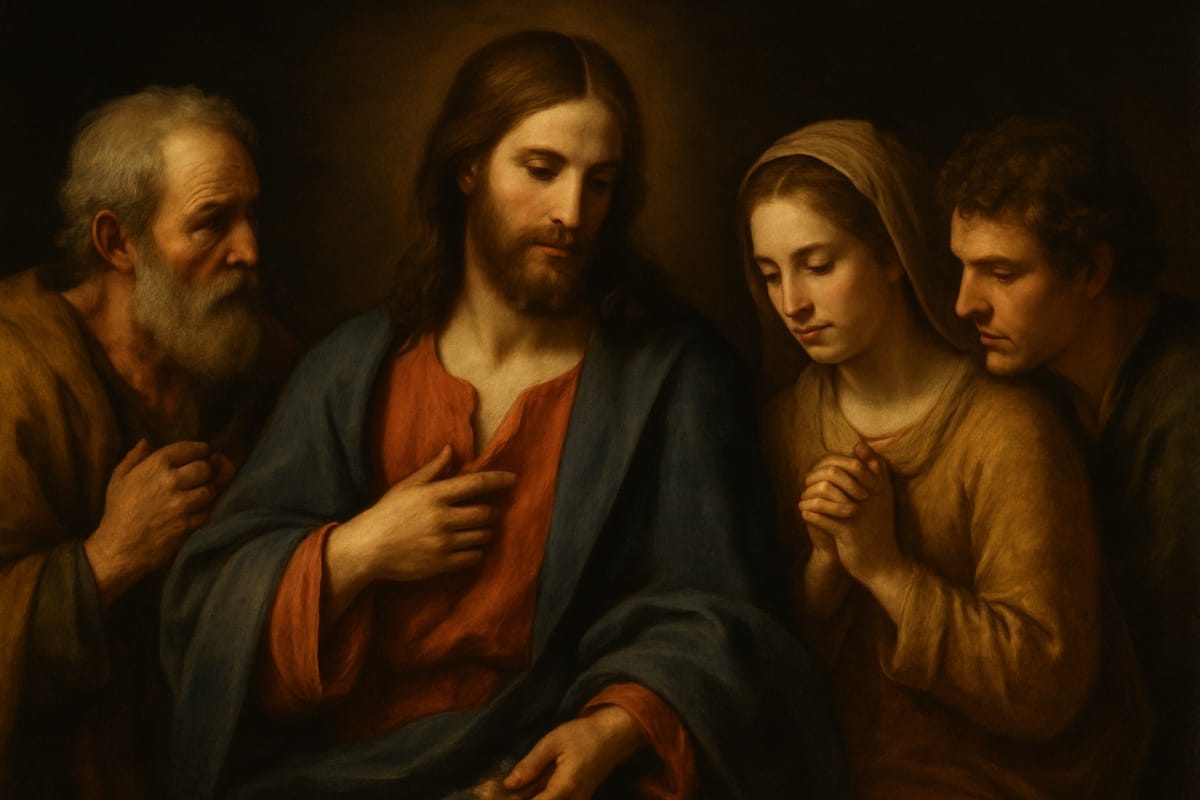
Ipse Spiritus postulat pro nobis gemitibus inenarrabilibus.
Rom 8:26
“The weeds and the wheat” (Mt 13:24-30): the Sixteenth Sunday in Ordinary Time of Year A brings together three texts around the patience of God and the hidden action of his Spirit. Wis 12:13, 16-19 proclaims that the sovereign God judges with mildness and leaves time for conversion. Rom 8:26-27 reveals that the Spirit intercedes for us with groanings that language cannot express.
Mt 13:24-43 brings together three parables of the Kingdom: the weeds and the wheat that grow together until the harvest, the mustard seed that becomes the largest of shrubs, the leaven that leavened the whole batch of dough. The three texts describe the same God: sovereign but patient, effective but discreet, who does not pull up the weeds before the time, does not force the mustard to grow, does not compel the leaven to act, but trusts that his word and his Spirit will do what they promised.
I. The First Reading: Wis 12:13, 16-19
Wisdom proclaims the uniqueness and the clemency of God: “There is no god besides you who cares for all, that you should have to prove that you have not judged unjustly” (Wis 12:13). God does not have to justify himself before anyone: he is the only sovereign. But this sovereignty does not translate into arbitrariness: “Your might is the source of justice” (v. 16). And the consequence is unexpected: because he is sovereign, he can be clement, “treating the guilty with all gentleness” (v. 16).
The most eloquent sign of this clemency is time: “You govern with great indulgence and with much forbearance, for you have power whenever you will” (v. 18). God does not act hastily because he does not need to hurry: his power does not expire, his sovereignty is not threatened. And so he makes room for repentance: “to the sinner you leave time and place to be converted” (v. 19 LXX). God’s clemency is not weakness: it is the expression of one who has enough power not to need to use it hastily.
II. The Second Reading: Rom 8:26-27
Paul describes the situation of the believer: he does not know what to ask for. This is not culpable ignorance: it is the condition of the creature who does not yet see the fullness. “The Spirit comes to the aid of our weakness, for we do not know how to pray as we ought, but the Spirit himself intercedes for us with inexpressible groanings” (Rom 8:26). The same Spirit who groans with creation (v. 22) now groans within the believer, articulating what human language cannot say.
And the guarantee is twofold: the Spirit intercedes, and God hears that intercession: “He who searches hearts knows what is the intention of the Spirit, because it is according to God that the Spirit intercedes for the saints” (v. 27). The deepest prayer is not the one we know how to formulate: it is the one the Spirit formulates in us, in the silences, in the groanings, in the situations where words fail. God does not need elaborate words: he searches hearts.
III. The Gospel: Mt 13:24-43
Jesus tells three parables. In the first, a man sowed good seed in his field, but an enemy sowed weeds on top of it, by night. The servants ask whether they should pull up the weeds. The answer is unexpected: “No. Lest, in pulling up the weeds, you uproot the wheat along with them. Let them grow together until the harvest” (Mt 13:29-30). The separation will come, but not now: at the harvest, the harvesters will first gather the weeds to burn them, and the wheat into the barn.
The explanation (vv. 36-43) identifies the field with the world, the sower with the Son of Man, the good seed with the children of the Kingdom, the weeds with the children of the Evil One, the harvest with the end of the world. The weeds are not tolerated out of moral indifference: they are tolerated by the same clemency of Wis 12, which gives time for repentance. In the second parable, the mustard seed, the smallest of seeds, grows and becomes the largest of shrubs, where the birds of the sky come to make their nests. In the third, the leaven hidden in the flour leavened the whole batch of dough. The two parables describe the hidden growth of the Kingdom: not by force, but by inner transformation, discreet and irresistible.
IV. Mary and the Patience of the Leaven
Wis 12 describes a God who leaves the sinner time to be converted. In Mary, this clemency finds its fullest response: she who never needed conversion is the one who best understood the need for mercy for others. At Cana, when the wine ran out, she did not judge the hosts for their lack of foresight: she interceded. Like the Spirit of Rom 8:26 who groans for us with what we do not know how to ask for, Mary intercedes with what we do not know how to ask for. Tradition calls her “advocate of sinners”: not because she knows better what we lack, but because the Spirit who prayed in her at the Annunciation continues to pray in her for the Church.
Mt 13 speaks of the hidden leaven that leavened the whole batch of dough. Mary’s presence in the early Church was that leaven: discreet, with no recorded public discourse, but transforming. The Upper Room where the Spirit descended had Mary at its center (Acts 1:14). The Kingdom that grows like a mustard seed has in Mary the model of growth without noise: “She kept all these things and pondered them in her heart” (Lk 2:19). The patience of the weeds and the wheat, the discretion of the leaven, the final greatness of the mustard seed: all this Mary lived, awaiting the resurrection of the Son and the coming of the Spirit.
Postgraduate Program in Mariology
Would you like to deepen your formation in Mariology? Discover the Postgraduate Program in Mariology of Locus Mariologicus – an academic formation that unites theological rigor, spiritual life, and the living tradition of the Church.
To read the readings: Wisdom 12, Romans 8, and Matthew 13, in the Ave-Maria Bible.





Responses