Mary as the Contemplation of God

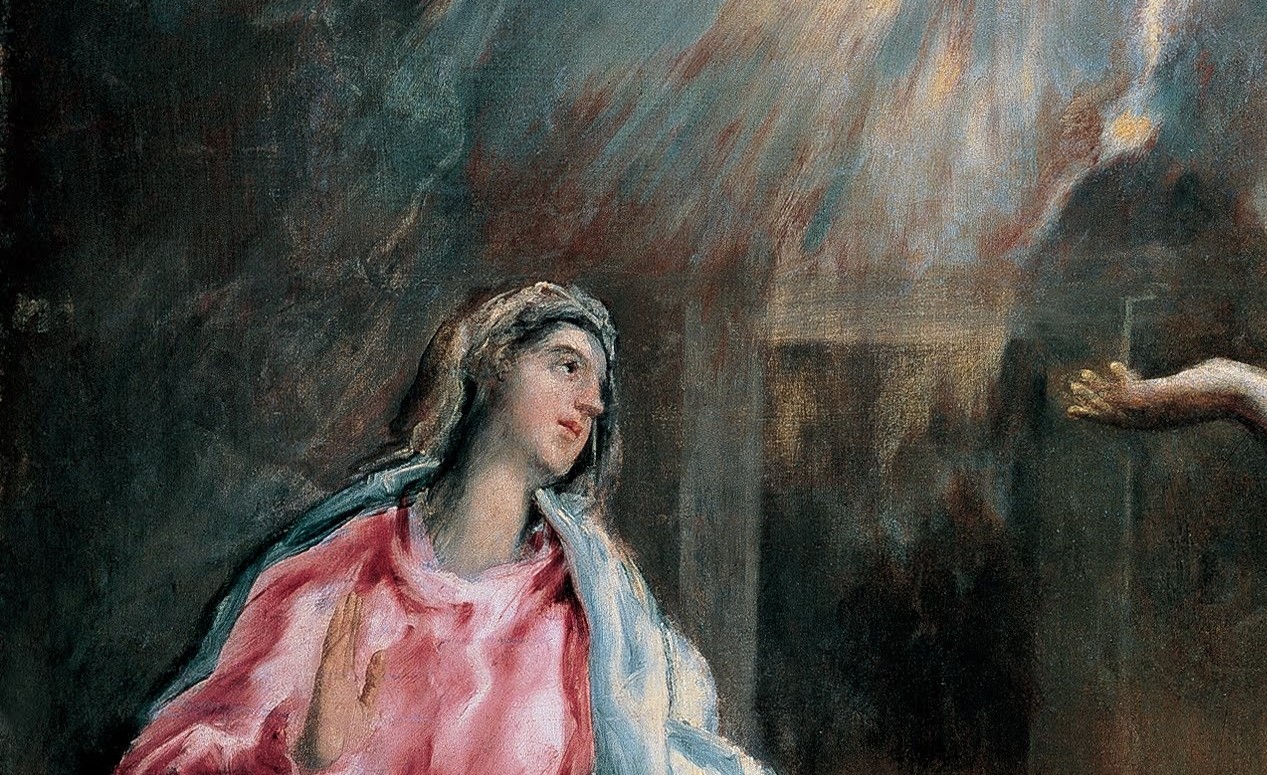
Mary, Contemplation of God
Mary fully realizes the divine theoria, that is, the full understanding of God’s love for man, and at the same time she becomes the exemplary cause of salvation, of the orientation of our existence toward God: in her contemplation, as theoria and as temple, she becomes perfect. All who are led by the Spirit of God are sons of God.
, and your body is the temple of the Holy Spirit who is in you and who is from God (Rom 8:14; 1 Cor 6:19).
The contemplation of Mary, and ours as well, as theoria, acquires its meaning beside the Cross, from which Jesus breathes forth the Spirit. As temple, it acquires its meaning at Pentecost, which places Jesus at the center of the Church as the source of eternal life: Jesus stood up and cried out in a loud voice:
Whoever thirsts, let him come to me and drink, whoever believes in me. As the Scripture says, out of his belly shall flow rivers of living water. (Jn 7:37-38).
Christian and Gospel-based contemplation is not a philosophical speculation, but a fact that concerns the charity of God and links the Cross to Pentecost,
through the love of God poured into our hearts by the gift of the Holy Spirit (Rom 5:5)
Mary is the contemplation of God, because she is the dwelling place of the Holy Spirit.
Mary is open to the Giver in the gift she receives. Inasmuch as she is charismatic, she is continually transformed into a spiritual woman: she continually gives herself to the Giver by receiving the gift of God. As such, she is wholly turned toward God. Let us not be surprised, then, to find Mary in the Upper Room, not far from Calvary, with the apostles and other disciples of Jesus, who,
devoted with one accord to prayer, together with some women and Mary, the mother of Jesus (Acts 1:14),
await the coming of the Holy Spirit promised by Jesus. In the Upper Room, Mary guides the prayer of Jesus’ disciples: it seems that, in another dimension, she continues her service at the wedding at Cana.
On Easter evening, Jesus made Himself present in the midst of the Upper Room, behind closed doors, to free them from fear through the gift of peace and of the Spirit. At the present moment we are still in the Upper Room, and Jesus is not there, because He has ascended into heaven. But Mary is there (whom iconographic art sometimes seats in Jesus’ place), leading the prayer of the nascent Church and gathering it around herself, as if she were a center.
Mary can effectively act as a center in the prayer of the Church because she is completely centered on Christ; she is entirely consecrated to the truth: Mary and Jesus are one. Mary is the temple of the living God, because in her womb, in her heart, and in her spirit the Spirit of God has made His permanent dwelling.
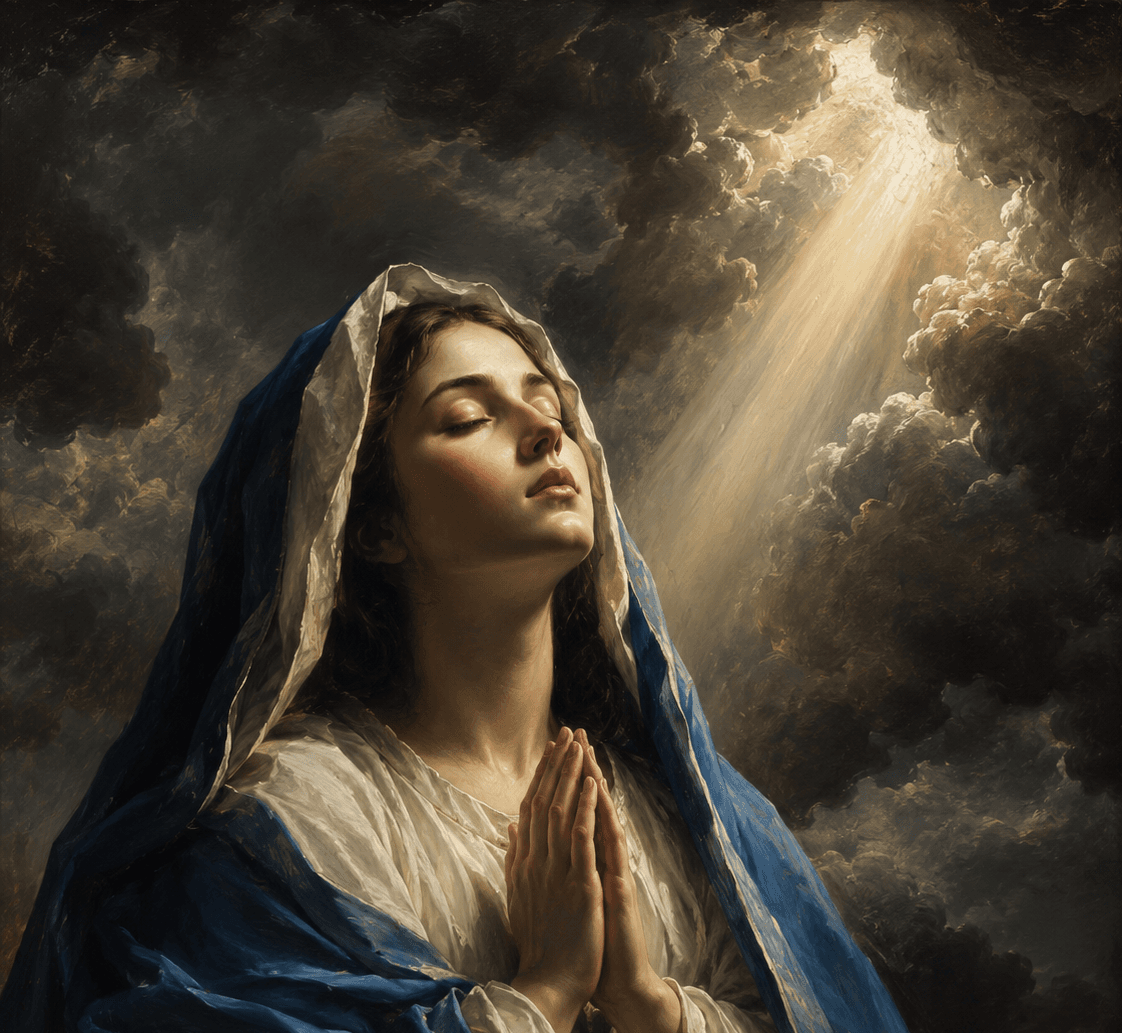
After all that we have said, it is no exaggeration to affirm that Mary does not pray, but is prayer. Mary does not contemplate, but is contemplation. The Christian contemplative, then, is one who has centered and concentrated his whole existence on Christ, becoming the dwelling place of the Holy Spirit. Stable is his dwelling, and continuous is his concentration. For this reason the contemplative lives and understands everything that happens to him in the right sense, because the Word of God always resounds in his heart, keeping him in relationship with the Word.
At the same time, the Christian contemplative, firmly centered on Christ, decentralizes the presence of the Spirit who dwells in him, radiating the love of God in the Church and in the world. This sheds light on a beautiful definition of contemplation given by Saint Gregory the Great: the contemplative life is to live love for God and for neighbor with all one’s heart and with the sole desire of cleaving to the Creator.
To deepen your reflection on Mary as the living expression of divine contemplation, consult John Paul II’s encyclical Redemptoris Mater, which presents Mary as the one who lived in full openness to the mystery of God.
Deepen your studies: explore Mariology, Marian Theology, Marian apparitions, and the Postgraduate Program in Mariology.
Postgraduate Program in Mariology
Would you like to deepen your formation in Mariology? Discover the Postgraduate Program in Mariology of Locus Mariologicus — an academic formation that unites theological rigor, spiritual life, and the living tradition of the Church.
Would you like to study Mariology seriously?
This article grows out of the works in the Locus Mariologicus library. The Postgraduate Program in Mariology takes you to the same source, with academic guidance: Scripture, the Fathers of the Church, and the Magisterium, from the first dogma to contemporary questions.

Responses