The Rosary from Vatican II to the present day
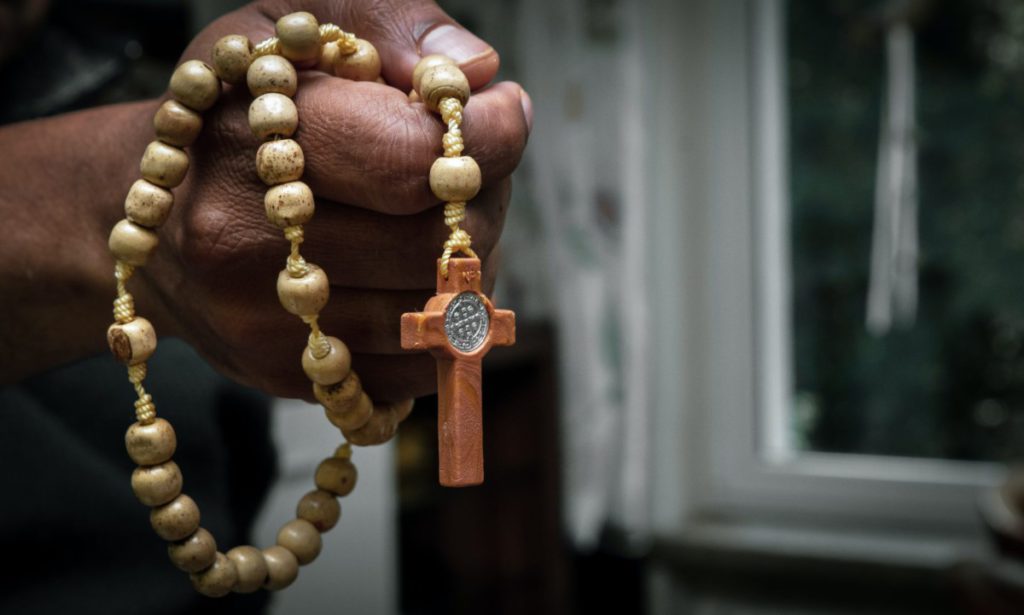
The Rosary and Mary: from Vatican II to the present day

The Second Vatican Council (1962-1965) was certainly one of the most decisive moments in the history of Christianity in the second millennium, and it is the starting point for living the faith in Christ in the third millennium. This Council was the one that devoted the most space to Mary and also to the exercises of piety toward the Mother of the Church, for as Lumen Gentium 67 (1964) affirms:
“Very deliberately the sacred Council teaches this Catholic doctrine, and at the same time it recommends to all the sons of the Church that they generously foster the cult of the Most Holy Virgin, above all the liturgical cult, that they hold in great esteem the practices and exercises of piety toward Her approved in the course of the centuries by the Magisterium, and that they faithfully keep all that was decreed in the past concerning the cult of the images of Christ, of the Virgin and of the saints”.
Saint Paul VI (1963-1978), with the encyclical letter Christi Matri (1966), explains the meaning of the words of the Second Vatican Council which, even without referring explicitly to the Rosary, nonetheless affirms: “the Second Vatican Ecumenical Council, although not expressly but with a clear indication, rekindled in the soul of all the faithful of the Church the fervor for the Rosary, recommending esteem for the practices and exercises of piety toward Her [Mary], as they have been recommended throughout the ages by the Magisterium”. In the same Encyclical the pope recalled that the Rosary is the prayer for obtaining peace, a refuge and nourishment of faith. Some years later, with the apostolic exhortation Recurrens mensis october (1969), Saint Paul VI affirmed: “by meditating on the mysteries of the Most Holy Rosary we will learn, following the example of Mary, to become souls of peace, through loving and unceasing contact with Jesus and with the mysteries of His redemptive life”. This great “public and universal” prayer may be offered in the form established by Saint Pius V or else in the manners that adapt it to the legitimate need of our own day.
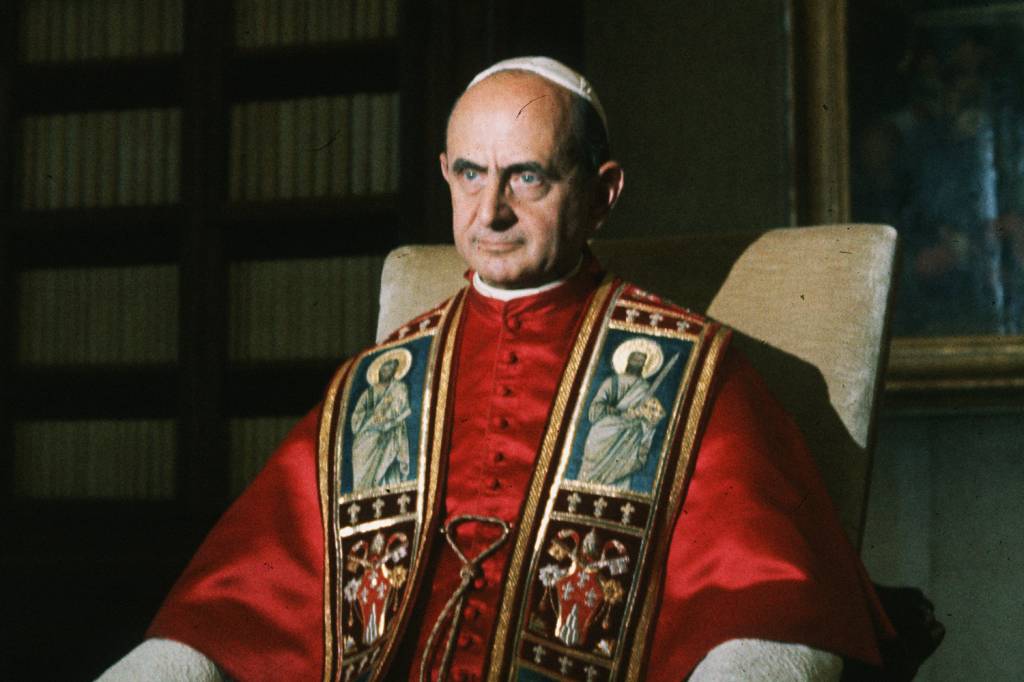
From a historical point of view, it was this emphasis on the perspective of a renewal of the Rosary that gave rise to new forms of recitation, which encouraged pastoral experiments in adapting the Rosary according to local, inculturated experience. Once again Saint Paul VI would treat the question of the Rosary, although in a diffuse manner, with the apostolic exhortation Marialis Cultus (1974), where the core of Marian prayer is explained in its essential elements: a) the contemplation of the mysteries of salvation distributed in three cycles. b) the prayer of the Lord and of the Our Father, which by its immense value is the basis of Christian prayer. c) the litanic succession of the Ave Maria, in the number fixed by tradition. d) the doxology of the Glory Be to the Father concludes this devotion with the prayer to the Holy Trinity. At the same time, the supplication of praise gave rise to new formulations of prayers, as though they were celebrations of the word.
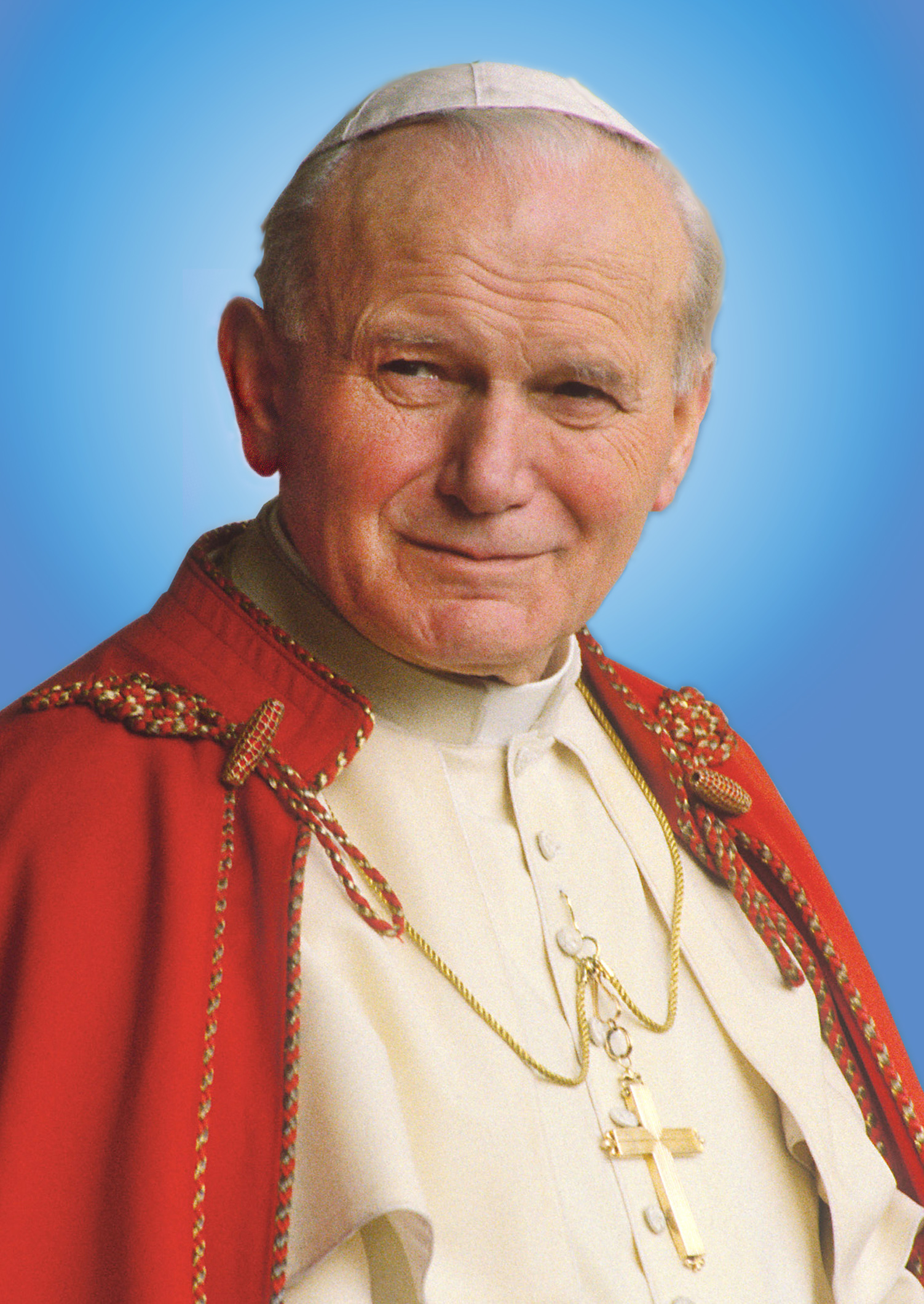
Saint John Paul II (1978-2005) is known as the Pope of the Rosary, on which he intervened with the Rosarium Virginis Mariae (2002), where he expresses the meaning of the prayer in the contemplation of the face of Christ in Mary and in the attitudes that the one who prays must make his own, when he affirms in no. 14:
“a school, that of Mary, all the more effective when one considers that She gives it by obtaining for us the gifts of the Holy Spirit in abundance and, at the same time, by proposing to us the example of that ‘pilgrimage of faith’, in which she is an unequaled teacher. Before each mystery of the Son, She invites us, as at her Annunciation, humbly to put the questions that open onto the light, so as always to conclude with the obedience of faith: ‘Behold the handmaid of the Lord; let it be done to me according to your word’ (Lk 1:38)”.
In the course of the apostolic letter the Polish Pope proposes to the community of those baptized in the same Spirit a new series of five mysteries of light in no. 21:
“passing from the infancy and the life at Nazareth to the public life of Jesus, contemplation leads us to the mysteries that may be called, by a special title, ‘mysteries of light’. In truth, the whole mystery of Christ is light. He is the ‘light of the world’ (Jn 8:12). But this dimension emerges particularly in the years of the public life, when He announces the gospel of the Kingdom. Wishing to indicate to the Christian community five significant moments, luminous mysteries, of this phase of the life of Christ, I consider that they can rightly be identified as: 1st, in His Baptism in the Jordan; 2nd, in His self-revelation at the wedding of Cana; 3rd, in His proclamation of the Kingdom of God with the call to conversion; 4th, in His Transfiguration; and finally 5th, in the institution of the Eucharist, the sacramental expression of the paschal mystery”.
As an element of novelty, there is introduced into the announcement of the mysteries the contemplation of an icon, the proclamation of a biblical text followed by a pause of silence; in the Ave Maria a clause may be introduced to invoke the mystery and to give prominence to the name of Christ. The Glory Be in public prayer may also be sung, and instead of the customary short invocations a prayer is advised for obtaining the fruits of the meditation.
This “new manner” of contemplating the mysteries calls into question the conformity of the Ave Maria with the Davidic psalter. Nevertheless, it is safeguarded that this integration does not compromise the traditional composition of the Rosary, since it is left to the freedom of those who pray. For as the Holy Father of the Totus tuus affirms in no. 38:
“the Rosary can be recited in full every day, and there are those who most laudably do so. In this way it fills with prayer the days of so many contemplatives, or serves as company to the sick and the elderly who have time in abundance. But it is obvious, and this holds with all the more reason when the new cycle of the mysteria lucis is added, that many will be able to recite only a part of it, according to a certain weekly order. This distribution over the week ultimately gives its successive days a certain spiritual ‘color’, in a way analogous to what the Liturgy does with the various phases of the liturgical year. According to current practice, Monday and Thursday are dedicated to the ‘mysteries of joy’, Tuesday and Friday to the ‘mysteries of sorrow’, and Wednesday, Saturday and Sunday to the ‘mysteries of glory’. Where can the ‘mysteries of light’ be inserted? Considering that the glorious mysteries are proposed on two successive days, Saturday and Sunday, and that Saturday is traditionally a day of intense Marian character, it seems advisable to move to that day the second weekly meditation of the joyful mysteries, in which the presence of Mary is more pronounced. And thus Thursday is left free precisely for the meditation of the mysteries of light. This indication, however, does not intend to limit a certain freedom of choice in personal and communal meditation, according to spiritual and pastoral needs and above all the liturgical coincidences that may suggest timely adaptations. What is truly important is that the Rosary be ever more seen and felt as a contemplative itinerary. Through it, in a manner complementary to what is accomplished in the Liturgy, the week of the Christian, having Sunday, the day of the resurrection, as its hinge, becomes a journey through the mysteries of the life of Christ, so that He may assert Himself, in the life of His disciples, as Lord of time and of history”.
With particular brevity, both on account of the Pontificate and on account of the output of a Mariological character, we indicate only the words of Benedict XVI (2005-2013) when, in 2010, at Fátima, Portugal, having recited the Rosary in the Chapel of the Apparitions with the several thousand people who were gathered there, he said:
“it is an admirable manifestation of faith in God and of devotion to His Mother and ours, expressed in the recitation of the Holy Rosary. This prayer, which is in the heart of the Christian people, found in Fátima a driving center for the whole Church and for the world. The ‘White Lady’, in the apparition of June 13, said to the shepherd children: ‘I want you to pray the Rosary every day’. We could say that Fátima and the Rosary are almost a synonym” (Benedict XVI, From Fátima, a message of hope beyond the terrors of history).

In our own day we find the Holy Father Francis (2013-) when, on May 31, 2013, at the close of the month of Mary in St. Peter’s Square, he describes the attitudes of the Mother of Jesus as: listening, decision and action. These words would come to describe the attitude of the Argentine Pope concerning the Rosary, which is the contemplation with Mary of the mysteries of Jesus, where one learns to listen, to decide, and to act for the Kingdom of God. Therefore the Rosary, for Pope Bergoglio, is a prayer that trains us to be ready to hear the Word of life and that leads us to decide for the fundamental option, which is that of following God in Christ, and this leads us to identification with Mary, woman of faith, beloved of God.
Tell us what graces you have already received through the Rosary.
The Second Vatican Council and the post-conciliar Magisterium reaffirmed devotion to Mary. Go deeper with the apostolic exhortation Marialis Cultus of Paul VI, published after the Council.
Deepen your studies: explore Mariology, Marian theology, Marian apparitions and the Postgraduate Program in Mariology.
Postgraduate Program in Mariology
Would you like to deepen your formation in Mariology? Discover the Postgraduate Program in Mariology of Locus Mariologicus, an academic formation that unites theological rigor, spiritual life, and the living tradition of the Church.
Learn to pray the Rosary in our guide: How to Pray the Rosary, Step by Step.
Would you like to study Mariology seriously?
This article is born of the works in the library of Locus Mariologicus. The Postgraduate Program in Mariology takes you to the same source, with academic guidance: Scripture, the Fathers of the Church, and the Magisterium, from the first dogma to contemporary questions.





Responses