The Virgin Mary, Mother of the Savior
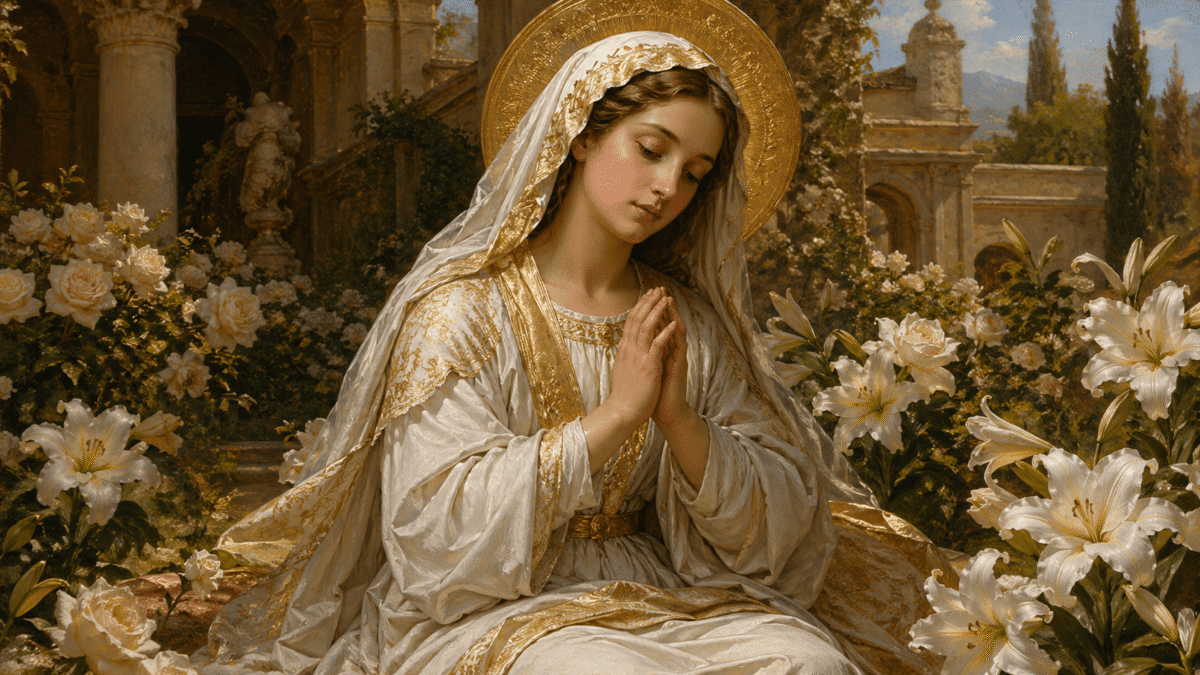
The Mother of the Savior occupies a central place in the economy of salvation: “Parvulus enim natus est nobis, filius datus est nobis”. “A child is born to us, a son is given to us”. (Is 9:5)
I. The light that breaks the darkness: the prophecy of Isaiah
This dimension illuminates the Marian title Mother of the Savior in its theological fullness.
The ninth chapter of the book of Isaiah is one of the most luminous prophetic texts in all of Hebrew Scripture. Addressed originally to a people that walked in the darkness of Assyrian oppression and political despair, the oracle announces a radical reversal: “The people who walked in darkness have seen a great light. Upon those who dwelt in the land of the shadow of death, a light has shone” (Is 9:1). The light of which Isaiah speaks is not a vague metaphor: it is the light of a presence, the light that radiates from a birth. “For a child is born to us, a son is given to us, and dominion rests upon his shoulders. And he shall be called Wonderful, Counselor, Mighty God, Eternal Father, Prince of Peace” (Is 9:5).
The five titles attributed to the child to be born form a whole that the Christian tradition has always read as an anticipation of the New Testament revelation about the person of Jesus Christ. “Wonderful” evokes the transcendent dimension that exceeds all human understanding. “Counselor” designates the divine wisdom that guides history. “Mighty God” affirms the divinity of the child to be born with a clarity that the Old Testament rarely attains. “Eternal Father” reveals the pastoral solicitude that will characterize His reign. “Prince of Peace” announces the messianic shalom, the harmony restored between God and the creature, between a man and his brother. Mary, in giving birth to this son in Bethlehem, gave to the world the fulfillment of each of these titles. She is the Mother of the Wonderful, the Mother of the Counselor, the Mother of the Mighty God: she is the Mother of the Savior.
II. From prophecy to the census: God enters history along His own paths
This dimension illuminates the Marian title Mother of the Savior in its theological fullness.
The providential irony of Christmas lies in the fact that the decree of the emperor Augustus, ordering the universal census, becomes the instrument by which the prophecy of Micah is fulfilled: the Messiah must be born in Bethlehem. Augustus acts for reasons of fiscal administration and the demonstration of power. God uses the imperial decree to lead Mary and Joseph to the city of David. This articulation between secular history and sacred history is not a coincidence: it is the way God habitually acts in history, through human freedoms and historical contingencies, without manipulating them yet without being conditioned by them.
Mary arrives in Bethlehem pregnant. There is no room at the inn. The Son of God is born in a stable, among animals, in the most marginal conditions that the society of the time had to offer. This paradox of the condition of God who makes Himself poor is the heart of the Christmas mystery: the “Mighty God” of Isaiah wrapped in an infant’s swaddling bands, the “Wonderful” who cannot speak, the “Prince of Peace” who cries like every newborn. Mary embraces this paradox without reserve: she does not argue with God about the suitability of the place, she does not lament the conditions, but wraps her Son in swaddling bands and lays Him in the manger (Lk 2:7). Her gesture is the most concrete and simplest maternal response to the most disconcerting mystery of history.
III. “Glory to God in the highest and peace on earth to men”
This dimension illuminates the Marian title Mother of the Savior in its theological fullness.
The angelic announcement to the shepherds, which constitutes the core of the Lucan account of the Nativity, has the structure of a royal proclamation: the angel announces the birth of a king, identifies the place where he may be found, and offers a sign that allows him to be recognized. “To you is born this day, in the city of David, a Savior, who is Christ the Lord” (Lk 2:11). The three accumulated titles, Savior, Christ, and Lord, constitute a christological confession in miniature: Savior indicates the redemptive function, Christ indicates the messianic anointing, Lord indicates the divine dignity. The sign that allows Him to be recognized is paradoxical: “You will find a child wrapped in swaddling bands, lying in a manger” (Lk 2:12). The royal glory of the Savior is manifested in His utmost human humiliation.
The angelic canticle that follows, “Glory to God in the highest and peace on earth to men whom he loves” (Lk 2:14), sums up the theology of Christmas in two members. The first member points upward: the Incarnation is an act of divine glory, the fullest manifestation of the greatness of God who, out of love, lowers Himself to the human condition. The second member points downward: the Incarnation is the foundation of human peace, the reconciliation between the Creator and the creature that sin had broken. And at the center of these two movements, vertical and horizontal, stands Mary: the woman who receives the glory of God in her womb and delivers to the world the foundation of peace. The Mother of the Savior is the woman who makes possible both the glory of God and the peace of men.
IV. Mary, Mother of the Savior: the title that embraces the whole economy
The fifth Mass of the Collection contemplates Mary under the most comprehensive title of the economy of salvation: Mother of the Savior. This title is not only a biological statement about Mary’s relationship with Jesus: it is a theological statement about Mary’s place in God’s plan. If the Son of God came into the world as Savior, then the woman who brought Him into the world is necessarily constitutive of the saving act itself. There is no Savior without the Mother of the Savior, there is no Incarnation without her who gives it flesh, there is no Christmas without her who gave birth on the night of Bethlehem.
The Mariology that emerges from this Mass is a Mariology of saving motherhood. Mary is not only the physical mother of Jesus, but the mother of the Savior as such: she cooperates in salvation not only by giving birth to the Son of God, but by raising Him, by accompanying Him, by remaining beside His cross, by awaiting in the Upper Room the gift of the Spirit. The prophecy of Isaiah, in proclaiming “a son is given to us”, includes in the gift of the son the existence of the mother who gave him. To contemplate Mary as Mother of the Savior is to contemplate the divine motherhood in its most dynamic and most comprehensive dimension: not only the moment of the birth, but the whole life of service that preceded it and the whole maternal intercession that is prolonged in glory.
Postgraduate Program in Mariology
Would you like to deepen your formation in Mariology? Discover the Postgraduate Program in Mariology of Locus Mariologicus – an academic formation that unites theological rigor, spiritual life, and the living tradition of the Church.
Would you like to study Mariology seriously?
This article is born of the works in the library of Locus Mariologicus. The Postgraduate Program in Mariology brings you to the same source, with academic guidance: Scripture, the Fathers of the Church, and the Magisterium, from the first dogma to contemporary questions.





Responses