The history of the Rosary: medieval origins, the mysteries, and the role of Pius V in the Battle of Lepanto
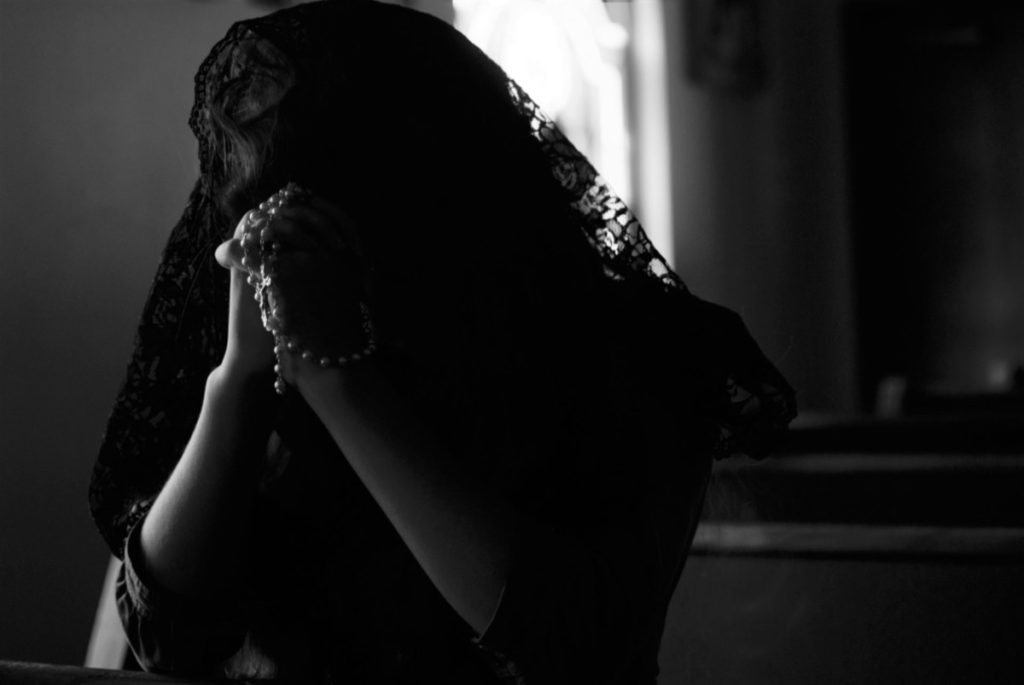
The Rosary is the most widespread Marian prayer in the Church, but its history is more complex than the legend of Saint Dominic suggests. Between the thirteenth and the twentieth centuries, its present form was built up by successive papal interventions, from the fixing of the 15 mysteries by Pius V to the addition of the Luminous Mysteries by John Paul II in 2002. This article examines the documented origins and the historical milestones of this prayer.
From medieval monastic beads (twelfth century) to the Luminous Mysteries of John Paul II (2002): the historical formation of the Rosary

If we consider Christian prayers, the Rosary is probably the greatest in the world. Known as the Psalter of the Virgin Mary, in the telling of its beads we find the histories of peoples, families, and individuals. The greeting of the Angel, repeated so many times, like the psalms, is alternated with episodes from the life of Christ and of Mary, as though we were speaking of two mirrors that give light to each other.
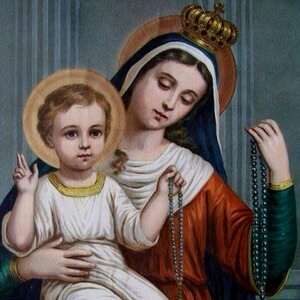
In Catholic history we had to wait until Pius V to see an official consecration of this devotional practice, fixing the norms that have come down to our own day with the Bull Consueverunt romani Pontifices. The history of the Rosary is much older. We can fix a date of great diffusion: the twelfth century. In this century we find the pious practice of reciting the Ave Maria, although this greeting was already known long before that time. At the end of the seventh century the offertory antiphon of the Fourth Sunday of Advent, a celebration of clearly Marian emphasis, already presents the Ave Maria. Imitating, so to speak, the monastic prayer of the repetition of the 150 Davidic psalms, we find, for the unlettered monks, the same number of repetitions of the Our Father or of the Ave Maria.
One particular feature of the prayer that would be repeated in the Rosary is the fact that it had only the first part, corresponding to the angelic greeting Ave [Maria], full of grace, the Lord is with you, and the blessing of Elizabeth: Blessed are you among women, and blessed is the fruit of your womb. This is the original prayer that was repeated for centuries, and only at the end of the fifteenth century do we find the second part, Holy Mary. It should also be noted that monks and lay people divided the prayer of the Our Father into 3 sets (50+50+50) during the day, and that Pope Pius V would bring this practice into the publication of the breviary in 1586.
Going back in time to the fourteenth century, we find an important milestone in the history of the Rosary when the Carthusian monk Henry of Kalkar (1328-1408) subdivided the psalter of the Virgin into groups of 15 decades, inserting an Our Father between each of them. From this same period comes Alan de la Roche, a Dominican (1428-1475), who began to spread the story of an alleged diffusion of the Rosary by Saint Dominic de Guzmán (1170-1221). Concerning this historical fact we can only note indirectly that the Marian psalter can be documented even before the birth of the saint. Another element, no less important, is the use of this popular form of prayer by his friars and probably also by Saint Dominic himself. One need only think of the Marian confraternities founded by Saint Peter of Verona (1205-1252), whose charism was to spread devotion to the Virgin. Therefore, if one cannot speak of a paternity of the Rosary, at least an encouragement to Marian devotion is present, not so much in the writings as in the pastoral activity of the founder of the Order of Preachers.
In its present form we repeat the Ave Maria and the Our Father, interspersing them with the meditation of the mysteries. It was only in the fifteenth century that Dominic of Prussia (1382-1461) introduced this, reducing the number of Ave Maria to fifty, and at the end of each one a reference to a Gospel event was added (fourteen on the life of Jesus in Nazareth, six on the public life, twenty-four on the passion and death, and finally six on the glorification of Christ and His Mother). This form of prayer, of subdivided meditation, would ultimately give us the Rosary in the manner in which we know it. In fact, this form came to proliferate throughout Europe, and in the fifteenth century more than three hundred psalters of this kind could already be counted. We will have to wait for the preaching and the founding of the confraternities of Alan de la Roche, already cited, to find the new Rosary of the Blessed Virgin Mary, the name given by the Dominican, divided into three parts: incarnation, passion and death, glory of Christ and of Mary.
Already within the Order of Preachers we will see, in 1521, Alberto da Castello reducing these mysteries to fifteen, proposing simple commentaries on the mystery while reciting the Ave Maria. This reform of the new Marian psalter gradually took hold almost everywhere in Europe, above all in the confraternities, until it reached its first stage in 1569, as we have already mentioned, with Pius V in his bull, which gave it the form that has come down to our own day.
The Rosary, unlike other popular devotions, has the particular feature of being a universal form of prayer, to the point of merging with the very concept of Marian piety, which from the most remote parishes and monasteries to the most distant Christianized peoples continues to spread and to gather people together. And even when the avalanche of scarcely evangelical criticism of popular piety called this pious exercise into question, the Magisterium of the Holy Fathers did not fail to come to its aid, and of this we will speak in the next article.
To understand the spiritual meaning of the Rosary and of the veneration of Mary, read the apostolic exhortation Marialis Cultus of Paul VI, a fundamental reference on Marian devotion.
Deepen your studies: explore Mariology, Marian Theology, Marian apparitions and the Postgraduate Program in Mariology.
Postgraduate Program in Mariology
Would you like to deepen your formation in Mariology? Discover the Postgraduate Program in Mariology of Locus Mariologicus – an academic formation that unites theological rigor, spiritual life, and the living tradition of the Church.
Learn to pray the Rosary in our guide: How to Pray the Rosary, Step by Step.
Would you like to study Mariology seriously?
This article is born of the works in the library of Locus Mariologicus. The Postgraduate Program in Mariology takes you to the same source, with academic guidance: Scripture, the Fathers of the Church, and the Magisterium, from the first dogma to contemporary questions.




Responses