The Effects of Grace: Part III

The Effects of Grace in Mary and in Christians

In the previous article we looked at the situations in which the word grace was used, in both the Old and the New Testament. We now consider the effects of grace. In describing the effects of divine favor, Scripture speaks first of its external and general effects, but, as time goes on, it describes that favor penetrating the soul ever more widely, with particular effects. The Old Testament initially presents the favor of being God’s chosen people, who live in the hesed that binds them to YHWH, from the time of the Covenant: “Then Moses took the blood, sprinkled the people with it, and said: ‘This is the blood of the covenant which the Lord has made with you concerning all these terms’” (Ex 24:8). Let us recall that the sprinkling of blood signifies the sprinkling of life, for blood is life: “For the life of a living being is in the blood, and I have commanded you to put the blood upon the altar to make atonement for your lives, for it is the blood that makes atonement for life” (Lev 17:11). Indeed, God binds himself to his people just as relatives are bound to one another by blood, and also as the go’el (redeemer) who is committed by the Covenant to save the people from their weaknesses. It is in this context that we see the Old Testament considering the effects of divine favor. The most general word is berakâ (blessing), through which man receives joy, strength, fullness of life, and a special relationship with God. At times we may also find the sense of a wisdom that makes a person spiritually perfect.
In the Synoptic Gospels (Matthew, Mark, and Luke), káris appears only in Luke, eight times, but always with a meaning similar to that of the Old Testament. The image of grace thus appears in the Synoptics as follows:
- God who invites man to belong to his Kingdom: “Jesus again spoke in parables to the chief priests and the elders of the people, saying: ‘The Kingdom of Heaven is like a king who prepared a wedding feast for his son. He sent his servants to call those who had been invited to the feast, but they would not come. Then he sent other servants, with this order: “Tell those who are invited: I have prepared the banquet, the oxen and the fattened animals have been slaughtered, and everything is ready. Come to the feast!” But the guests paid no attention at all: one went off to his field, another to his business, while others seized the servants, beat them, and killed them. The king was angry and sent his troops to kill those murderers and burn their city. Then he said to his servants: “The wedding feast is ready, but those who were invited were not worthy of it. Go therefore to the crossroads and invite to the feast all whom you find.” The servants went out into the streets and gathered all whom they found, both bad and good. And the wedding hall was filled with guests. When the king came in to see the guests, he noticed a man who was not wearing a wedding garment, and he asked him: “Friend, how did you get in here without a wedding garment?” But the man was speechless. Then the king said to the attendants: “Bind his hands and feet and cast him outside, into the darkness! There will be weeping and gnashing of teeth.” For many are called, but few are chosen’” (Mt 22:1-14)
- The invitation to the New Covenant: “for this is my blood of the new covenant, which is poured out for many for the forgiveness of sins” (Mt 26:28)
- Belonging to God as children: “Pray then like this: Our Father in heaven, hallowed be your name. Your Kingdom come. Your will be done, on earth as it is in heaven” (Mt 6:9-10).
- The need to imitate God: “Be perfect, therefore, as your heavenly Father is perfect” (Mt 5:48)
- And the promise of bearing much fruit: “So every good tree bears good fruit, and every bad tree bears bad fruit” (Mt 7:17). “A great crowd gathered, and people from every town were coming to Jesus. He then told a parable: ‘A sower went out to sow his seed. As he sowed, some of the seed fell along the path and was trampled underfoot, and the birds of the air ate it. Some fell on the rock; it sprang up, but withered for lack of moisture. Some fell among thorns, and the thorns grew up with it and choked it. And some fell into good soil. It sprang up and bore fruit, a hundredfold.’” Having said this, he called out: “He who has ears to hear, let him hear!” His disciples asked him about the meaning of the parable. Jesus then said to them: “To you it has been given to know the mysteries of the Kingdom of God, but to the others only in parables, so that seeing they may not see, and hearing they may not understand. This is the meaning of the parable: the seed is the Word of God. Those along the path are the ones who hear, but then the devil comes and takes away the word from their hearts, so that they may not believe and be saved. Those on the rock are the ones who hear and receive the word with joy, but have no root. For a while they believe, but when the time of temptation comes, they fall away. What fell among thorns are those who hear, but, living amid the cares, riches, and pleasures of life, are choked and do not reach maturity. What fell into good soil are those who, hearing with a good and generous heart, hold fast the Word and bear fruit through perseverance” (Lk 8:4-15).
When we go through the non-Pauline letters, namely James, Jude, and Peter, we see the preponderance of the Old Testament view, which describes the effects of interior grace, understanding it as law and as wisdom. Some of these notions are present in the letters of Peter, who speaks of the effects of grace as:
- Salvation: “This salvation has been the object of the inquiry and meditation of the prophets. They prophesied about the grace that was destined for you” (1 Pet 1:10).
- Light: “But you are a chosen race, a royal priesthood, a holy nation, the people he has acquired, so that you may proclaim the mighty deeds of him who called you out of darkness into his marvelous light” (1 Pet 2:9).
- Sanctification: “chosen according to the foreknowledge of God the Father and through the sanctification of the Spirit, to obey Jesus Christ and to be sprinkled with his blood: to you, grace and peace in abundance” (1 Pet 1:2).
- Imitation of the holiness of Him who called the faithful to himself: “But as he who called you is holy, be holy yourselves in all your conduct. For it is written: ‘You shall be holy, for I am holy’” (1 Pet 1:15-16).
- Rebirth: “Blessed be God, the Father of our Lord Jesus Christ. In his great mercy, through the resurrection of Jesus Christ from the dead, he has given us new birth into a living hope” (1 Pet 1:3).
- Participation in the divine nature already in the present life: “Through them we have been granted the promised goods, the greatest and most precious, so that you may become partakers of the divine nature, escaping the corruption that concupiscence spreads in the world” (2 Pet 1:4).
The Johannine writings speak of the effects of grace as light and truth, but also as:
- Passage from death to life: “Truly, truly, I say to you: whoever hears my word and believes him who sent me has eternal life and does not come into judgment, but has passed from death to life” (Jn 5:24). “We know that we have passed from death to life, because we love the brethren. Whoever does not love remains in death” (1 Jn 3:14).
- Abundant sharing in the life of Christ: “The thief comes only to steal and kill and destroy. I came that they may have life, and have it in abundance” (Jn 10:10)
- Rebirth in the Spirit: “Jesus answered: ‘Truly, truly, I say to you, unless one is born from above, he cannot see the Kingdom of God!’” (Jn 3:3)
- The man who lives the divine life cannot sin: “No one who abides in him goes on sinning, and anyone who goes on sinning shows that he has neither seen him nor known him. […] No one who is born of God lives in sin, because God’s seed abides in him. He cannot go on sinning, because he is born of God” (1 Jn 3:6, 9)
- The Father and the Son make their dwelling in him: “Jesus answered him: ‘If anyone loves me, he will keep my word. My Father will love him, and we will come to him and make our dwelling in him’” (Jn 14:23)
- The Holy Spirit also makes his dwelling: “The proof that we abide in him and he in us is that he has given us of his Spirit” (1 Jn 4:13)
The true sacred writer on the effects of grace is Saint Paul, in his Epistles. The Apostle of the Gentiles speaks of these effects as:
- A progressive transformation: “But we all, with unveiled face, reflect the glory of the Lord and, according to this image, are being transformed from glory to glory by the Spirit of the Lord” (2 Cor 3:18)
- The man dedicated to the mystery of Christ becomes a new creation: “Whether one is circumcised or not is of no importance. What counts is being a new creature” (Gal 6:15). “Therefore, if anyone is in Christ, he is a new creature. The old has passed away; now all things are new” (2 Cor 5:17)
- The Christian becomes a temple of God: “Do you not know that you are God’s temple and that the Spirit of God dwells in you? If anyone destroys God’s temple, God will destroy him, for God’s temple is holy, and that temple you are. You belong to Christ, and Christ belongs to God” (1 Cor 3:16-17).
- Living as a member of Christ: “Do you not know that your bodies are members of Christ? Shall I then make the members of Christ members of a prostitute?! By no means!” (1 Cor 6:15)
- The believer is a child of the Father: “All who are led by the Spirit of God are children of God. For you did not receive a spirit of slavery to fall back into fear, but you received the Spirit who, by adoption, makes you children, and in whom we cry out: ‘Abba, Father!’ The Spirit himself joins with our spirit, bearing witness that we are children of God. And if we are children, we are also heirs: heirs of God and co-heirs with Christ, if indeed we suffer with him so that we may also be glorified with him” (Rom 8:14-17). “Indeed, you are all children of God through faith in Christ Jesus” (Gal 3:26)
- The Christian is not coerced by the external Law of Moses; on the contrary, he is moved interiorly by the Spirit of God: “You too, my brethren, have died to the Law through the body of Christ, so that you may belong to another, to him who has been raised from the dead, in order that we may bear fruit for God. While we were living on the level of the flesh, our sinful passions, aroused by the Law, were at work in our members to bear fruit for death. But now, having died to that which held us captive, we have been set free from the Law, so that we serve in the new regime of the Spirit and no longer in the outdated regime of the letter” (Rom 7:4-6). “All who are led by the Spirit of God are children of God. […] Likewise the Spirit comes to the aid of our weakness. For we do not know what to ask for, nor how to ask for it. It is the Spirit himself who intercedes for us with ineffable groanings. And he who searches hearts knows what the intention of the Spirit is, because it is according to God that he intercedes for the saints” (Rom 8:14, 26-27).
- Grace allows not only that the believer perform good works outwardly, but also that these works be a profound act of the inner will when God acts in him: “For it is God who works in you both to will and to accomplish, according to his good pleasure” (Phil 2:13).
- Christians depend on Him for every good thought: “By ourselves we are not capable of crediting anything to ourselves as coming from us. Our capacity comes from God” (2 Cor 3:5)
- There is a distinction between the effects of grace that are accessible to all and those that are higher: “Strive for the higher gifts. And I will show you a still more excellent way” (1 Cor 12:31)
As we have been able to see throughout our journey through the effects of grace, many of the descriptions practically point to a good life according to the Gospel. For the abundant life that God grants to the faithful is confirmed by the Scriptures. Nevertheless, the question remains as to who receives grace and what the conditions are for receiving it. We will address this question in the next article.
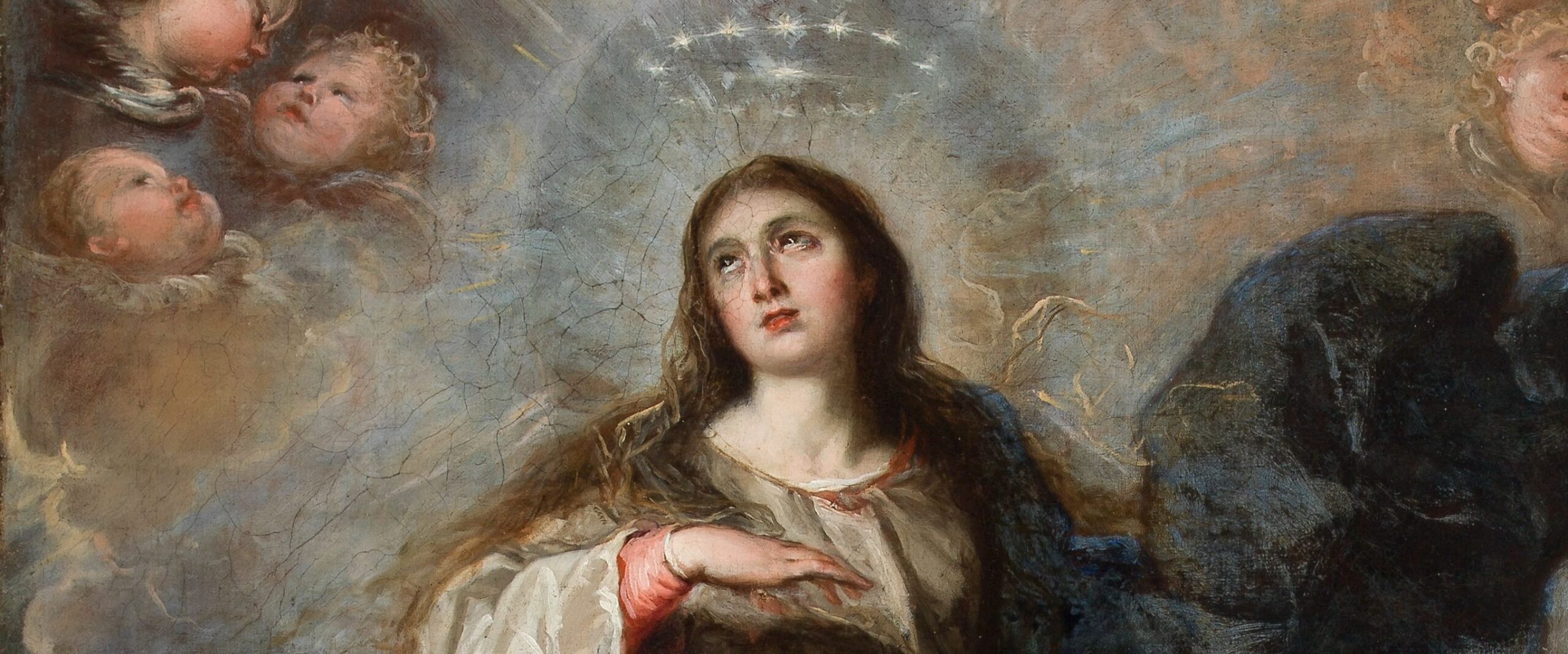
Mary is the perfect model of the effects of grace in earthly life. Go deeper with Saint John Paul II’s encyclical Redemptoris Mater, on how Mary fully welcomed the grace of God.
Deepen your studies: explore Mariology, Marian Theology, Marian apparitions, and the Postgraduate Program in Mariology.
Postgraduate Program in Mariology
Would you like to deepen your formation in Mariology? Discover the Postgraduate Program in Mariology of Locus Mariologicus, an academic program that unites theological rigor, spiritual life, and the living tradition of the Church.


Responses