Learning to Contemplate Like Mary

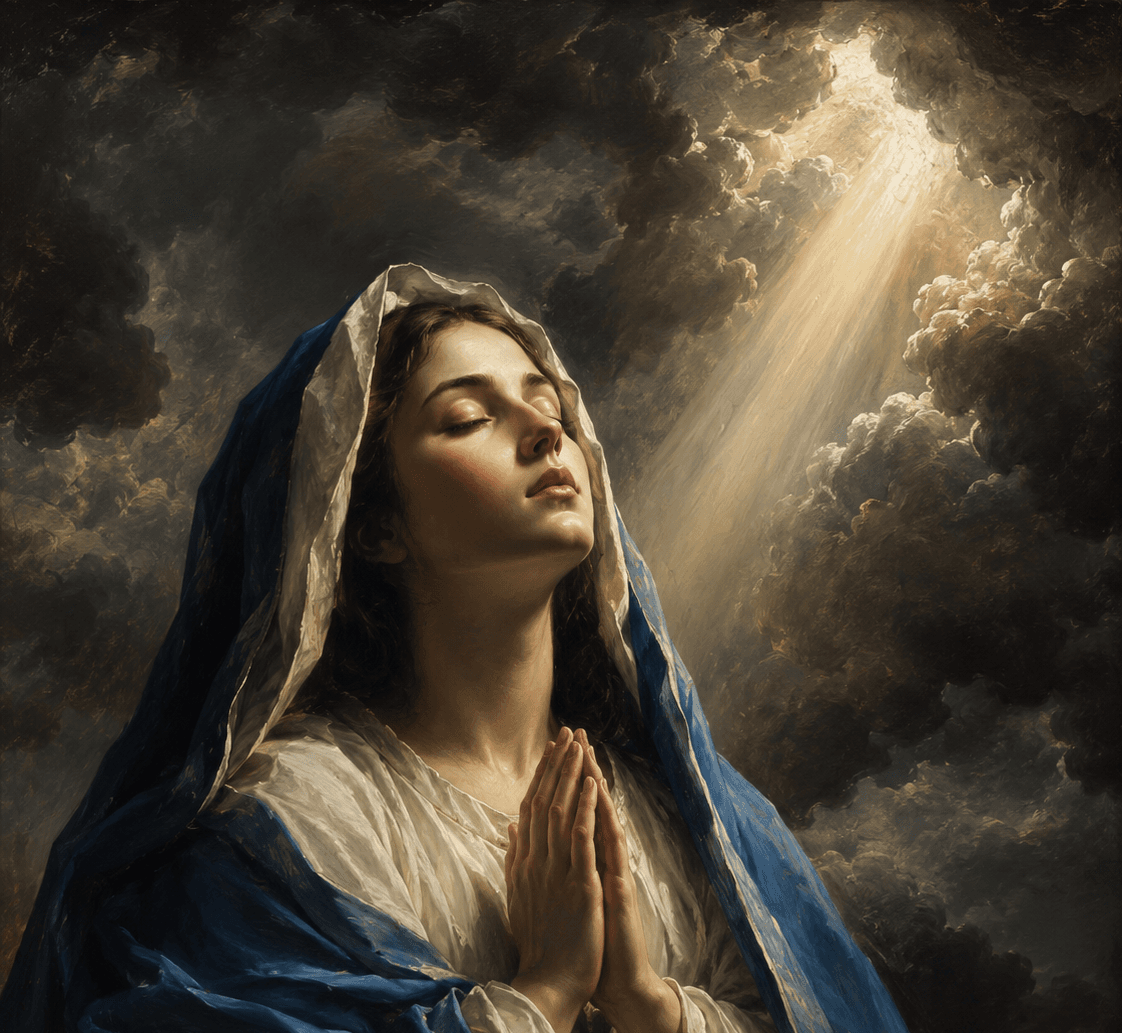
Prayer and ContemplationIn spiritual life, prayer and contemplation are as essential as lungs are to physiological life. Prayer, involving more words, listening, and speaking, is necessary, as is contemplation, which relates more to looking and, thus, to the altar. To become prayerful individuals, to become like sarces in a garden, we need both prayer and contemplation. Prayer, without contemplation, risks becoming a purely cerebral and mechanical prayer, falling into the danger mentioned by Jesus of “multiplying words as do the Gentiles” (Mt 6:7). Only contemplation can allow for a prayer that, while involving reading, meditation, and even spoken words, is done with interiority.On the other hand, in the Christian view, contemplation needs prayer, the Word, and listening. Contemplation that consists merely of looking and concentration risks becoming narcissistic and false mysticism. The true silence that contemplation seeks is not that of the desert, but the silence that makes the Word audible, that allows one to hear the Spirit guiding the ways of God and leading to encounter the Lord who comes.The word “contemplation” is translated from the Greek term “θεωρία.” However, while “contemplation” derives from Latin “contemplari,” “θεωρία” comes from Greek “θεωρεῖν.” Thus, we find two meanings of contemplation: the “vision” and the “temple.” Yet, both converge in a single meaning: contemplation always starts from the contemplator, situated in a specific place that becomes the viewpoint from which he or she observes. Everything we see and tell is organized around this center. The “temple,” in turn, represents the organization of our lived reality around a center in which we place God.In Christian faith, the center of this organizing activity is the Cross, the throne of the sacrificed Lamb, the heart of the Church and liturgical action, from which the gift of the Spirit flows. The Cross and Pentecost express and actualize the mystery of Christ’s death and resurrection, dynamizing the centrality of faith and liturgy, which is an action of concentration and de-centering in the life of the Church. On the path of faith, the life of each Christian also participates in this ecleial concentration and de-centering mystery.However, the work of concentration and de-centering is impossible without a solid center. That center is the presence of God’s Spirit in us, the sentinel of Jesus reigning in our hearts from his Cross. Therefore, to be contemplatives of the living God, inhabited by Him, listening should be attentive to the Word, which has become a parable in our time, and looking should be piercing, capable of seeing the Image consubstantial with the Father, in his Icon, that is, in every visible image of the eyes of flesh.
The Incarnation of the Word of God
We can pray and contemplate with Mary from the event of the Incarnation of the Word of God. However, this understanding is acceptable only if we recognize that there is no contradiction in the fact that God, who is pure spirit, could incarnate.How could an immaterial God become matter?In the Prologue of the Gospel of John, we read: “In the beginning was the Word, and the Word was with God, and the Word was God” (Jn 1:1). This unusual translation highlights the similarity of attitude between the Word of God and the word directed by God to his prophets (cf. Is 38:4, Jr 1:2, 4, 11, 13, Ez 6:1, 7:1). The Greek phrase πρὸς τὸν θεόν (= *to God*) indicates the constitutive orientation of the Word of God, and this orientation remains in him, vivifying every word and gesture: *everything comes from God and is oriented to God*.In this Word of God, who is God, is contained, even before creation, the creative plan, called in biblical terms “*divine wisdom*”. It is thus understood that to be contemplative means to be wise, not according to worldly mentality, but according to “*the thought of Christ*” (1 Cor 2:16). This heavenly wisdom consists in discerning God’s plan in human things and events, in seeing everything with God’s eyes, for everything is like a word of God, which comes forth from the unique Word who became flesh and leads to “*understanding*” of him.We also read that God, who had spoken many times and in various ways to the fathers in ancient times through the prophets, spoke to us in recent times through the Son. This Son, who is the glory of his glory and the exact expression of his substance, is the image of the invisible God, generated before all creation (cf. Heb 1:1-3, Col 1:15). Therefore, *the unique Word of God*, the Word who became flesh in Mary’s womb, *is the whole expression of God* and also *the whole expression of creation*: *in him is concentrated the meaning of all of God’s words, both those that create and those that give meaning to creation*.This has a profound consequence for faith life. When we read the Sacred Scriptures, we encounter “*words*”, but these words, now that the Word has become flesh, are fulfilled, accomplished, concentrated in the unique Word who “*pitched his tent among us*” (Jn 1:14). Jesus holds the key to revealing the meaning of every word that came from the mouth of the patriarchs and prophets. Therefore, everything we read in the Scriptures is a word that comes from his mouth, it is his broken bread for us who unite ourselves to him. The Word of God, with the gesture of the Incarnation, becomes matter, assuming a voice and a face of its own, to be heard by our ears and seen by our eyes. He draws near to man, becoming a parabolic Word (that is, a Parable) and reveals himself to man, becoming a visible Image (that is, a Sign: an image that prompts us to think, through what it shows, of that which is invisible and cannot be seen with the eyes of the body). Thus, all Scripture becomes parabolic, because the Word, which was turned toward God, upon its Incarnation, also turned toward man, placing itself beside man and thus becoming a Parable. We need to recognize this Word that lives beside us and that constantly addresses us.It seems that the Word is beside us to make the journey of life with us, and we can only understand it by accepting to walk with Him. And only on the path, after the decision to adhere to Him, can we come to understand Him through a relationship with Him. The parabolic dimension encompasses all of God’s revelation, achieved through words and also through gestures and events. Everything happens as it did with the disciples of Emmaus, who heard the explanation of the Scriptures and recognized Jesus in the act of breaking bread.We can infer that there are two consequences of the Incarnated Word of God: He becomes a Parable from the Word (a word always spoken beside man) and a Sign from the consubstantial Image of the Father (an historical image that shows Him in every event of human existence). And He radiates in many words and parables, in many images and gestures (common and extraordinary), so that we may find our way to Him. In this path toward the incarnate Word, Jesus Christ, Mary is our mother and teacher, guiding us to use our ears and eyes to move from words to the Word and from images to the only Image of the invisible God. Therefore, “Blessed are your eyes, for they see, and your ears, for they hear” (Mt 13:16). This reference to eyes and ears expresses an anthropological law: man opens himself to reality through the two windows of hearing and sight. In philosophical tradition, hearing and sight are considered the senses par excellence, meaning they are the bodily openings of the mind that allow man to relate to the reality around him.Mary, and consequently the Church, in revealing herself and leading us to the Lord, respect this human structure. In the Church, alongside the tradition of Scripture, developed the tradition of sacred images, which in some way make the Word and the Image of God sensible. We can expand our hearing through contemplation: a deep understanding of revelation cannot neglect sacred iconography.At this point, we can grasp Mary’s role in prayer and contemplation of God’s Word. Mary is always with Jesus, totally related to Jesus: “just as the Word is totally turned toward the Father, Mary is totally turned toward the Son.” From this comes her exemplary role in salvation. In accordance with this function, Mary shows us how to listen to the Word through words, how to see the consubstantial Image of the Father by looking at divine charity icons, and how to become dwellings of the Holy Spirit, praising God the Father in Christ Jesus.“No creature is so oriented toward Christ as Mary, who is prayer, an absolute direction toward Christ.” Mary also shows us how to become oriented toward Christ, how to direct ourselves toward Christ, and how to be prayer and contemplation. To do this, three stages are imposed, and Mary helps us achieve them:– From parable to Word, listening to God’s words. – From icon to Image consubstantial of the Father, looking at icons (historical configurations of salvific events) with faith. – From having a contemplative orientation to becoming contemplation of the living God who walks with us and by our side.Listening to Mary is the key to understanding the Word, while looking is the key to seeing the Invisible. With her ear and eye, we can inflame our lives with the fire of the Holy Spirit and become those “burning presences” that the Father seeks, as Jesus revealed to the Samaritan woman: “Believe me, woman, the hour is coming when true worshipers will worship the Father in spirit and truth. And the Father seeks such worshipers” (Jn 4:23).The Attentive Listening of Mary
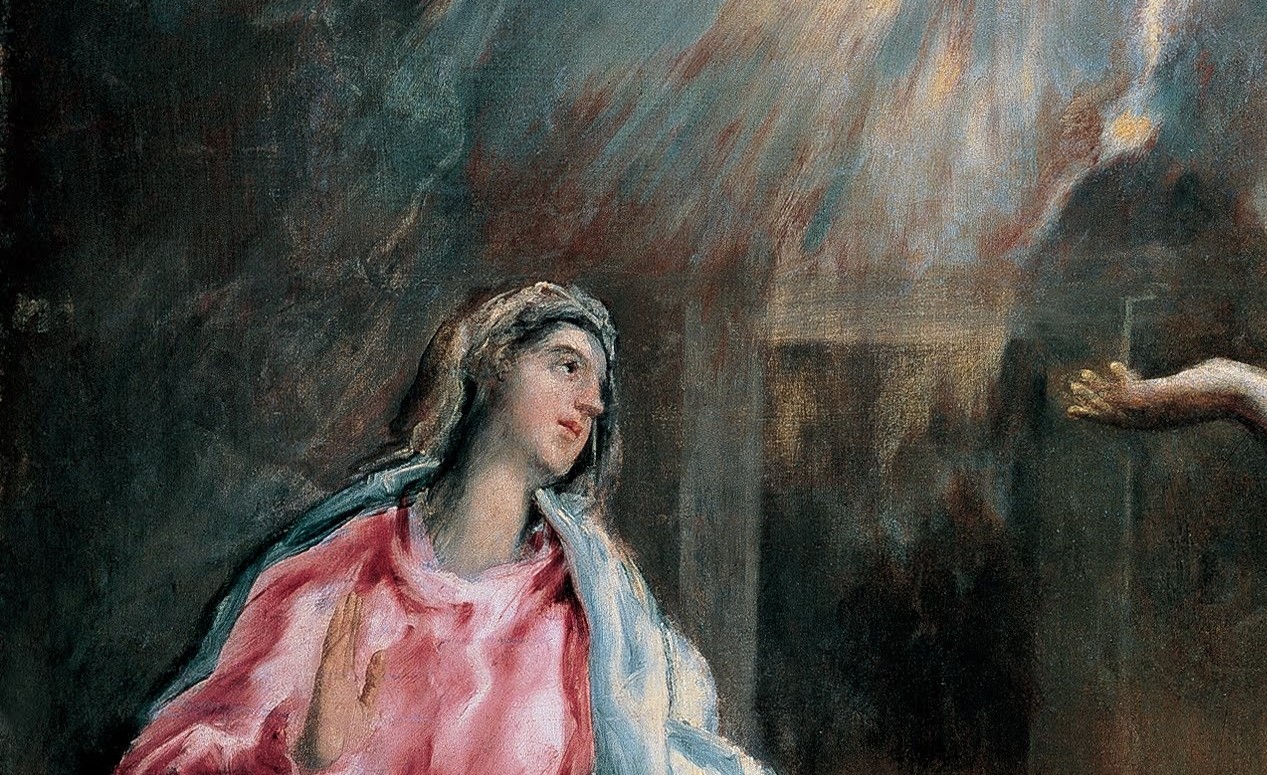
To grasp the depth and breadth of Mary’s attentive listening, we must descend to the grotto of the Nativity in Bethlehem and relive the visit of the shepherds to the manger of Jesus. The shepherds came and told of many wonderful things that had happened that night while they kept watch over their flock. “And all who heard were amazed at the things the shepherds told. Mary, meanwhile, kept all these things, pondering them in her heart” (Lk 2:18-19). Here, Mary’s listening is meditation, and to understand her attitude, we must know that to meditate means to gather, to unite, to collect.Mary practiced meditation on the Sacred Scriptures and meditated on all things, for she gathered in her heart everything she heard and understood about God: she united word to word, event to event, decision to decision, love to love. Thus, she delved deeper and deeper into the mystery of God and the understanding of His Word. All this work of meditation is marked by great discernment: Mary knows what to accept and what to set aside. This gift of hers is especially evident in the narrative of the Annunciation (Lk 1:26-38). Mary hears and sees truly extraordinary things. And she is a devoted woman, a lover of the Lord. She is called “gracious.” An angel assures her that “the Lord is with her” and that she has been chosen to be the mother of the Messiah, who will sit on David’s throne.However, Mary does not get carried away. It would seem that all this does not go to her head, but rather that she takes a distance attitude and submits the angel to a verification: “How can this be? I do not know a man.” The angel responds accurately, providing all the explanations she seeks, and concludes that the one who will be born of her will be conceived by the Holy Spirit. Then Mary closes her discernment, her meditation, by accepting the angel’s words: “If it is to be willed by the Holy Spirit, there is no problem. Let it be done to me, then, as you have said!”For Mary, this is enough. She can immediately rebuild everything, from a verse to an entire psalm, from a detail to an entire episode, because the Word of God is familiar to her. Through meditation, slowly, Mary reaches the Word of God, conceiving Him in her heart even before her womb. “What is in the heart of the Son is in the heart of the Mother”: Mary and Jesus live in profound harmony. Only thus can we understand the episode of the wedding at Cana, Jesus’ reaction to Mary’s news of the lack of wine.I believe Mary did not accelerate the time of Jesus’ miracles, but in her prophetic spirit, she saw Him coming and prepared everything so that the transformation of water into wine would be received as a moment of divine mercy. The miracle at the wedding at Cana reveals the depth of Mary’s prophetic spirit, rooted in the Scriptures and entirely focused on the revealing Word. To Jesus’ observation: “My time has not yet come” (Jn 2:4), Mary does not respond, but directs the servants: “Do whatever he tells you.”Mary knows that the hour is near. And this knowledge comes from her prophetic spirit. Thus, we understand how our attentive listening to the Word of God becomes skilled: we understand parables, words with collateral meanings that serve to “reveal” (to those who adhere to Jesus) and also to “hide” (from those who do not adhere to Him), and then we combine words and gestures to discover “the one Word and the one Gesture: the Cross,” the revelation and gift of God’s love.One might say that Mary listens to the words and understands the parables through “silence” and “vigilance,” which make the Word audible, the wonder at the Speaker’s understanding, the memory that holds in personal intimacy the path with the Word. As a result, meditation brings about a deep conversion of our freedom, which is the reason for our reason, completely orienting us toward the Word of Life. Meditation on the Word slowly becomes a relationship with Him who speaks, and contemplation of Him who, though remaining hidden, allows His friends to find and see Him: “the attentive listening to the Word provokes a gaze capable of penetrating the mystery.”Mary’s Penetrating Gaze
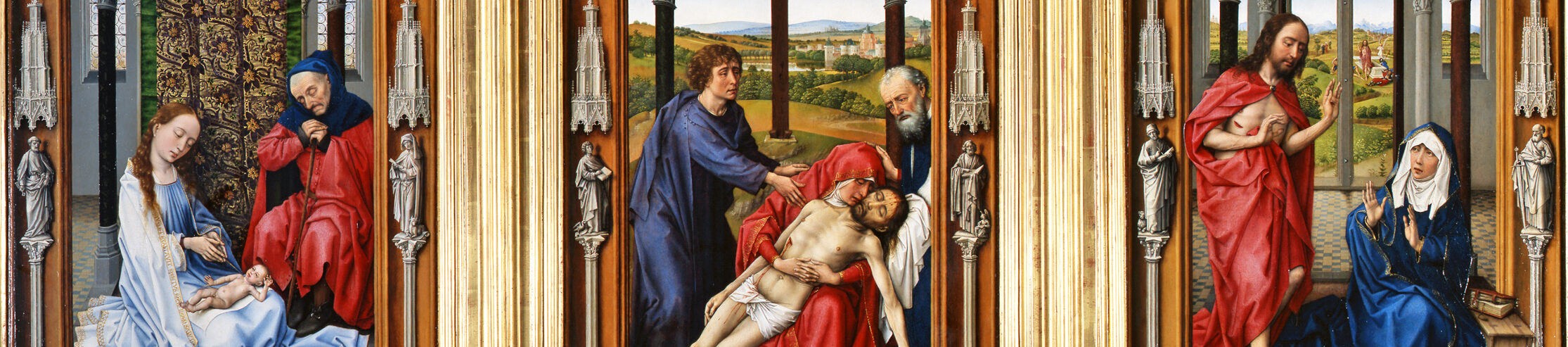
To understand Mary’s gaze, her ability to peer with faith into the mystery of God’s love, we need to ascend with her to the Cross, at the feet of Jesus’ Cross. Here, Mary sees what others do not: her prophetic gaze, “the penetrating look” (Num 24:3), catches a glimpse of the Presence in the supreme manifestation of divine love. We read that “all the crowds that had come to witness the event, turned away, beating their breasts, while Jesus’ friends and the women who had followed him from Galilee stood at a distance, watching all that was happening” (Lk 23:48-49).The event of Jesus’ death is called by Luke a “theoria,” a Greek word with profound meaning: theoria was the ultimate explanation of everything. Luke finds on the Cross that explanation for everything, and with Luke, Mary too, who sees what others do not see, for her eyes are washed clean by tears and torn by pain.To penetrate with the gaze into the mystery of God’s love, it is necessary that first the mystery penetrates the gaze, softening the heart. Prayer expressed through the gaze, both outward and inward, flows from the supreme manifestation of God’s love for humanity. The Cross becomes, thus, the “heart of contemplative life,” because it is the place where love is poured out upon us. The Cross is the “icon of God’s charity,” as Saint Maximus the Confessor beautifully expressed, the full gift of God’s love to humanity. It is thus possible to understand what the Second Council of Nicaea (787) affirms in its dogmatic definition, specifying the type of veneration reserved for sacred images. It is not, according to our faith, a true worship of latria, which is reserved only for the divine nature, but a worship similar to that given to the precious and life-giving image of the Cross, to the holy Gospels, and to other sacred objects, honoring them with the offering of incense and candles, as was customary in ancient times. For the honor paid to the image is transferred to him whom it represents; he who venerates the image, venerates the person represented in it.At this point, it is clear that if we wish to grow in prayer, in contemplation of the mystery of the Cross, which is the throne of the Lamb around which the Church gathers, we need to discover, perhaps rediscover, the iconographic tradition of the Church. There is an iconography in the Church of the East and West: the first is more figurative and finds its most characteristic expression in icon painting (or rather, writing), the second is more abstract and finds its most characteristic expression in architecture (especially Gothic).Today, there are still unique opportunities: the Cross, the Crucifix, the Paschal Candle, the Altar are images to be deciphered and internalized, which enter as sacred images into the liturgical action. There is also a rediscovery of the art of icons, both Latin and Byzantine, which offers a unique opportunity for prayer. However, to “read” these images, a method is necessary, otherwise, we can fall into sentimentalism or attribute meanings completely freely, which would not favor wise contemplation, in harmony with the living tradition of the Church and in tune with the liturgy.If an icon is understood, receiving its service of reference to the archetype, then it allows for *lectio divina* with greater depth and clarity than a text from Sacred Scripture can do. A positive method for reading icons can be summarized in five moments:– Theme. – Narrative. – Stimulus. – Distance. – Labyrinth.Discovering the theme, even with the help of the inscription, means identifying the text of Scripture to which the icon refers. Each icon must make visible, through drawing and colors, what Scripture announces with words. The theme is then expressed in the icon through a visual language, creating a kind of narrative, a sequence of images that makes the icon a visible equivalent of the invisible reality it refers to and believes in.The stimulus relates to the function of colors, because color is a psycho-emotional stimulus. A correct reading of the icon allows to identify the central color and the secondary colors, which harmonize like the notes of a music. The chromatic aspect and its implicit symbolism are responsible for the therapeutic power of icons, capable of healing the imagination and freeing it from the aggressiveness of perverse images.However, it is also necessary to maintain distance from chromatic stimuli, because man is not only imaginative (night), but also rational (day). We are led to this operation by the discovery of the icon’s perigram, the subtle geometric and abstract symbolism.Every icon has its secret, offers its treasure, beyond what is immediately seen. And this treasure suggests the symbol of the labyrinth, because the reading of the icon is like a path that leads to the treasure room, to celestial Jerusalem, as in the labyrinths we find in the chants of certain ancient churches, walked on knees by penitents, in place of pilgrimage to the Holy Land. Each icon presents itself as a small iconostasis, which hides and reveals, for the discerning eyes, the mystery of faith. It is like a labyrinth to be walked on knees, slowly, until the point of radiation that burns our gaze is discovered, making us think with love about what is real, but invisible.The fire that burns the gaze, when introjected, ignites the heart and warms prayer and contemplation. If an icon is not consumed by the gaze, it remains as an external surface, perhaps so beautiful that it is looked at repeatedly, until it becomes respectable. This could result in idolatry, an impious manipulation of the icon.> Mary, the Contemplation of GodMary fully realizes the divine theory.In other words, contemplation, as both theory and temple, becomes a complete understanding of God’s love for man and, at the same time, an example of salvation, guiding our existence towards God. In the Mother of Jesus, contemplation becomes perfect, both as theory and as temple. “All who are guided by the Spirit of God, they are children of God, and your body is a temple of the Holy Spirit who is in you, which you have from God” (Rom 8:14; 1Cor 6:19).Contemplation, as theory, finds its meaning at the Cross, from where Jesus pours out the Spirit. As a temple, it finds its meaning at Pentecost, which places Jesus at the center of the Church as the source that flows into eternal life: “Jesus, lifting up his voice, said in a loud voice, ‘If anyone is thirsty, come to me and drink, he who believes in me, as the Scripture says, ‘Flowing rivers of living water will be within him’ This he said about the Spirit whom those who believe in him were to receive. For the Spirit had not yet been given, because Jesus had not yet been glorified” (Joh 7:37-39).Christian, evangelical contemplation is not philosophical speculation, but an event that involves God’s charity and connects the Cross with Pentecost, through “the love of God poured out in our hearts by the Holy Spirit who has been given to us” (Rom 5:5).Mary is the contemplation of God, because she is the dwelling place of the Holy Spirit, the temple of the Holy Spirit. Mary is open to the Giver in the gift she receives. As charismatic, she is continually transformed into a spiritual woman, she gives herself to the Giver, always receiving God’s gift. Thus, she is totally oriented towards God.We should not be surprised to find Mary in the Cenacle, not far from the Cross, with the apostles and other disciples of Jesus, “who persevered in prayer, with Mary, the mother of Jesus, and with his brothers” (Acts 1:14), awaiting the coming of the Holy Spirit promised by Jesus. In the Cenacle, Mary leads the prayer of Jesus’ disciples: it seems that, in another dimension, she continues her service at the wedding in Cana. On Easter night, Jesus presented Himself in the midst of the Cenacle, with the doors locked, to dispel His disciples’ fear through the gift of peace and the Spirit. Now we are once again in the Cenacle, and Jesus is not present, for He has ascended into heaven. Yet Mary is there (sometimes iconographic art places her in Jesus’ place), leading the prayer of the nascent Church, gathering it around her as a center.Mary can truly be the center in the Church’s prayer because she is totally focused on Christ. She is completely united: “Mary and Jesus are one.” Mary is the temple of the living God, for in her womb, in her heart, and in her spirit, the Spirit of God has found a permanent dwelling place. It is no exaggeration to say that “Mary does not pray, but is prayer” and “Mary does not contemplate, but is contemplation.”The contemplative Christian is one who has centralized and concentrated his or her entire existence in Christ, becoming the dwelling place of the Holy Spirit. The dwelling place is stable, and the concentration is continuous. The contemplative lives and understands all that happens to him or her correctly, for God’s Word resounds in his or her heart, keeping him or her in relation with the Speaker.At the same time, the contemplative, deeply centered in Christ, expands the presence of the Spirit that dwells within him or her, radiating God’s love in the Church and in the world. This clarifies a beautiful definition of contemplation by Saint Gregory the Great: “The contemplative life is to live the love of God and of one’s neighbor with all one’s heart and with the single desire to adhere to the Creator.”Deepen your studies: explore Mariology, Marian Theology, Marian Apparitions, and the Postgraduate Program in Mariology.Regarding Mary as a model of contemplation and interior life, refer to the Apostolic Exhortation Marialis Cultus by Pope Paul VI.Graduate Studies in Mariology
Do you want to deepen your formation in Mariology? Get to know the Graduate Program in Mariology from Locus Mariologicus, an academic formation that combines theological rigor, spiritual life, and the living tradition of the Church.Serious about studying mariology?
This article arises from the works in the Locus Mariologicus library. The Graduate Program in Mariology takes you to the same sources, with academic guidance: Scripture, the Fathers of the Church, and the Magisterium, from the first dogma to contemporary issues.

Responses