Brief Mariology, According to Saint Bonaventure of Bagnoregio
Introduction
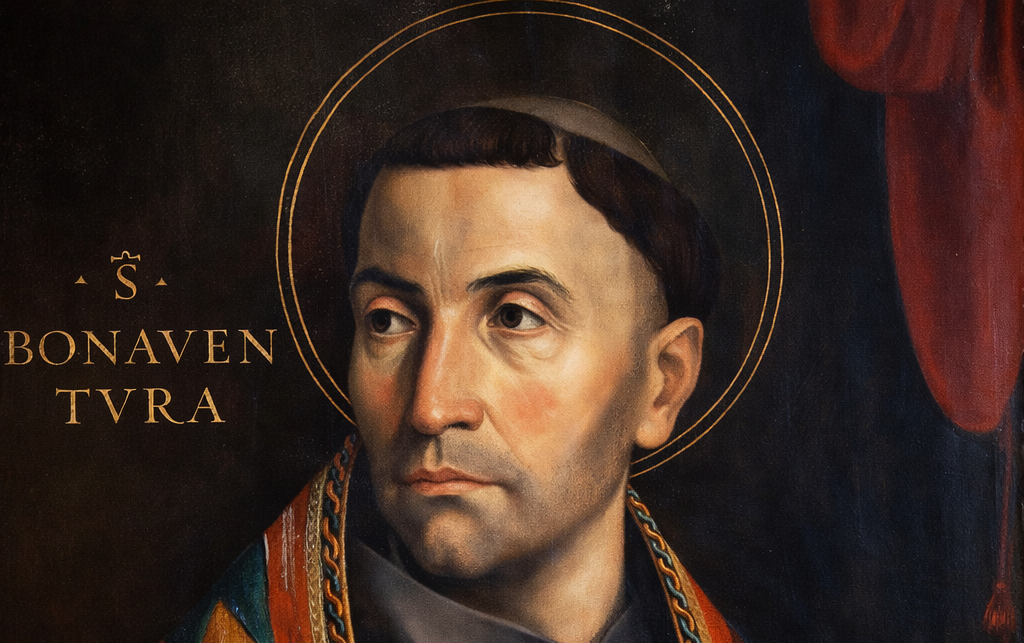
The thirteenth century is the golden age of Scholasticism. It should be emphasized that with it, in the history of the Church and of the world, a particular moment begins for theological systematization. In the first organic project of this body of knowledge, Mariology is also found, increasingly situated within the context of Christology and therefore intimately bound to it. Later, the composition of autonomous treatises on Mariology and on Ecclesiology would begin. Nevertheless, the person of Mary and that of the Church would remain, completely and for a long time, foreign to each other (cf. M. Semeraro, Maria e la Chiesa: mutamenti del tema in epoca medievale, in E. M. Toniolo (a cura di), La Madre del Signore nel Medioevo e nel rinascimento, Centro di Cultura mariana “Madre della Chiesa”, Roma 1998, p. 175). In this period, Mariology was extensively treated, among others, in the thought of Saint Bonaventure of Bagnoregio (Saint Bonaventure (*1218, Bagnoregio, Viterbo, † July 15, 1274, Lyon, France), a medieval mystic and thinker, a doctor at the Studium of Paris, gave Scholastic theology the form of a sapiential synthesis in the footsteps of Augustine. The most mature expression of this theological humanism is found in the “Itinerarium mentis in Deum”. A disciple of Saint Francis, he guided his Order with superior wisdom (1257-1273) and was called “second founder and father”. Bishop and Cardinal of Albano, he took part in the Second Council of Lyon and worked for the unity of the Church, in Missale Romanum, Città del Vaticano 1983, p. 359). In the present study, we consider the most important arguments present in the Mariology of Saint Bonaventure, which may be summarized in the following themes: the motherhood of Mary, the greatness of Mary, her spiritual beauty, Mary as collaborator in the redemption and as a model to be imitated.

The Greatness of Mary
Bonaventure appears as one enraptured by the sublime greatness of Mary, which no tongue in the world could express. It is a greatness that places her above all creatures and makes her worthy of being honored by men, by the angels, and by the saints. He speaks of her with admiration, drawing on evocative metaphors: Mary is the germinating earth, the fruitful root, the gushing spring, the full moon, the star of the sea, the dawn that breaks, and the resplendent sun (cf. B. Commodi, Canto francescano a Maria, San Paolo, Cinisello Balsamo 2011, pp. 75-92). This last metaphor is usually attributed to Jesus Christ, the “sun of justice”, but since the Mother is intimately united to the Son, it can also be referred to her, and so Mary is the sublime woman who rises over the world like the sun and possesses the most beautiful properties of the sun: “the luminosity of its rising, the swiftness of its course, the sublimity, that is, the incomparable preeminence in relation to the other creatures, and the efficacy of its action” (De Nativitate Beatae Mariae Virginis, in Opera Omnia, Quaracchi, vol. IX, q. IX, p. 708. cf. also the explanation in the same place). Bonaventure fixes his attention on the greatness of the Virgin when he places her in relation to the three Persons of the Most Holy Trinity, from whom she receives every gift: “The whole Trinity, O Mary, knew you as the bride of chaste love, as the house of holy indwelling, as the workshop of an admirable work. In distinct terms we say: the Father knew Mary as the dwelling place of His majesty […], the Son recognized in her the principle of His humanity, and the Holy Spirit, the sanctuary of His goodness, in which He gathered most fully and beyond measure the charisms of the graces” (De Assumptione Beatae Mariae Virginis, in Opera Omnia, Quaracchi, vol. IX, q. IX, p. 694).
Mother of God
Clearly, all this benevolence and action of Mary on behalf of the people of God are rooted in her total motherhood in relation to Jesus. It is a bond with God and with men, as clearly appears in a passage of the Fourth Sermon on the Annunciation: “The Creator of all things rests in the tabernacle of the virginal womb, because here He prepared His bridal chamber, so as to be able to become our brother. Here He set up a royal throne, so as to be able to become our prince. Here He put on the priestly vestments, so as to be able to become our pontiff. By reason of the nuptial union, she is the Mother of God. By reason of the royal throne, she is the Queen of Heaven. By reason of the priestly vestments, she is the advocate of the human race” (De Annuntiatione Beatae Virginis Mariae, in Opera Omnia, Quaracchi, vol. IX, q. IX, p. 672a). Bonaventure explains the meaning that the Incarnation has for the Mother of God herself by means of the combination of three types of merit: congrui, digni, and condigni. The question is presented in the Commentarius in III Librum Sententiarum, where, first of all, the author emphasizes that Mary merited to conceive the Word by the merit congrui, relative to the whole of her virtues: “Because of her great purity, humility, and kindness, she was fit to become the Mother of God” (In III Librum Sententiarum, dist. IV, art. 2, q. 2, conclusio, p. 107b). After the angel’s announcement and her consent, the Virgin of Nazareth merited to become the Mother of God also because of her dignity, which always remains a gift and a grace received from the very richness of the Holy Spirit.
The Immaculate Conception
Despite this underlying openness, which allows a glimpse of the possibility of accepting the immaculate conception, Bonaventure, faithful to his methodological principles — Scripture, reason, and tradition — once again denies the fact: for Mary there is no exemption from original sin, but sanctification after having contracted it (In III Librum Sententiarum, ibidem, p. 15). This position is, in the author’s eyes, the best, because it is the most common, the most rational, the safest, and the most in keeping with piety: “It is more common, I say, because almost all are of the opinion that Mary received original sin, which is proved by the fact that Mary was subject to many penalties, and it cannot be said that she suffered them for the redemption of others (…), but it must be said that she contracted them. It is also more rational because nature always precedes grace, both by priority of time and by logical priority of order. As Augustine says, one must be born before being reborn, just as one must be before being well. The soul, therefore, had to be united to the body before receiving grace. Now, since that flesh was infected, it transmitted to the soul the infection of original guilt. It must therefore be logically concluded that Mary’s soul was first infected by the guilt of origin and afterward sanctified. It is safer because it conforms to piety and to the teaching of the saints. The saints generally, when they speak of this matter, except only Jesus Christ from the universality of guilt, for it is said: All have sinned in Adam. Of those of whom we speak, we do not find one who has said that Mary was immune from guilt. It is more in conformity with piety and with faith because, although one must show great reverence to the Mother and have singular devotion for her, much more must be done toward the Son, from whom all honor and glory come to the Mother” (In III Librum Sententiarum, dist. III, pars 1, art. 1, q. 2, conclusio, p. 68a). Bonaventure then speaks of a twofold sanctification of Mary: the first before her birth and the second at the moment of the conception of the Son. Bonaventure’s prudential and at the same time possibilist position contributes to the deepening of the question, which would be taken up again by John Duns Scotus. Meanwhile, the cult and the feast were already widespread, so that the Doctor emphasizes that the immaculate conception had as its aim to celebrate the sanctification of the Mother of the Lord, not that pious opinion which, in his view, did not adequately highlight the redemption wrought by Christ.
The Assumption of Mary
In comparison with the question of the Immaculate Conception, the theology of the Assumption developed by Bonaventure is more comprehensible and more easily shared, even for our own mentality. Moreover, the Franciscan master does not fear to face at least two arduous questions: the death of Mary and her entrance into Heaven in soul and body. These are aspects that generated not a few discussions in the centuries before the saint and that would emerge again, above all the first, in the period immediately following the promulgation of the dogma in 1950. The Assumption retains the strong Christological character typical of our Doctor, which is why it is welcomed, justified, and grounded. Because of Mary’s unique holiness, that is, because of the sanctifying work of the Holy Spirit, as is read in the expression that the Mother of the Lord is “full of grace”, to the point of placing her at the highest degree of holiness, Bonaventure writes: “The Blessed Virgin chose for herself the absolutely better part, because she became the queen of mercy, while the Son is constituted king of justice. Now, mercy is better than justice, for mercy always prevails in judgment and: the mercy of the Lord extends over all His creatures. In the seventh place, she was further distinguished in relation to the Son, for if He sits at the right hand of the Father, that is, He was made a sharer in the best goods of the Father, she was seated as Queen at the right hand of the Son, and the Gloss says that she was made a sharer in the best goods of the Son. But among the best things, this represents the optimum: Mary, therefore, chose for herself the absolutely better part. And this is evident, since no good whatever was lacking to her” (De Assumptione Beatae Virginis Mariae, in Opera Omnia, Quaracchi, vol. IX, q. IX, p. 703b).
The Spiritual Beauty of Mary
Bonaventure, in his dense reflections, brings out not only the greatness of Mary but also her incomparable beauty: “Mary is the most beautiful Virgin whom the Lord prepared for His Son” (In Vigilia Nativitatis Domini, in Opera Omnia, Quaracchi, vol. IX, p. 98). It is a spiritual beauty that coincides with holiness and with virtue, and it fills Bonaventure with wonder: if “it is so sweet to contemplate with the eyes of the body the sun that shines on the horizon, how much sweeter and more joyful it is to contemplate the splendor of the most glorious Virgin Mary” (De Nativitate Beatae Mariae Virginis, in Opera Omnia, Quaracchi, vol. IX, p. 709).
Collaborator in the Redemption
The goodness of God, who created the world according to a design of love unfortunately frustrated by the sin of man, reaches its highest expression in the incarnation, death, and resurrection of the Son, sent by the Father to redeem the world and to ratify a new and definitive covenant. In this plan of redemption, the role of the Virgin Mary is fundamental, for she welcomes the divine design, making it entirely her own, and thus becomes a precious collaborator of the Redeemer Son (cf. L. Di Girolamo, Maria tra teologia monastica e teologia scolastica, p. 18). Adhering to the word of the archangel Gabriel and surrendering herself docilely to the action of the Holy Spirit, she conceives the Savior awaited for centuries and, as the new woman set against the ancient Eve, she inaugurates the work of redemption: “Therefore, just as the woman deceived by the devil transmitted guilt, sickness, and death to all, so the woman instructed by the angel and sanctified and made fruitful by the Holy Spirit, without any corruption, either in mind or in body, brought forth the offspring who would give grace, health, and life to all who came to her” (Breviloquium, IV, 3, in Corpus Novi Operum, V/2, p. 169). Mary shares in the redemptive mission of the Son not only by her initial adherence, but also by all the other conscious and free “yes” responses pronounced throughout her existence.
The Motherhood of Mary
Thanks to the divine motherhood, Mary is not only the Mother of Jesus Christ, the Son of God, but also the mother of the men and women of every age. In the one generation of the Son, all are children of the Virgin, that is, her children in the Son: “In her holy womb the Son of God introduced human nature so as to be able to join it to Himself and to bring it about that the Creator became our brother and the blessed Virgin became the mother of all the saints. Through the Virgin Mother, God became our Father and the Son of God our brother” (De Annuntiatione Beatae Mariae Virginis, in Opera Omnia, Quaracchi, vol. IX, p. 672). By consenting to be the Mother of the Savior, Mary becomes the universal mother through the ontological union existing between the Head and the members: in giving birth to the Head, she gave birth to the body. In generating Jesus Christ, the Firstborn, she generated all her children. It is a spiritual motherhood, but a real one: “She generated the Son in the flesh and generated us spiritually. She is a mother after the manner of Eve: as Eve generated us for the world, so Our Lady generated us for heaven” (De Assumptione Beatae Mariae Virginis, in Opera Omnia, Quaracchi, vol. IX, p. 706).
A Model to Imitate
Considering the love that this most loving Mother nurtures for her children, Bonaventure, vibrating with authentic and profound love for Mary, warmly invites all men and women to raise every praise to her, with the single caution of “believing nothing concerning her that is contrary to the truth of Sacred Scripture and of the Christian faith” (In III Librum Sententiarum, dist. 3, pars 1, art. 1, q. 1, p. 64). To invoke her every day, at every hour, and with complete confidence, in order to “find grace, mercy, and help at the opportune moment” in her, who is the “mother of highest mercy” (Commentarius in Evangelium secundum Lucam, 1, 70 and 81, in Corpus Novi Operum, IX/1, pp. 109 and 117). To love her with all one’s heart and to venerate her in a special way, as the saints did: “I have never read of a single saint who did not have a special devotion to the glorious Virgin” (De Purificatione Beatae Mariae Virginis, in Opera Omnia, Quaracchi, vol. IX, p. 642). And so, as Bonaventure says, let us follow her, let us imitate her, let us make her attitudes our own: listening to the Word, profound humility, intense piety, prompt obedience, full benevolence, interior beauty, fortitude, perseverance. In doing so, we shall be blessed, because, in loving and imitating Mary, “we are more enlightened in the truths of the intellect and enriched with holy renown and with every good” (De Assumptione Beatae Mariae Virginis, in Opera Omnia, Quaracchi, vol. IX, p. 698). And we shall arrive, full of joy, at the summit of our spiritual itinerary because, forever, “God will dwell in us and with us, and we with Him” (In Nativitate Domini, in Opera Omnia, Quaracchi, vol. IX, p. 125).
Conclusion
The Mariology of Saint Bonaventure of Bagnoregio, set within the theological vigor of the thirteenth century, proves to be profoundly Christological and, at the same time, marked by a spiritual density that unites contemplation and doctrine. In presenting Mary as exalted above all creatures, the Seraphic Doctor does not extol her on account of an autonomous principle, but because in her the work of the Most Holy Trinity shines forth with singular fullness. Thus her greatness, her spiritual beauty, and her motherhood appear as gifts received, realities that manifest the divine initiative and the Virgin’s perfect correspondence to grace.
From this perspective, Mary emerges as a precious collaborator in the redemption, not because she replaces the one mediation of Christ, but because she welcomes, with freedom and fidelity, the design of the Father and remains united to the Son throughout her entire existence. The Marian itinerary set forth by Bonaventure, with its emphasis on holiness, on virtue, and on docility to the Holy Spirit, shows that Mary’s presence in the Christian mystery is not reduced to a devotional theme but belongs to the very understanding of the faith. Even when he takes prudential positions on debated questions, his method, rooted in Scripture, in reason, and in tradition, reveals a theology that seeks doctrinal security without losing its openness to deeper exploration.
For this reason, Mary, in the Bonaventurian reading, remains for the Church not only an object of praise but a pedagogical path for the Christian life. In her are contemplated the features of the perfect disciple, and therefore the believer is invited to imitate her: to listen to the Word, to live humility, to persevere in obedience, and to cultivate the interior beauty that is holiness. In this way, the brief Mariology presented here converges toward its proper end: to lead to union with God. By following and loving Mary, the believer is more firmly oriented to the Son and reaches, with joy, the end of the spiritual journey, when “God will dwell in us and with us, and we with Him” (In Nativitate Domini, in Opera Omnia, Quaracchi, vol. IX, p. 125).
For a contemporary magisterial synthesis on devotion to Mary, the apostolic exhortation Marialis Cultus of Paul VI complements Saint Bonaventure’s spiritual vision of the greatness of Mary.
Deepen your studies: explore Mariology, Marian Theology, Marian apparitions, and the Postgraduate Program in Mariology.
Continue your Marian formation: Explore our resources on Mariology, Marian Theology, and Marian apparitions. Discover the Postgraduate Program in Mariology of the Locus Mariologicus Institute.
Postgraduate Program in Mariology
Would you like to deepen your formation in Mariology? Discover the Postgraduate Program in Mariology of Locus Mariologicus – an academic formation that unites theological rigor, spiritual life, and the living tradition of the Church.
Would you like to study Mariology seriously?
This article is born of the works in the library of Locus Mariologicus. The Postgraduate Program in Mariology brings you to that same source, with academic guidance: Scripture, the Fathers of the Church, and the Magisterium, from the first dogma to contemporary questions.



Responses