Holy Mary, Disciple of the Lord: a dogmatic-liturgical analysis
By Prof. Dr. Daniel C. Afonso · Updated
Holy Mary, Disciple of the Lord: a dogmatic-liturgical analysis
On this fourth day of the Novena of Our Lady of Aparecida we celebrate the Mass of Holy Mary, Disciple of the Lord. It is a title as ancient as time, and as new as the light of each day.
Mary hears the Word, fulfills the promise, makes herself available to the will of the Father, and is the Mother of Jesus. In all this she is the model of the disciple.
Why?
The disciple is the one who listens to the Word, in the Spirit in which it was written, within the Church. This is what discipleship consists of; and Mary? At the Annunciation she listened to the Word, the Spirit came down upon her, and she went, as the nascent Church, to bring the announcement to Elizabeth.

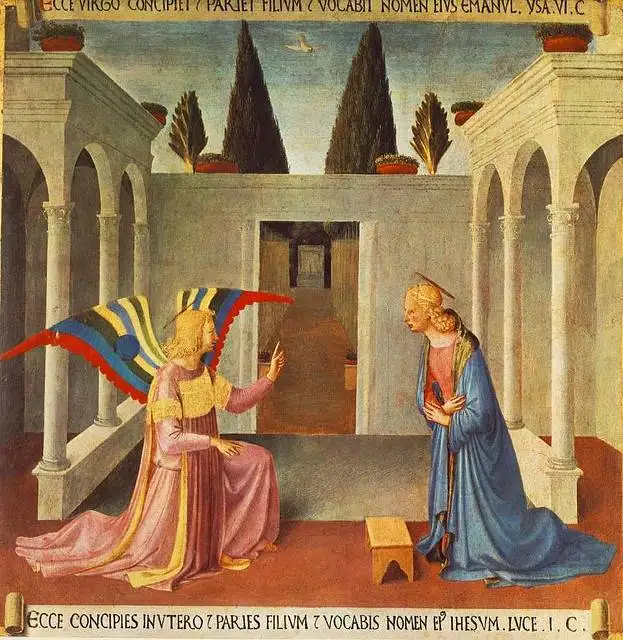
But today the readings go even deeper to speak of the disciple of the Teacher of disciples: the Book of Ben Sira speaks of Wisdom, sought in the Sanctuary, and therefore in the presence of God. And the more it flourished, the more joy increased: think of how the angel addressed her at the Annunciation: kekaritomene, which means something like this: she who has received the karis, that is, grace, from the past and continues to receive it in the fullness of having been chosen and of responding to that predestination from all eternity.
Wisdom offers herself to whoever listens to her; she gives us understanding, moves our heart, is the most precious good and leads us to glorify God. This is what the disciple does, just as Mary does:
- She listens to the Word and is Mother of the Word made flesh
- She moves us to the point of making us agile and practical, carrying everything forward so that the proclamation of the Gospel can reach others
- She leads us to gather all things together and to seek their real meaning, which is often not explicit. And this brings us to the Gospel…
We read the very famous passage of the loss and finding of the child Jesus in the Temple. So far nothing new, but as always we find two elements. The first: the concern, in the Sanctuary, to fulfill the precepts of the Hebrew Law. The Holy Family begins as a Hebrew family, but Jesus fulfills the precept of coming of age. At Passover he is found after three days, a foreshadowing of Easter. After being found, he answers that he was doing the will of the Father. At the Resurrection, after being found, he answers Mary Magdalene in the same way: do not hold on to me, for I must go to my Father.
And Mary, before this event in the life of Jesus and the words that were spoken?
She asks: why? The Son answers, she did not understand, but she kept all these events in her heart.
Here again we have the core of discipleship: to gather, to keep, and to ponder all the meanings of the mystery of salvation that the Master reveals to the disciple.
Let us try to define the disciple: the one who responds to God’s proposal. Mary responds to God’s proposal at the Annunciation before all of us, before all the apostles. She follows Jesus, does not understand the mystery revealed and in the end… keeps the memory, knowing that one day it will make sense.
The Mother becomes a disciple, follows the Son, is with the Apostles and remains faithful at the crucial moments in the history of Salvation that God chose to design with her at each stage, seeking his will in order to put it into practice, and all this through meditation on the mysteries. Without this, we are merely good people seeking a world that is more caring, fraternal and just, but even without God that can be achieved.
What makes us different is that each day we respond concretely to God’s proposal revealed through Jesus, who came to do the will of the Father. Where this leads us, we do not know, but we know our ultimate destination: be it done unto me according to your Word!
To deepen the analysis of Mary as the perfect disciple of the Lord, consult the encyclical Redemptoris Mater of John Paul II, which presents Mary as a model of faith and discipleship for the whole Church.
Deepen your studies: explore Mariology, Marian Theology, Marian apparitions and the Postgraduate Program in Mariology.
Postgraduate Program in Mariology
Would you like to deepen your formation in Mariology? Discover the Postgraduate Program in Mariology of Locus Mariologicus – an academic formation that unites theological rigor, spiritual life and the living tradition of the Church.
Would you like to study Mariology seriously?
This article grows out of the works in the Locus Mariologicus library. The Postgraduate Program in Mariology takes you to the same source, with academic guidance: Scripture, the Fathers of the Church and the Magisterium, from the first dogma to contemporary questions.
Responses