Vocati sumus: The Laborers in the Vineyard and Mary Called from the Morning of Creation
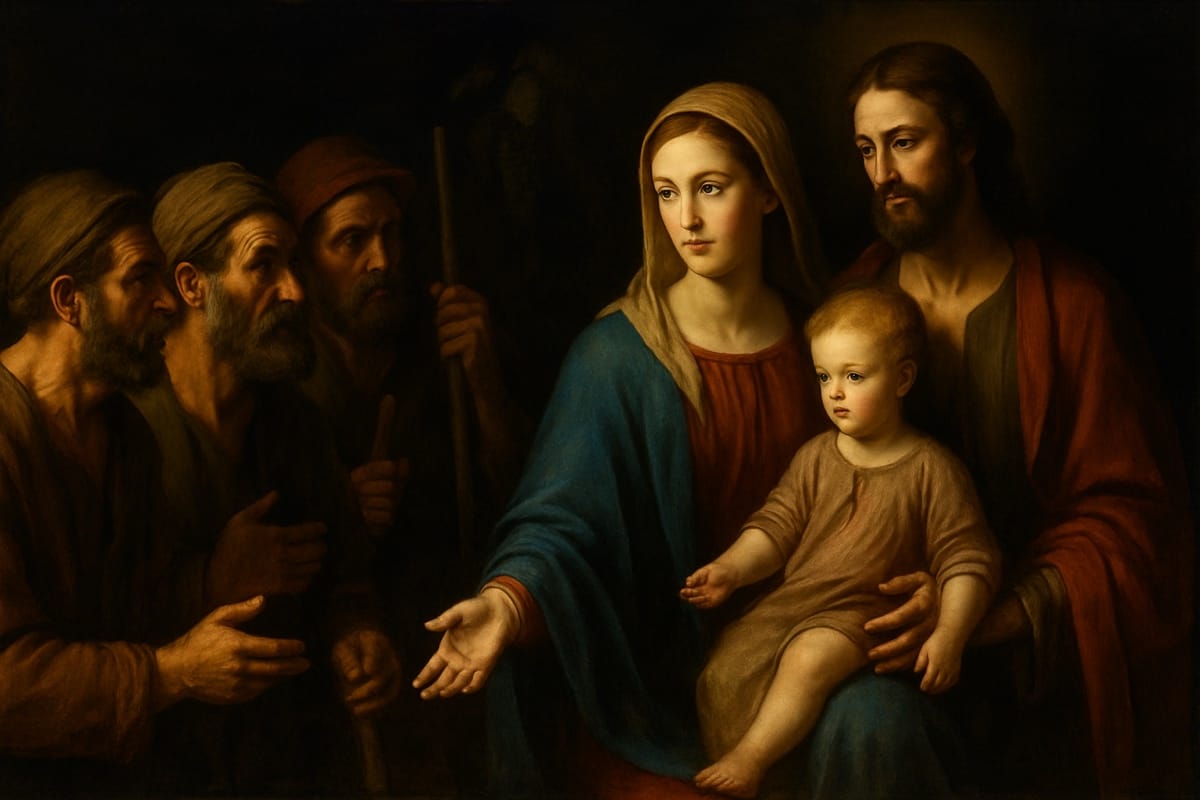
Simile est regnum caelorum homini patrifamilias, qui exiit primo mane conducere operarios in vineam suam. […] Sic erunt novissimi primi et primi novissimi.
Mt 20:1, 16
Mt 20:1-16, the parable of the laborers in the vineyard, is one of the most disconcerting in Matthew: a landowner hires workers throughout the whole day (at dawn, at 9 a.m., at noon, at 3 p.m., at 5 p.m.) and in the end pays them all the same wage, one denarius. Those who worked from dawn complain. The landowner defends his freedom to give the same to all. The conclusion: “the last will be first and the first will be last” (Mt 20:16). The parable is not about labor justice, it is about the logic of grace: the Kingdom is not paid for but given, and the measure of the gift is the generosity of the Giver, not the merit of the receiver.
The literary context is the answer to Peter’s question in the previous chapter: “we have left everything, what then shall we have?” (Mt 19:27). Jesus promised the hundredfold and eternal life, but He adds the parable of the laborers as a warning: the reward of the Kingdom is not proportional to human effort or to length of service. The disciple who began “from the beginning” has no more rights than the one who began “at the last hour”, because neither of them “deserves” the denarius of eternal life. All receive it as grace.
I. “Quid iustum fuerit, dabo vobis”: Justice as Gratuitousness
“Give me what is just” (Mt 20:4), the promise the landowner makes to those he hires throughout the day is intentionally vague: it does not specify the amount. The “justice” of the landowner is not arithmetical proportionality (time worked × wage) but his sovereign generosity. When he pays the same to all, he does not violate justice, he fulfills his promise, but he goes beyond human justice: he gives more than would be expected.
The complaint of those who worked more hours (“these last worked only one hour, and you have put them on an equal footing with us who have borne the burden of the day and the heat”, Mt 20:12) is the complaint of proportional justice against sheer gratuitousness. The landowner does not deny their work, he confirms that they received what had been agreed. The problem of those who complain is not that they received little but that they “cannot bear that I am generous” (Mt 20:15): the scandal of the mercy that makes the unequal equal.
The theology behind the parable is the theology of grace: salvation is not a wage but a gift. Whoever entered the way of the Gospel at the age of seventy receives the same “denarius” of eternal life as the one who was baptized as a child and lived decades of fidelity. The “injustice” of grace is the central scandal of the Gospel, and it is precisely what makes it “good news” for those who arrive “at the last hour”: for the crucified thief, for Zacchaeus, for Paul the “one untimely born” (1 Cor 15:8).
II. “Eamus et nos in vineam”: The Different Hours of Vocation
The parable recounts five moments of hiring: at dawn (πρωΐ), at 9 a.m. (τρίτην ὥραν), at noon, at 3 p.m., and at 5 p.m. Each moment is a different hour of the vocational call: some are called from childhood, others in adolescence, others in adulthood, others in old age. The parable legitimizes every hour of calling as equally valid; there is no “too late” in the Lord’s vineyard.
The history of the Church is the history of these different hours: Augustine called “late” (“late have I loved You, Beauty so ancient and so new”, Conf. X, 27), Saint John of the Cross fruitful only after a prolonged “dark night”, Saint Ignatius of Loyola called after a war wound at the age of thirty. Each one received the “denarius” of holiness not by the seniority of the call but by his availability to the grace that came at his hour.
III. Mary: Called from the First Hour of Creation
Mary is, in the theological tradition, the one who was called “from the first hour”, not only in the sense of baptism as a child but in the sense of the Immaculate Conception: she was “hired for the vineyard” before she existed, in the eternal election of God who prepared her as Mother of the Son. The Immaculate Conception (December 8) is theologically the “first hour” of the parable: Mary was called at the dawn of the history of salvation, before Abraham, before Moses, before the whole economy of the Covenant.
But the logic of the parable also applies to Mary in an unexpected way: the “first hour” gave her no advantage in terms of merit, she received her grace (the Immaculate Conception, the divine Maternity, the Assumption) not because she worked from dawn but because the “landowner” chose to be generous with her in a singular way. Mary’s election is pure gratuitousness of the Father, not payment for services rendered but a sovereign gift given in advance. The Magnificat acknowledges this: “He who is mighty has done great things for me” (Lk 1:49), not “I did great things in order to deserve it”.
Mary’s “first hour” has a dimension for the Church: she who was called before all the others stands in the position of the “first” who are tempted to complain. But Mary never complained, the Magnificat is not an inventory of merits but a song of gratitude for the grace received. The humility of the “handmaid” (Lk 1:48) is precisely the refusal to turn the “first hour” into a title of precedence.
IV. “Nonne licet mihi facere”: The Sovereignty of Mercy
“Am I not allowed to do what I want with what is mine? Or is your eye evil because I am good?” (Mt 20:15), the landowner’s defense is the defense of God’s sovereignty over grace. God’s mercy is not subject to the logic of human proportionality: God can give to the last the same as to the first because what He gives (eternal life) is His own and exceeds every measure of merit.
The doctrine of the Immaculate Conception is the most eloquent example of this sovereignty: Mary was preserved from original sin not because she “deserved” more than any other human being but because God “willed” to be generous with her in advance. The eternal decree that prepared Mary as Mother of the Redeemer is the sovereign decision of the “landowner” who decides to pay the same denarius to the one he hired “at the dawn of the world”.
To contemplate Mary in the light of the parable of the laborers in the vineyard is to learn to rejoice in God’s generosity, not to calculate comparative merits but to receive with gratitude the “denarius” that is given to all. Mary, who sang “He has done great things for me” without calculating whether she deserved more or less than the others, is the teacher of this disinterested joy: she who receives grace with open hands, without keeping it for herself or envying the grace of others.
Postgraduate Program in Mariology
Would you like to deepen your formation in Mariology? Discover the Postgraduate Program in Mariology of Locus Mariologicus – an academic formation that unites theological rigor, spiritual life, and the living tradition of the Church.
Would you like to study Mariology seriously?
This article grows out of the works in the Locus Mariologicus library. The Postgraduate Program in Mariology takes you to the same source, with academic guidance: Scripture, the Fathers of the Church, and the Magisterium, from the first dogma to contemporary questions.




Responses