The Heart of Mary in the Bible


Leafing through a good Lexicon of Words of Sacred Scripture, one is struck by the multiplicity of figurative senses, idiomatic expressions, popular expressions, and even proverbs that have the word “heart” as their point of reference. The notion of heart also occupies a central place in the religion, mysticism, and poetry of all peoples.
In the common language of the people of our time, we frequently find heart and love combined, influencing each other according to a hierarchy of nuances that frequently and deliberately privileges the sentimental and emotional dimension, with particular attention to the sphere of the feminine world: the heart evokes above all the life of love. There are diaries of the heart, affairs of the heart, and the heart has reasons that reason does not know, as Blaise Pascal would say. But we also speak of the heart as the central part of something: the heart of the night, the heart of winter, the heart of the problem, and so on. The heart, therefore, evokes a multiplicity of meanings.
If we now look at our specific theme, we will see that in recent decades devotion to the Heart of Mary has not had the same reception as devotion to the Heart of Jesus, despite the progress of biblical studies and some enlightened interventions by the Ecclesial Magisterium. The opinion is still widespread that these devotions are very sentimental, with tendencies toward intimism and in a certain way theoretical. Some also feel uncomfortable before the continuation of theologically questionable discourses about reparation and the various promises associated with these devotions. From all this we deduce the need to clarify first of all what we mean by heart when we speak of the Immaculate Heart of Mary.
The heart of Mary in the Bible: the Hebrew lēb/lēbāb and biblical devotion to the Immaculate Heart
The heart in the Bible is a theological symbol rich in multiple meanings. In the Old Testament we have for the heart the words lēb and lēbāb. The LXX translation renders lēb mainly with kardía.
For Hebrew culture lēb represents the center of the spiritual life, the interiority of man with his various sentiments:
courage:
“and his heart was lifted up in the ways of the Lord, and furthermore he removed the high places and the groves out of Judah”
(2Chr 17:6).
joy:
“because you did not serve the Lord with joy and a good heart, in the abundance in which you lived”
(Deut 28:47),
sorrow:
“my bowels! My bowels! I am in pain! Oh! The fibers of my heart! My heart pounds within me, I cannot keep silent! I hear the sound of the trumpets and the din of battle”
(Jer 4:19),
affection:
“then a messenger came to David, saying: The heart of everyone in Israel follows Absalom”
(2Sam 15:13).
anger:
“lest the avenger of blood pursue the slayer, while his heart is enraged, and overtake him, because the way is long, and take his life. For he is not guilty of death, since he did not hate him beforehand”
(Deut 19:6).
displeasure:
“my servants will sing in the joy of their heart, and you will lament with an anguished heart, you will howl with your soul in despair”
(Is 65:14).
The heart is the seat of understanding and of knowledge:
“I will satisfy your desire. I give you a heart so wise and understanding that there has never been another like it before you, nor will there be after you”
(1Kgs 3:12),
but also of foolishness and of evil thoughts:
“the tongue of the just is choicest silver. The heart of the wicked, however, is worth nothing”
(Prov 10:20).
From the heart, then, comes the impulse to work:
“Moses called Bezalel, Oholiab, and all the prudent men whom the Lord had endowed with understanding, all those who were impelled by their heart to undertake the execution of this work”
(Ex 36:2),
of planning and of willing:
“though he does not so intend, nor does his heart so imagine. Rather, in his heart he plans to destroy and to root out not a few nations”
(Is 10:7).
In the Old Testament, however, the heart, more than the individual functions, indicates man with all his impulses. In short, man in his totality, the whole personality. Thus, for example, in the psalms:
- “the poor will eat and be satisfied. Those who seek Him will praise the Lord: may our hearts live forever” (Ps 21:27).
- “my heart and my flesh may already fail; the rock of my heart and my eternal inheritance is God” (Ps 72:26).
- “my fainting soul is consumed with longing for the courts of the Lord. My heart and my flesh exult in the living God” (Ps 84:3).
In the heart, therefore, man takes his stand before God, in faith:
“hear me, you who know justice, my people, in whose heart is my teaching: do not fear the insults of men, do not let yourselves be dismayed by their outrages”
(Is 51:7),
as also in hardening:
“the Lord said: this people comes to me only with words and honors me only with their lips, while their heart is far from me and the fear they show me is conventional and routine”
(Is 29:13).
Distance from God and the hardening of the heart are overcome by means of the conversion to God that takes place in the heart:
“O my God, create in me a pure heart, and renew within me a steadfast spirit. […] My sacrifice, O Lord, is a contrite spirit; a repentant and humbled heart, O God, you will not despise”
(Ps 51:12, 19).
In the New Testament, the use of the word kardía coincides with the conception of the Old Testament. Indeed, the idea of the heart as the seat of the interior life, the intimate core of the person where God makes Himself known to man, is expressed even more clearly in the texts of the New Testament than in those of the Old Testament. We must also note the closeness, in the New Testament, between the concepts of kardía and noûs, which means intellect or mind. Heart and mind are concepts that can stand in parallel:
“consequently, their minds remained darkened. Even now, when they read the Old Testament, that same veil remains lowered, because it is only in Christ that it is to be lifted”
(2 Cor 3:14)
or also be repeated as synonyms:
“and the peace of God, which surpasses all understanding, will guard your hearts and your thoughts, in Christ Jesus”.
(Phil 4:7)
noûs, however, accentuates more than kardía the aspect of knowing, of understanding. We can, therefore, conclude by affirming that both in the Old and in the New Testament, the heart is the place where man meets God, an encounter that becomes fully active in the human heart of the Son of God.
When we speak explicitly of the heart of Mary:
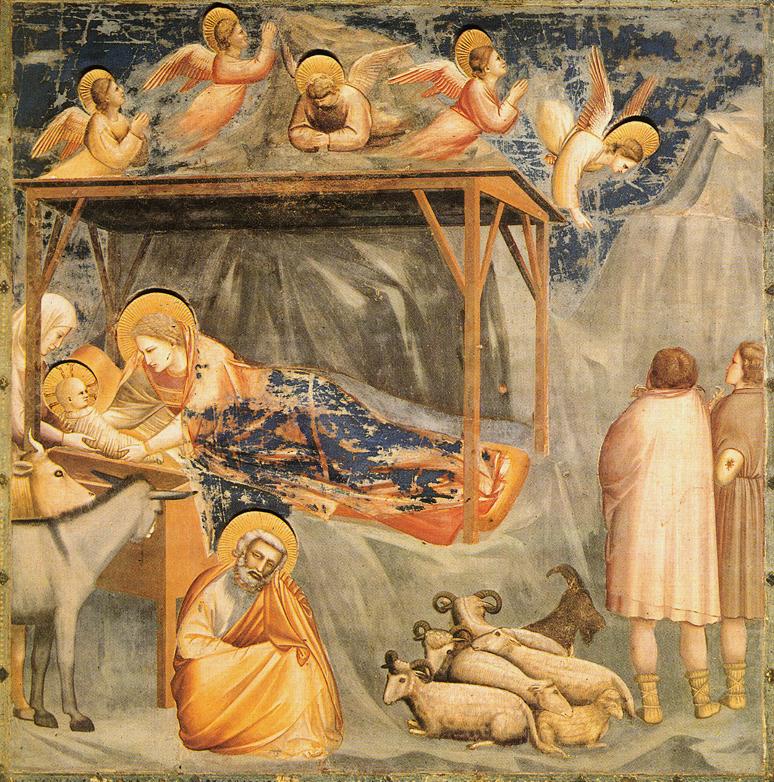
“Mary, for her part, kept all these things, pondering them in her heart”
(Lk 2:19)
and
“his mother meditated on all these things in her heart”
(Lk 2:51).
The words to keep and to meditate translate two Greek words that mean respectively: to keep and to bring together (symballō), to bring together and meditated (diatēreō). Thus, according to the two contexts, the meaning is that Mary, reading the Scriptures, which had foretold what she witnessed, remembered all those words: more than the things, the reality. She read the prophecies. She saw some of them happen before her eyes. And now, in the depths of her consciousness, in her heart, she compares the facts.
When we speak of the Heart of Mary we are using the biblical sense. As we have seen, heart in the language of Sacred Scripture means the totality of the human person, as opposed to the individual faculties and individual moments of that same person. Heart of Mary means her intimate and unrepeatable being. The center of human existence, the confluence of reason, of will, of temperament, and of sensibility. Only in the heart does the person find her unity and interior orientation of mind and heart, of will and affectivity.
The spiritual tradition of the Church insists […] on the heart, in the biblical sense of the ‘depths of one’s being’, where the person decides for or against God (Catechism of the Catholic Church 368). The heart is, therefore, the undivided soul, with which Mary loved God and her brothers and dedicated herself entirely to the work of the salvation of the Son. Devotion to the Immaculate Heart of Mary is, therefore, a way of approaching this attitude of the heart, in which the fiat, the Thy will be done of the Our Father, becomes the informing center of the whole of existence.
To go deeper into the biblical theology of the Heart of Mary and devotion to the Immaculate Heart, consult the apostolic exhortation Marialis Cultus by Paul VI.
Deepen your studies: explore Mariology, Marian Theology, Marian apparitions, and the Postgraduate Program in Mariology.
Postgraduate Program in Mariology
Would you like to deepen your formation in Mariology? Discover the Postgraduate Program in Mariology of Locus Mariologicus – an academic formation that unites theological rigor, spiritual life, and the living tradition of the Church.
Would you like to study Mariology seriously?
This article is born of the works in the library of Locus Mariologicus. The Postgraduate Program in Mariology takes you to the same source, with academic guidance: Scripture, the Fathers of the Church, and the Magisterium, from the first dogma to contemporary questions.




Responses