Mary in the Service of the Kingdom
The Kingdom of God as liberation: Gal 5:13 and the human vocation in the face of structures of oppression
The Kingdom of God restores to the human being the value of a word that sin has denied thousands of times: freedom. Freedom is a grand word that reveals man’s most sublime vocation: “Indeed, brothers, you were called to freedom” (Gal 5:13). God created man for freedom. Sin, however, introduced into history the oppression of man by man, giving rise to gestures, actions, and situations that disfigured that lofty vocation to freedom, degrading man to the condition of a slave or a servant: the weak were subjugated by the strong, the poor by the rich. These relationships of servant and master created a growing separation between those who, by vocation, should live as equals, as brothers. These conditions of inequality made communion impossible.
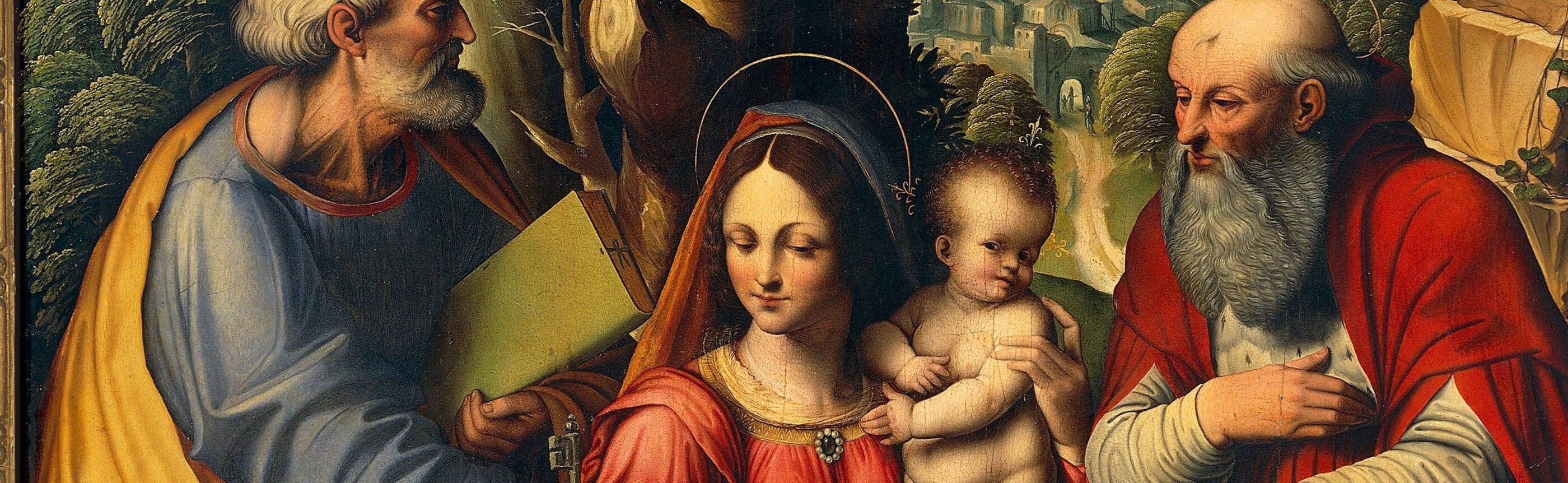
<img fetchpriority="high" fetchpriority="high" decoding="async" width="2560" height="788" data-src="https://locusmariologicus.org/wp-content/uploads/2024/11/Maria-ao-Servico-do-Reinov2-scaled.jpg" alt="Mary in the service of the Kingdom: the handmaid of the Lord, the New Eve and the obedience of Mary” class=”wp-image-35278″ srcset=”https://locusmariologicus.org/wp-content/uploads/2024/11/Maria-ao-Servico-do-Reinov2-scaled.jpg 2560w, https://locusmariologicus.org/wp-content/uploads/2024/11/Maria-ao-Servico-do-Reinov2-300×92.jpg 300w, https://locusmariologicus.org/wp-content/uploads/2024/11/Maria-ao-Servico-do-Reinov2-768×236.jpg 768w, https://locusmariologicus.org/wp-content/uploads/2024/11/Maria-ao-Servico-do-Reinov2-1536×473.jpg 1536w, https://locusmariologicus.org/wp-content/uploads/2024/11/Maria-ao-Servico-do-Reinov2-2048×631.jpg 2048w, https://locusmariologicus.org/wp-content/uploads/2024/11/Maria-ao-Servico-do-Reinov2-624×192.jpg 624w” sizes=”(max-width: 2560px) 100vw, 2560px” />
The message of the Kingdom proclaimed the sovereignty of God, the dominion of God’s fatherly love. It spoke of communion and of mutual service, being good news for the oppressed, an announcement of liberation. In the Advent of the Kingdom, the supreme norm of conduct is the will of the Father: “Thy will be done, on earth as it is in heaven” (Mt 6:10). The will of the Father is to save man (Jn 6:34-40). Not in a coercive or conditioning way, but in a liberating one. It is a will that seeks to reconcile and gather all the scattered children of God. A will of communion among men and with God. For this reason, Jesus declares: “Whoever does the will of God is my brother and my sister and my mother” (Mk 3:35). This divine will advances the Advent of the Kingdom and the union of the scattered brethren, building a new and definitive communion among men. The death of Jesus, as the supreme expression of the Kingdom, is redemptive: “Christ has set us free so that we may remain free” (Gal 5:1). His redemptive death introduces into the world the community of liberated men and women, the People of the Redeemed.
The path Jesus traveled to bring about the liberation of the world is paradoxical, the opposite of the serpent’s suggestion of an easy disobedience. It is the painful path of obedience, of humiliation, of the cross: “He emptied Himself, taking the condition of a servant, becoming like men. Recognized in human form, He humbled Himself, becoming obedient unto death, even death on a cross. Therefore God exalted Him above all things and gave Him the name that is above every name” (Phil 2:7-8). Jesus introduces the Kingdom through obedience, through service in love unto death. At the banquet of the Kingdom, He acts “as one who serves”, as the servant, the deacon of fraternal communion. In this way, He offers freedom to those who are enslaved. From this perspective, we contemplate Mary as handmaid, as deaconess of the Kingdom, through her obedience, her availability, and her faith. In this way, she shares in the sovereignty of Christ, in the free dignity of the children of God.
Mary under Roman occupation (AD 6): political subjugation, the condition of women, and the anawim of Israel
Mary was part of a people subjugated and colonized by the Roman Empire: “In AD 6, with the deposition of the ethnarch Archelaus, Judea lost to the Romans the political independence it had held (almost always in fact, but at times only nominally) since the time of Judas Maccabeus (165-161 BC)”. Mary belonged to a social stratum dependent on the rich and powerful of Israel and to a gender subjugated by the antifeminism of the age: the wife was obliged to obey her husband as she would a master. Woman was placed on a level with slaves (pagans) and children (minors), being in a condition of inferiority before man, even in religious matters.
Mary was not an autonomous woman, able to dispose freely of herself or to plan her life or her future. Like any other Jewish woman, she depended on her parents, on her husband, and on the religious, political, and economic authorities of the day. It would not be an exaggeration to picture her as a submissive woman, deprived of her fundamental rights. The Gospels portray Mary as an obedient woman, a stranger to rebellion and showing no sign of claiming her rights. At no point is any trace of disobedience indicated in Mary. Yet God’s predilection for the weak and the Advent of the Kingdom of His love transformed her condition as an obedient handmaid, making her a new woman.
“Behold the handmaid of the Lord” (Lk 1:38): Mary’s radical obedience and her place in the prophetic lineage
The Advent of the Kingdom stirred in Mary a response of absolute obedience and docility: “Behold the handmaid of the Lord”. Mary was marked by the Spirit to serve God’s cause unconditionally, taking her place in the line of the great servants of God, those on whom He can depend at any moment and for any mission. Mary depended on God alone, her Lord, and the fulfillment of the divine will was her constant norm. For her, all other masters of the earth automatically lost their value. Mary did not fight to win spaces of human freedom. She sought radical freedom, that liberation which profoundly transforms the small slaveries to which human life is subject.
Mary reserved her service and her heart exclusively for God, taking no interest in any other master. “God alone”, “His will alone” define the evangelical figure of Mary. In a certain sense, this seems to exclude a direct service to men or to their liberation, but this total self-giving to God took place within the scope of His plan to save humanity from its many slaveries. Mary was the handmaid of God in the sense of being a liberator of humanity, serving the cause of the Kingdom in the world. Her obedience to the Father implied a total readiness to renounce everything, as Jesus required of those who wished to follow Him. She was prepared to leave Joseph, had it not been for the angel’s intervention. She was ready to be separated from her Son, not only when He was twelve years old, but later, when He became the Prophet of the Kingdom. This readiness found its supreme expression in the death of Jesus.
On Calvary, the figure of the Mother who sacrifices what she holds most precious, her own Son, evokes the figure of Abraham, ready to offer his only son. Mary submitted herself to the principle of the Kingdom, which consists in hearing and carrying out the Word, even when this involves something as painful as a sharp sword piercing the soul. Her obedience to the Father was nourished by a burning passion for God, a love capable of overcoming the contradictions of existence and the incomprehensible actions of the Lord.
At certain moments, Mary, like any believer, may have experienced the feeling of being completely overwhelmed by God, who breaks through her mental frameworks and her expectations. The divine pedagogy is carried out in her as in Jesus: “He learned obedience through what He suffered” (Heb 5:8). God the Father revealed Himself to Mary as a “different” God, who did not correspond to human projections but surprised and challenged. On several occasions in her life, Mary could have repeated the words of Job: “Ah, if only I knew where to find Him! If I could come to His throne! … But if I go forward, He is not there. If I turn back, I do not perceive Him. On the left I seek Him, but I do not see Him. I turn to the right, and I do not find Him. Yet He knows my way. If He tests me, I shall come out like pure gold! … He will accomplish what is destined for me, and He has many such plans. Therefore I tremble before Him. When I think of this, I am seized with fear. … I am not lost because of the darkness, nor does the darkness cover my face” (Job 23:3-8, 10-14, 17).
Mary bowed lovingly and passionately before a God who hid Himself and hoped against all hope. Her obedience in extreme situations was grounded in the conviction that the Father exalts, liberates, forgives, and offers the poor a luminous horizon of hope (Magnificat!). She believed that God was able to overcome and crush the supreme danger: death. Like Abraham, Mary believed in the God who gives life to the dead and calls into existence what does not exist, sustaining hope against all hope (Rom 4:17-18). Her obedience was not passive or apathetic. It was a passionate obedience, a cry, an invocation, an ardent search for the face of God. It was an infinite love for God and for His will, lived under the sign of passion.
Mary, the New Eve (Irenaeus of Lyons): obedience as a liberating act and the typological reversal of Gen 3
It seems paradoxical to claim that the path of obedience can be liberating. At first sight, it seems exactly the opposite. It is not easy to understand how Mary’s unconditional obedience to God, her absence of rebellion in the face of her condition of oppression, could be a liberating act. When I was teaching Mariology at the Theological Studium of Curitiba, in Brazil, in 1984, a seminarian committed to the struggle for the liberation of his people, after hearing my explanations of Mary in the Gospel of Luke, remarked: “If Mary were living in our historical moment, I imagine she would be at the forefront of any demonstration for liberation, with the courage and daring that are born of nonviolent love and evangelical denunciation.” Certainly, Mary did not act in this way in her own time. Nevertheless, can those who understand that their faith demands such a commitment find inspiration in Mary?
Mary never declared herself autonomous or independent. Her fundamental choice was, on every occasion, to be the “handmaid of the Lord”. And she chose this path because she gradually came to understand God’s desire to communicate with humanity. She realized that she stood at a decisive moment, being the first to open her heart and her life to the divine welcome. Through Mary, God came to us immaculate. In her, the heart of humanity opened to the God of Life, and in her God remains with us. Mary did not keep God for herself but offered Him, accepting the Father’s plan for the emancipation of the Son. For this reason, the early Fathers of the Church contemplated Mary as the woman who took part in the most decisive moment of history, the woman who became the Source of Life, the Mother of the Living, the New Eve.
Saint Justin Martyr (died around AD 165) wrote: “We know that He became man through the Virgin, so that by the same path on which sin, caused by the serpent, had its beginning, it might also be destroyed. Eve, who was a virgin and uncorrupted, on hearing the word of the serpent, brought forth sin and death. The Virgin Mary, on the contrary, filled with faith and joy, when the angel brought her the news that the Spirit of the Lord would come upon her and the power of the Most High would overshadow her, conceived life.”
In the same way, Saint Irenaeus of Lyons (died around AD 202) stated: “The Virgin Mary was found obedient when she said: ‘Behold the handmaid of the Lord, let it be done to me according to your word’. Eve, on the contrary, was disobedient while she was still a virgin. Both were naked in paradise and were not ashamed, for they had only just been created and had not yet thought of bearing children; they had to grow before multiplying. By her disobedience, Eve became a cause of death for herself and for all humanity. In the same way, Mary, betrothed to a man but still a virgin, became, by her obedience, a cause of salvation for herself and for the whole human race. What the virgin Eve bound by her unbelief, the Virgin Mary loosed by her faith.”
Mary’s obedience places her within the economy of salvation, conferring on her a soteriological dimension, saving and liberating. Mary was not merely a passive “instrument” for the preparation of the Redeemer’s body. She contributed actively, representing all humanity in responding to God’s call and in sharing in the reparation for original sin. Her obedience contrasts with the disobedience of Eve, who sought to “be like God” and ended up enslaved. Mary, on the contrary, by humbling herself and obeying, took part in her own liberation and in the liberation of all men.
Mary did not seek her own freedom, nor did she defend it. She was concerned, rather, with the freedom of others: “They have no more wine…”, “Behold your mother”, “Behold the handmaid of the Lord”. This is Mary’s mission: to serve and to intercede for the liberation of her children. For this reason, Mary is poor with the poor, discriminated against with those who are discriminated against, crucified with the crucified. All this out of effective love, because only love sets free: “Freedom is not guaranteed by crowns, absolutisms, or dictatorships, whoever it may be that wields those powers, but by the gift of oneself, by solidarity with the weak, by the dignifying of the poor. In short, by love.”
Out of her experience of obedience, Mary becomes the advocate of those who “mourn in this valley of tears” and inspires hope in those who feel let down by the promises of politicians. Her evangelical figure reveals the presence of the liberating Spirit in the world. She proclaimed this when she said: “He has cast down the mighty from their thrones and exalted the humble.” Mary does not offer immediate solutions, but her witness of evangelical freedom is capable of transforming the human heart and the roots of humanity.
For the Fathers of the Church, obedience and faith are inseparable realities in Mary, the New Eve. To believe and to obey God means to receive everything as a divine gift and to place oneself entirely at the service of the Lord. This obedience is not resignation, but a passionate sacrifice and a supreme form of witness. Mary, by her obedience, became a living and effective instrument of the presence and the establishment of the Kingdom of God, being the prototype of the Church as virgin and mother. As the Second Vatican Council expresses it: “The Virgin Mary showed, in an eminent and singular way, the model of virgin and of mother, for, believing and obeying, she brought forth on earth the very Son of the Father. This she did without knowing man, overshadowed by the Holy Spirit, like a New Eve, placing her faith in God’s announcement, without being corrupted by doubt, as Eve was by the ancient serpent.” (Lumen Gentium 63).
Mary’s obedience to historical mediations: fidelity in the darkness (Lk 2:51) and the model of spiritual discernment
Christian obedience is not simply a clear and luminous response to the Word of God heard unmistakably. It is, very often, an obedience that remains immersed in the darkness of night, in the experience of the annihilation of the soul, in the face of the nearness of doubt and anguish. As it has been said, “The will of God is manifested in what does not seem divine, in what is not immediately identifiable as coming from God.” The Lord makes use of everything to turn every reality into a sacrament of His will.
Mary discovered the will of God not through extraordinary revelations or heavenly privileges, but through an attentive observation of the ordinary facts of life, “pondering them in her heart”. She sought in these events the mystery and the divine transparency, for “what is essential is invisible to the eyes.” Above all, Mary discerned the will of the Father by listening to the Word proclaimed by her Son, who prophetically pointed out the ways of God for Israel.
Mary did not reject the human mediations through which the divine will was revealed to her. She accepted the word of the angel, the guidance of Joseph, the greeting of Elizabeth, the testimonies of the shepherds and of the magi, the words of Simeon and Anna, the gestures of the young Jesus in the temple, and later the preaching of Christ in His public life. She also submitted to the beloved disciple and to the community gathered around Peter and the Twelve. Thus, by serving others, she became the great Handmaid of the Kingdom.
This indicates that faith is not lived exclusively as an individual dialogue between “my God” and “my self.” Faith takes place in a communal and ecclesial context, needing, from the very beginning, the mediations of the Word, of the Sacrament, and of the Community. A personal and intimate relationship with God also embraces the world and the community, integrating the whole of reality into a full experience of faith. As Saint Francis said: “My God and my all.”
In this service to others, obedience is transformed into service to God. To obey is to take the last place, not for self-destruction, but in order to serve and to love. Perhaps for this reason Mary exercised no power, not even in the ecclesial sphere. She chose to remain in the last place, where one finds those who serve, both God and the guests at the banquet of the Kingdom.
Mary is the Handmaid of the Lord, the Servant of the Banquet of the Kingdom, Mother of faith and perfect imitator of her Son, the Servant of the Kingdom. She teaches that obedience is an act of service and of love, a path of full conformity to the divine will and a total self-giving to the mission of building the Kingdom of God.
Recommended reading: Redemptoris Mater (John Paul II), an encyclical on the Mother of the Redeemer.
Deepen your studies: explore Mariology, Marian Theology, Marian apparitions, and the Postgraduate Program in Mariology.
Mary, model of the Kingdom according to Lumen gentium 36: radical obedience, loving service, and the denunciation of the structures of slavery
The Kingdom of God, by restoring the value of human freedom, challenges the worldly logic of oppression and inequality. In this context, Mary, with her radical obedience and loving service, presents herself as the perfect model of fidelity to the Kingdom. Her path of faith not only reveals the fullness of a life lived for God, but also denounces the structures of slavery that draw men away from their divine vocation.
Mary did not seek prominence or power. On the contrary, she found true freedom in humility and in total self-giving to the Father. As the New Eve, her obedience was not an act of passive submission, but a conscious choice to cooperate in God’s saving plan. Her life shows that service to the Kingdom entails the capacity to listen to, to welcome, and to mediate the divine will in the small and the great realities of existence.
Thus Mary becomes the great Handmaid of the Lord and of the Banquet of the Kingdom, interceding for those in need and inspiring hope in the disillusioned. Through her obedience, Mary not only gave birth to the Savior, but also manifested the transforming power of the Kingdom of God. In her figure, we contemplate the universal call to freedom and to service, the foundations of a communion that reflects the very essence of God’s love. May Mary, Mother of the Redeemer, continue to be a beacon and a model for all those who desire to live fully under the sign of the Kingdom.
The Locus Mariologicus Institute is the world’s academic reference in Mariology. Discover our resources on Marian Theology, Marian apparitions, and the Postgraduate Program in Mariology.
Postgraduate Program in Mariology
Would you like to deepen your formation in Mariology? Discover the Postgraduate Program in Mariology of Locus Mariologicus – an academic formation that unites theological rigor, spiritual life, and the living tradition of the Church.
Would you like to study Mariology seriously?
This article is born of the works in the Locus Mariologicus library. The Postgraduate Program in Mariology takes you to the same source, with academic guidance: Scripture, the Fathers of the Church, and the Magisterium, from the first dogma to contemporary questions.



Responses