Our Lady of Grace or of Mercy? Conclusion.

“«Graces» or «of Grace»? The Theological Distinction: Grace as Participation in the Trinitarian Life and Mary as the Icon of Sanctifying Grace”

Grace as Participation in Divine Life
Grace can be seen as communion with the Father through Christ in the Spirit. The grace-filled educational process educates human beings to free themselves from sin and to achieve divinization (theosis). Patristic theology enunciates this mystery as follows:
«Deus se fez homem para que o homem se tornasse Deus»
Here the New Testament speaks of the outpouring of the Spirit as a principle of rebirth (John 3:5-7), of new life (Romans 5:5, 6:4), of filial life (Romans 8:15-16, Galatians 4:6), and of eternal life (Romans 6:23).
The doctrine of justification focused on the absolution and forgiveness of sins, leaving rebirth for new life aside. In reality, justification puts man in a new relationship with God, but rebirth according to the Spirit transforms the inner life, the seed of life, placing him in a different position to face life. Ultimately, the reception of Grace is not a human work. The one who receives a gift does not participate in the initiative of the gift, but merely receives it; a gift only exists when it is received. If it is not received, there is the good intention of the giver, and in our case, God’s gift is Christ. Until it is received in freedom, it does not become an offering. In this sense, Peter’s doctrine about our participation in the divine nature (2 Peter 1:4) reflects this reality, as the identity of human nature is the reception of God’s gift. Far from pantheism or apophasis of an ineffable and incomunicable God, the enlightening light of Grace illuminates in the mind of man the action of God and makes him capable of relating in conscience and love.
Beyond all the denominations offered throughout the history of theology regarding the relationship as an accident or essence, today we are able to look at the Trinitarian mystery and the Incarnation as a revelation of God, and reflect that there was Mary, and also the Trinitarian mystery that burst into history to save her. Grace is not an accidental, casual, or even random intervention in a man’s life, but a substantial mode of being that was communicated to humanity from divine benevolence.
The Christian definition of Christ as true God and true man helps us see the progressive humanization that deification brought as a central message converging the Old and New Testaments. In the post-conciliar world, it is inconceivable in Catholicism to think of Grace that makes us similar to God, which would disregard the necessary humanization, as it liberates human freedom from irresponsibility and matures the “I.” When we look at the person of the Messiah, we find the insoluble union between God and man, between divinity and humanity, but also the source, for only in the mystery of the incarnate Word do we find the light of the mystery of man (Gaudium et Spes 22). In reality, deification cannot mean that man leaves his human condition. Instead, it is the condition of human fullness, as dialogue with divine persons leads man to realize his original nature: image and likeness of God (Genesis 1:26). We can then conclude that the
Grace is the goal of human life: a dialogue event that vivifies the relationship between God and Man. Two elements are required: God’s proposal and Man’s response, which is expressed as an act of love and the communication of divine life. Throughout the history of salvation, from creation to eschatology, grace finds acceptance among the members of the People of God, especially the baptized, because it is a gift of new, divine life in the heart of humanity, in the Spirit of the Father and the Son.
Mary and Grace in the New Testament
Jesus, the Christ, Son of the living God, is the fullness of grace and truth (John 1:14). In the person of Mary, this is manifested in two ways: the benevolence of the Father, who in Mary sums up all the work of the Old Testament, and the divine and spiritual motherhood resulting from the Father’s will, communicated to the world through the Word. In fact, it is impossible to think about grace theologically without questioning the fullness of grace (Luke 1:28).
Mary’s Response to Grace

Maria, Mother in the Order of Grace
The benevolence of the Father who looks upon Mary, who found Grace with God, through the angel designates her in the history of salvation for the first time not as Myriam but as kecharitomene ‘full of grace’ (Lk 1:28). This name signifies a perpetual recipient of divine love. This difficult-to-translate word finds its roots in giving thanks and showing favor, indicating an action of God that endures in the present. The action of God’s love in Mary transforms her, as it blesses and accomplishes great things within her, beginning with the virgin motherhood of the Word of God.
The entire narrative of the Annunciation demonstrates Mary’s relationship with the Trinity. The Father is the one who sends Grace to Mary, bringing about the incarnation of the Son who becomes Mary’s son through the power of the Holy Spirit (Lk 1:35), who covers her with his shadow, as the Ark of the Covenant was covered by the cloud in the desert. Grace, understood as love for the persons of the Trinity, finds in Mary the space to save history, for in the Virgin Grace and freedom coincide. We can then affirm that Mary is the image of the Trinity, as she reveals God’s action in the world and the appropriate human response: full availability before the Father’s will: ‘Behold, I am the servant of the Lord; let it be to me according to your word’ (Lk 1:38).
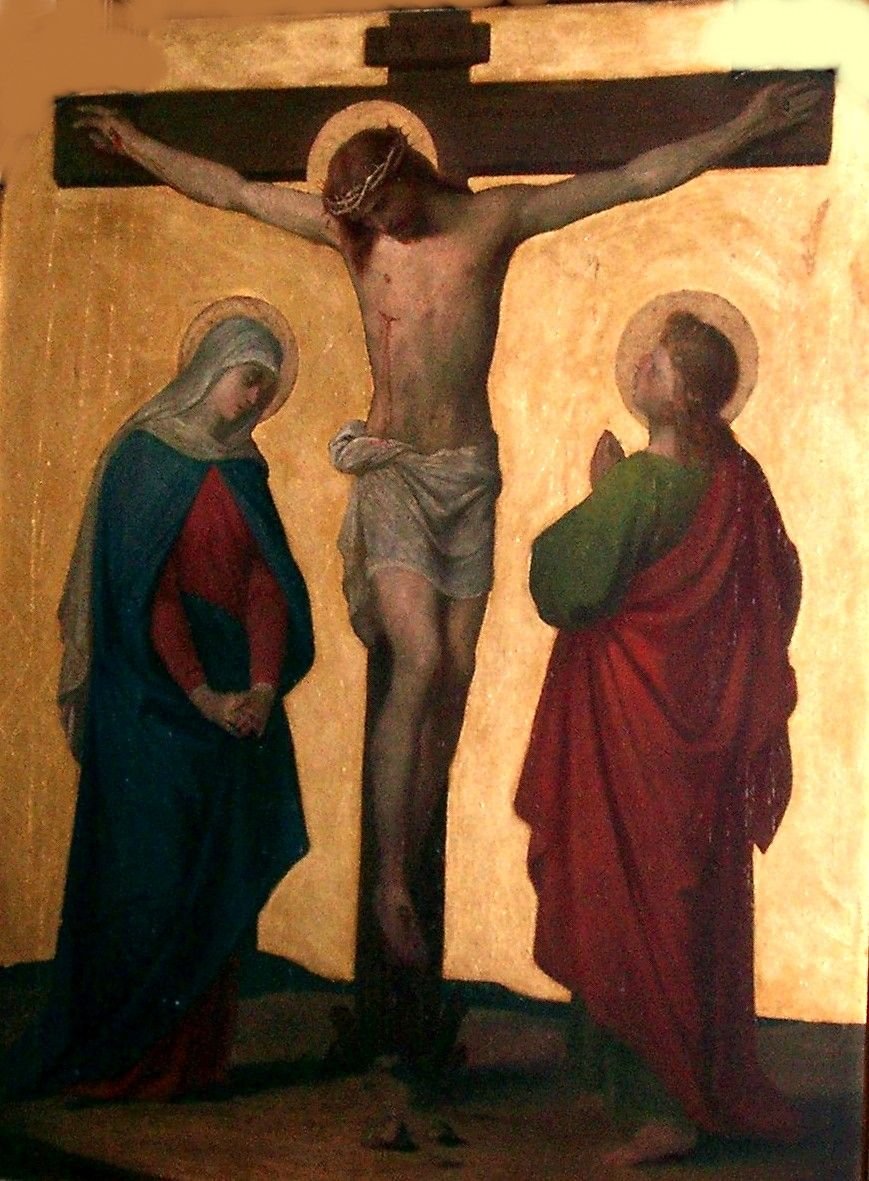
In the paschal event narrated in Jn 19:26-27, we are presented with a singular and vast mariological revelation that remains relevant even today, in the dramatic hour of Jesus’ death. Beyond socio-charitable interpretations, we must emphasize the long-standing and valid patristic and magisterial tradition in reading this verse from a theological perspective, revealing Mary’s unique role in the work of salvation. What significance does the revelation of Mary as the Mother of the beloved disciple hold? What kind of motherhood is this? On this point, contemporary times have drawn upon the context of Jesus’ invocation of Mary as a Woman to grasp the meaning of the parturient, a sign of blessing in biblical and Jewish tradition. In this sense, at that moment, in the eyes of the crucified Verbo, Mary represents Zion, who, from that hour on, will be the Mother of a People, the children of God through the Son. The supreme hour of passion reveals to the world that humanity is created anew in the Spirit of the Father, as Sons of God, and that Mary’s intervention, as the New Eve, is to participate in the new life that comes from the same Spirit that made her Mother of the Son of the Father.
We can thus conclude that Mary, the Mother of Jesus and the beloved disciple, evokes Zion, the Mother and parturient of a new People, the People of the messianic era, continuing Eve’s mission as Mother of the living. In this allegory, the figure of the Church as Spouse of the Word shines with particular brilliance, finding its place alongside the Husband in the relationship between Mother and Son.
Jesus reveals Mary’s identity in the history of salvation, not specifying what it entails, but we know it must be a motherhood that conveys life, for the dying gives his life so that we may have it to live. In this way, we can understand how, in John, the rebirth of water and the Spirit (Jn 3:3-7) takes place. The Second Vatican Council offers a decisive reading of motherhood in Lumen Gentium 53, stating that Mary is mother of the members of Christ, and in 61, mother in the order of grace, as she, by her special cooperation in the work of salvation, through obedience, faith, hope, and ardent charity, restored the supernatural life of souls.
Conclusion
After this journey, we can draw several conclusions that will also involve our mariological conversion, as our understanding of Mary has been updated, progressed, and purified from the light of Sacred Scripture, the soul of mariology.
Our Lady of Grace
This title signifies that Mary participates in the charisms that the Holy Spirit offers to the members of the People of God for the building up of the Church. The Acts of the Apostles narrate Mary among them when they were filled with the Holy Spirit and began to speak in tongues and prophesy. There is no reason to deny glossolalia and prophecy from the Pentecostal experience of the Mother of Jesus. Mary, glorified in body and soul, becomes a manifestation of the power of the Spirit and is recognized as a wonder-worker, as the permanent charism of the Mother of the Messiah intercedes with miracles, healings, and wonders, as documented by centuries of shrines and the history of Christianity, not only. Recognizing in Mary the fullness of charisms, in the light of her prominence in salvation, a result of God’s love for her, we conclude that the title of Mediator in Christ places her, from a catartic isolation, in relation to men and God, as she situates Mary in the history of salvation, in relation to Christ and the Church.
But this alone is not enough. Fidelity to the origin of all Mariology, which is Scripture, obliges us, in consistency, to make a transition from Our Lady of Grace to Our Lady of Grace. From the gifts of the Trinitarian God who transcends all divisions of grace, we find santification, which, once received by the baptized, places us in a vital relationship with the three divine persons. Now, the Mother of Jesus can be understood as the paradigm of this permanent action of grace in her, which is kecharitomene, for her life and presence at the cross of Christ placed her as the third of Christ to the Church, together with the Spirit exhaled on the Cross. Mary is then a cooperator of the Spirit in the rebirth of the children in the Son of God. Through baptism, Mary becomes the Mother of the faithful, as she participates in the mysteries of redemption accomplished by the Son and also cooperates with the love of a Mother to the generation and formation of the faithful.
We cannot devalue the position of the Council when it emphasizes that it is the charity of Mary that leads her to cooperate in the birth of the faithful in the Church. From the Cross, throne of grace, Jesus gave men his Mother Mary. At the moment of his sacrifice for humanity, he made Mary, in a certain way, a mediator of the flow of Grace that comes from the Cross. Along with the Cross, Mary becomes a companion and protector of men throughout life until the blessed Fatherland. Mary intercedes for us before the Son, and this confidence, together with our gratitude, impels us to renew our Christian life and go beyond the needs of the moment. Mary, mystagog, teaches us the breadth and depth of our Christian vocation. With maternal tenderness, she wants to make us understand that all of our life must be a response to the rich love of mercy of our God.
Our Lady of GracePray for us!
To deepen the theological meaning of the title of Mary as Our Lady of Grace, consult the Apostolic Exhortation. Marialis Cultus From Paul VI, on the veneration and titles of Mary in the tradition of the Church.
Deepen your studies Explore (no translation needed, keep as is) Mariology“Short title/phrase – translate without context or additional information.” Marian theology“Short title/phrase – translate without context or additional information.” Marian apparitions “And [she] said, ‘Behold, I am the handmaid of the Lord.'” Postgraduate Program in Mariology“Mariology, angelology, demonology, josephology”
Postgraduate Program in Mariology
Would you like to deepen your formation in Mariology? Get to know the Postgraduate Program in Mariology from Locus Mariologicus, an academic formation that combines theological rigor, spiritual life, and the living tradition of the Church.
Would you like to study Mariology seriously?
This article arises from the works in the Locus Mariologicus library. The Postgraduate Program in Mariology takes you to the same sources, with academic guidance: Scripture, the Fathers of the Church, and the Magisterium, from the first dogma to contemporary issues.




Responses