Jesus, Son of Mary and Son of God

Faith in Jesus, the Son of God, did not arise suddenly, but developed progressively in accordance with the cultural context in which Christianity spread. The narratives about His birth represent a specific stage within a process that can still be described on the basis of the New Testament texts.
Christological developments in the New Testament: from Synoptic sonship to high Johannine Christology and the Council of Chalcedon
The Synoptic tradition does not record that Jesus at any moment attributed to Himself the title of “Son of God”; at most there are a few allusions to His quality as “son” (cf. Mt 11:25-27; Mk 12:6; 13:32), whose true meaning is debated. Surprisingly, in prayer Jesus addresses God by calling Him “Father” with an intensity uncommon in Judaism.
The Son of Mary uses the word “abba” in reference to God (cf. Mk 14:36), the same one that Jewish children used and still use in reference to their fathers. This filial relationship is also evident in His submission to the will of God (Mk 14:32-40), in the need to imitate constantly the way God acts (cf. Mt 5:48; Lk 6:36), in His intimate and personal involvement in the kingdom that is coming (Mk 1:14-15), and in His mercy toward the last and the excluded. But it is chiefly in His death on the cross that His radical fidelity to God and to suffering humanity, in which He fully shared, is manifested.
After the announcement of His resurrection, these different aspects of Jesus’ human experience were read by the first Christians in the light of biblical faith, in which divine sonship is recognized as belonging to the people, to the king, to the righteous, and to the Messiah. As a result, the title “Son of God” was soon attributed to Him, equivalent to that of Messiah, emphasizing, however, His relationship with God as His representative.
In the most ancient strata of the Christian faith, Jesus’ divine sonship was proclaimed in close relation to His resurrection from the dead. The conclusion of Peter’s preaching on the day of Pentecost is significant in this respect: “therefore let all the house of Israel know for certain that God has made this Jesus, whom you crucified, both Lord and Christ” (Acts 2:36). Moreover, in his letter to the Romans Paul reports a very ancient profession of faith in which he states that Jesus was “designated Son of God in power, according to the Spirit of sanctification, by the resurrection from the dead” (Rom 1:4). By raising from the dead Jesus, the crucified one, God conferred on Him the dignity of Lord, Messiah, and Son of God.
The conception that Jesus received divine sonship at the moment of His resurrection gradually became inadequate for Christians who, on the basis of their faith in Jesus’ saving role, saw in Him the Messiah, the Son of God, even in the period preceding His crucifixion, that is, during His public ministry. The Gospel of Mark responds to this development of the Christian faith by introducing, in the context of Jesus’ baptism, a vision of which Jesus Himself is the recipient, and in which the Father proclaims Him as His “beloved Son” (cf. Mk 1:9-11).
This proclamation is repeated by the Father before the three beloved disciples during the transfiguration (9:7), and there is an allusion to it in the parable of the murderous vinedressers (Mk 12:6). Finally, Jesus answers affirmatively the question of the high priest: “Are You the Christ, the Son of the Blessed God?” (14:61-62). And at the moment of His death, He is recognized as Son of God by the Roman centurion (15:39). In the Gospels of Matthew and Luke, the messianic secret is less emphasized, and Jesus readily accepts being recognized as Messiah and Son of God during His public ministry (cf. i.e., Mt 16:16. Mk 8:29).
A more mature faith could no longer be content with the proclamation of Jesus as Son of God in the context of His baptism. If He is the Son of God, this means that He was so from the moment of His conception. This is the insight that Matthew and Luke develop in the infancy Gospels, establishing a close connection between His birth from Mary and the prophecy of the “virgin” that they read in the Greek Bible.
They emphasized that from His first entrance into this world, Jesus was proclaimed Son of God through an angel. He received His own existence from that divine word accompanied by God’s creative power, thus fulfilling a specific divine plan revealed in the Scriptures. It should be noted that these accounts say nothing of an existence of the Son of God before His conception in Mary’s womb: it is from that moment that He begins to exist with the fullness of His prerogatives as Messiah and Savior of Israel and of all humanity.
The last step in the understanding of the person of Jesus was taken by Paul when he affirmed that God sent His Son into the world, born of a woman, born under the Law (Gal 4:4. Cf. Rom 1:3. 8:3). He is the one through whom all things were created and through whom we go to the Father (cf. 1 Cor 8:6). This affirmation is developed further in the so-called deutero-Pauline letters, where it is stated that “He is the image of the invisible God, the firstborn of all creation, for in Him all things were created in the heavens and on the earth” (Col 1:15-16. Cf. Heb 1:1-4).
According to the Fourth Gospel, He is the “Word” of God, through which all things were created, the Only-Begotten who became flesh and came to dwell among us (Jn 1:1-18). Behind this development one glimpses the identification of Jesus with uncreated Wisdom, which God used to create the world and to lead humanity to Himself (cf. Prov 8:22-31. Sir 24:1-23. Bar 3:9-4:4. Wis 7:22-30).
These stages cannot be understood except in metaphorical terms. They are the unfolding of what Mark states in the title of his gospel: “the beginning of the gospel of Jesus Christ, Son of God.” With their infancy narratives, Matthew and Luke offer a longer exposition of the content of that opening verse. In doing so, however, they show the secondary character of their reflection. It is clear that only after His resurrection did the first Christian communities deepen the mystery of the person of Jesus and condense into the accounts of His birth, in the colorful style of the pious stories of the time, the conclusions they had reached.
Therefore, the infancy narratives clearly have a Christological purpose. They express the faith of the early community, which saw in Jesus the eschatological envoy of God, the center of all salvation, the Son able to gather a new humanity and to draw it into His own filial relationship with God. In these seemingly naive and popular accounts, the evangelists condensed the experience of the first Christians, who saw the divinity of the Father reflected in the humanity of Jesus. The infancy narratives contain no abstract dogmas or doctrinal statements, but convey the most mature fruit of a journey of faith, expressed in the language, symbols, and formulas that the people of Israel had developed in their centuries-old experience of God.
The twofold sonship as the dogmatic foundation of Marian devotion: Theotokos, the Nestorian controversy, and the Council of Ephesus (431)
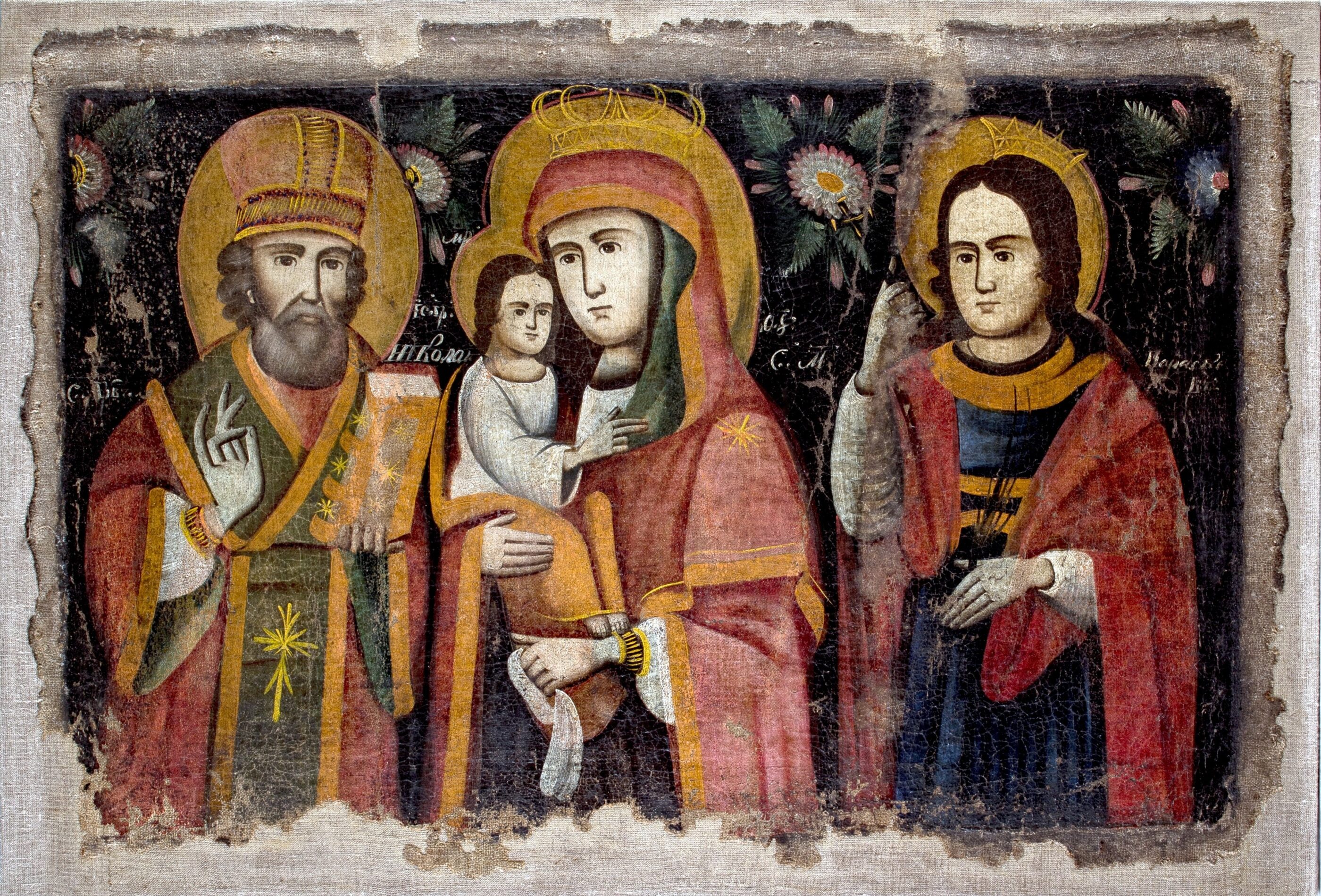
Within the context of faith in Jesus, the exaltation of Mary as the virgin mother of the Son of God arises. In the three Synoptic Gospels, apart from the infancy narratives of Jesus presented by Matthew and Luke, an explicit reflection on the figure of Mary and her role in God’s plan is lacking.
In the Gospel of Mark, the mother of Jesus is mentioned only twice. In the first, the evangelist reports the case in which, when some people tell Jesus that His mother and His brothers want to see Him but are prevented by the crowd, He answers: “Who is my mother and who are my brothers?” And, looking at those who were around Him, He adds: “Here are my mother and my brothers. For whoever does the will of God is my brother, sister, and mother” (Mt 3:32-35). In this saying there is a break with His mother, confirmed by Jesus when He proposes to His disciples, as a condition for receiving the hundredfold in this life and eternal life, even to abandon their mother (Mt 10:30. Cf. Lk 14:26). The second time Mark mentions Mary is when the inhabitants of Nazareth call her by name and are astonished at Jesus’ wisdom, saying: “Is this not the carpenter, the son of Mary?” (Mk 6:3).
Matthew, although he mentions Mary in his account of the birth of Jesus, gives her no particular prominence: Joseph is always in the foreground in his paternal role, while Mary is a silent participant in her husband’s decisions. Throughout his gospel, he limits himself to following Mark, reporting, without many adjustments, Jesus’ reply to those who had announced to Him the arrival of His mother and His brothers (Mt 12:48) and the words of His fellow townspeople of Nazareth (Mt 13:55).
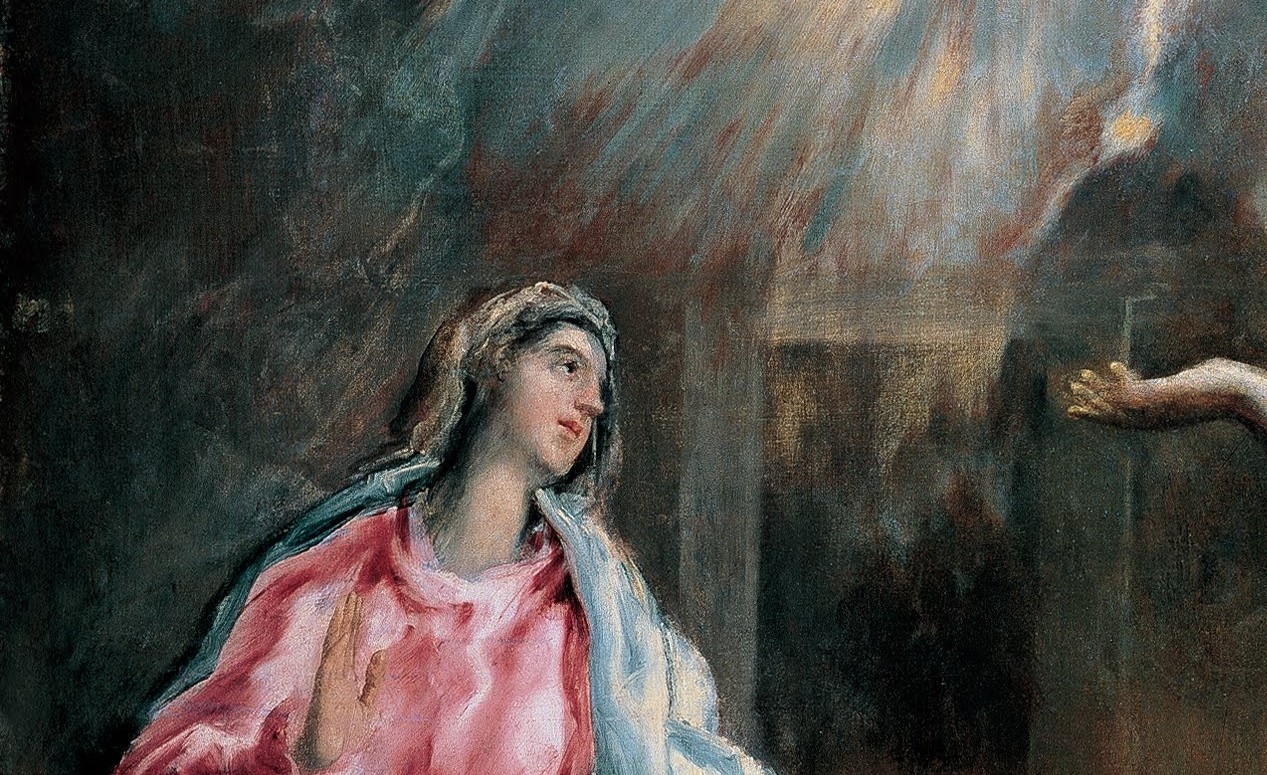
Luke, on the other hand, narrates the whole story of the birth and infancy of Jesus from Mary’s perspective. In his account, he presents her as the first to whom was revealed the plan of God that will culminate in the coming of the Son. In his greeting, the angel treats her as someone chosen by God and full of His grace, to whom God makes a proposal and asks her consent, thus making her a participant in its fulfillment. Her virginity is seen, in the light of the conceptions of the time, as the expression of a special purity. From there, based on the Augustinian doctrine of original sin, arose the idea that she, in view of the merits of the Son, was conceived without the stain that it left on all human beings.
Mary’s assent to the angel’s request highlights her profound faith, while in her visit to Elizabeth her generosity and availability are evident. Her spirituality is expressed in the Magnificat, which represents a synthesis of the gospel that Jesus will proclaim. Like Him, Mary places herself alongside the less favored, announcing their complete rehabilitation in the Kingdom of God.
Finally, in Luke’s description, Mary appears as someone who does not merely observe what happens to her, but meditates and seeks to understand the signs that God has sown in her life. She is fully involved in the story of Jesus, to the point that a sword pierces her heart. In the temple of Jerusalem, Jesus entrusts to her, first of all, the mystery of His relationship with the Father.
In the course of the gospel, Luke adds nothing particularly significant to his sources. He omits the name of Mary in his account of Jesus’ visit to Nazareth (Lk 4:22). In reporting the episode in which Mary comes to Jesus with His brothers, Luke eliminates the first part of His reply (“Who is my mother and who are my brothers?”. Cf. Lk 8:19-21), which means that Jesus does not contest His relationship with Mary, but places it in a different perspective, that of the relationship with God.
Moreover, Luke reports a saying absent from the other two Synoptics: faced with the cry of a woman who declares blessed the one who nursed Him, Jesus declares that, on the contrary, blessed is the one who hears the word of God and keeps it (Lk 11:27-28). According to Luke, Mary was the first to hear the word of God and to keep it.
Finally, none of the three Synoptics mentions the presence of Mary among the women who witnessed the crucifixion of Jesus. This information is present in the Gospel of John, where it says that Mary stood by the cross (Jn 19:25-27), and she was also present at the wedding at Cana, when Jesus performed His first miracle (Jn 2:7-11). For the Fourth Evangelist, Mary takes part from the beginning to the end of Jesus’ ministry and is entrusted as mother to the beloved disciple, that is, to the whole Christian community.
Deepen your studies: explore Mariology, Marian Theology, Marian apparitions, and the Postgraduate Program in Mariology.
Jesus is, at one and the same time, Son of God according to the divine nature and Son of Mary according to the human nature. The Council of Ephesus (431) declared Mary Theotokos, Mother of God, precisely because the personal unity of Christ implies that she who bore Him is the Mother of the Second Person of the Most Holy Trinity. The Council of Chalcedon (451) confirmed this doctrine by defining the two natures in a single Person, making the divine sonship and the Marian sonship of Jesus inseparable.
Postgraduate Program in Mariology
Would you like to deepen your formation in Mariology? Discover the Postgraduate Program in Mariology of Locus Mariologicus – an academic formation that unites theological rigor, spiritual life, and the living tradition of the Church.
Would you like to study Mariology seriously?
This article grows out of the works in the library of Locus Mariologicus. The Postgraduate Program in Mariology takes you to that same source, with academic guidance: Scripture, the Fathers of the Church, and the Magisterium, from the first dogma to contemporary questions.


Responses