The face of Mary in the writings of Saint John of the Cross
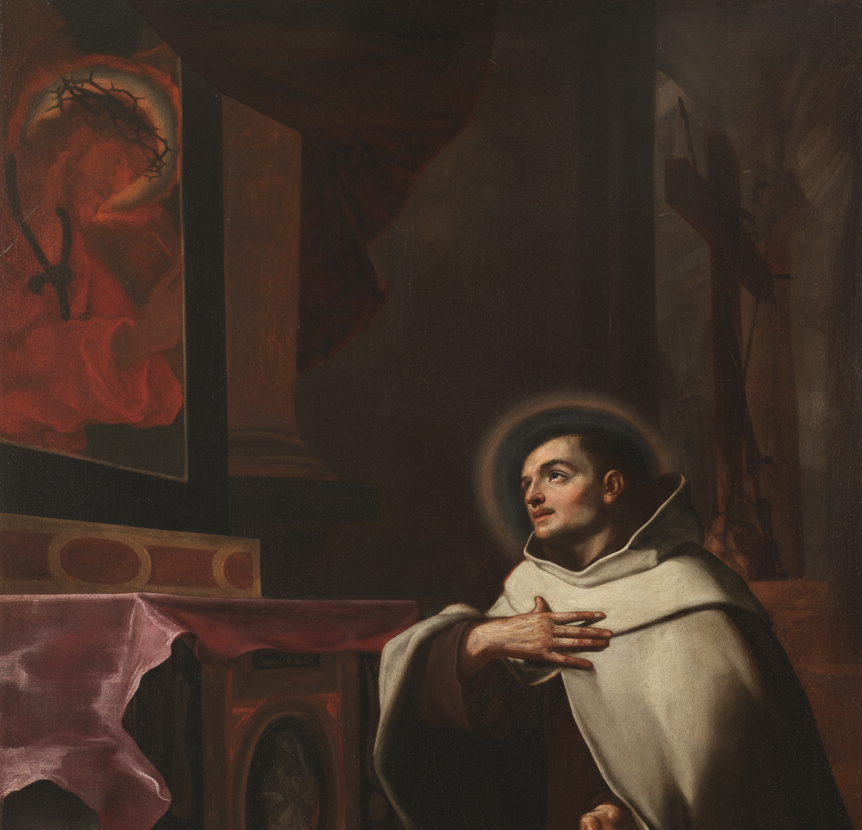
The apparent marginality of Mary in the writings of Saint John of the Cross (1542-1591): context and objective
In a summary analysis of the writings of the holy Father John, one fact immediately stands out which, at least at first sight, may leave us somewhat disappointed: the marginal place that the Virgin Mary seems to occupy in his texts. This fact should neither surprise nor disconcert us. It is simply explained: Saint John of the Cross does not intend to write a complete treatise of spiritual theology, as it is conceived today. He wants to offer help and light to so many souls who have already begun, and begun well, their journey, souls who already live, even if not perfectly, their relationship with God the Trinity and with the divine world, in which Mary already occupies the place that belongs to her by divine decree.
If, moreover, we keep in mind that the immediate recipients of his writings are above all the Carmelite friars and the Carmelite nuns, this explanation may seem superfluous. He stands before lives that, by religious consecration as well, are consecrated to Mary. The formula of profession then in force, and until not long ago, expressly emphasized that to consecrate oneself to God in profession was, at the same time, to consecrate oneself to Mary.
The face of Mary in Saint John of the Cross: scriptural sobriety and theological elevation
We have, however, despite the material sobriety of the references found in his writings, statements that present to us a face of Mary certainly far from certain commonplaces or from a superficial devotionalism, but without doubt worthy of the most exalted degree of holiness and of union with God that the Lord deigned to grant to His Most Holy Mother, and worthy also of the role that the Lord assigned to Mary in the work of salvation. On the other hand, not everything that the holy Father John lived did he express in his writings. And, in this particular case, we know a good deal of his devotion, with a capital D, sincere, tender, and ardent toward the Virgin Mary.
The first biographers will say that, many times during his life, he would recount how, when he was a boy, he fell into a pond and, while he was struggling to get out, a beautiful Lady appeared to him and, at her gesture, he being spontaneously afraid to stretch out his hand so as not to stain the white Lady, in the meantime a peasant arrived who pulled him out. We also know that he embraces Carmel because it is the Order of Mary, although he was invited by the nascent and already established Society of Jesus to join that new religious family. He is nourished, then, by that Carmelite spirituality which sees in Mary, besides the Mother, the model and the Sister: a characteristic aspect of our spirituality, sister to the ideal of union with God through the contemplative life.
The elements of Mary’s interior profile in the Carmelite spirituality of Saint John of the Cross
We have, therefore, sufficient elements to trace the essential profile, so to speak, of the interior face of Mary, in the light of the Sanjuanist texts, both those that speak explicitly and those that clearly allow it to be glimpsed, that face, that presence of Mary. According to some commentators, the ideal bride of the Canticle and the feminine figure of the Flame, on whose breast the Beloved rests His head, would be precisely Mary. It is not unlikely that, beneath the veils of that figure, the eminent face of Mary appears.
There is, however, a general statement that immediately places Mary in her rightful place in the mystery of Christ and in the mystery of every saved soul, and therefore also in that of John of the Cross. In the Prayer of the Enamored Soul, among other things, he says: “Mary is mine, because Christ is mine and all is for me.” That alone would suffice to say everything about the presence of Mary in the life of John of the Cross and in the life of every pilgrim on the way to union with God.
“Mary is mine”: belonging to Christ and the encounter with Mary in Christ
Christ is mine, because He is the Bridegroom whom the Father destined for me from eternity and who, through the Incarnation, and still more through His death on the cross, united Himself to me in a chaste and spiritual espousal. Through that union, all that belongs to the Bridegroom belongs also to the bride. All that belongs to Christ belongs also to John of the Cross: John’s are the Father, the Spirit, the Mother, the angels, men good and bad, everything. Therefore, nothing and no one will ever be able to take from him this gift that proceeds from the Heart of Christ. No one will be able to take Mary from him: Mary is mine. He says Mary, he calls her by name.
This bond with the mystery of Christ makes us understand how the baptized person moves always and only within the mystery of Christ, and from Christ receives sense and meaning. His Virgin Mother, Mary, also moves within that mystery; she is therefore not a reality that can separate us from Christ, but a reality that we find in Christ and, still more, a reality in which Christ offers Himself to us.
Mary in the mystery of Christ: union and subordination
It is a theological vision, moreover, very close to the understanding that the Church has today of the mystery of Mary. Mary can only be understood and received in her union with Christ and in her subordination to Christ. Mary is, further, the virginal womb in which the Word, by the joint work of the Trinity, takes flesh and unites Himself to the bride, who is humanity. This is a statement that we find in Romance no. 8.
Saint John of the Cross affirms here implicitly that every soul, in the virginal womb of Mary, is united to the Incarnate Word. It is in that womb that the Word, in the first instant of His coming into the world, unites Himself to the bride, to the whole of humanity. This is not something transitory, but remains as a sure point in the mystery of salvation. What happened for Christ happens for each one of us who belong to Christ. It is in that womb that the union takes place.
Spiritual motherhood: a real, continuous action subordinate to Christ
Through that union, historically realized in the womb of Mary, we come to share in the grace of Christ, the Incarnate Word. He was made flesh of Mary. And in that grace of Christ, Christian grace, there is not absent something, let us call it so for lack of better terms, something of the Mother, who really, really and not merely as a manner of speaking, contributes to the generation of the men of Christ.
The filial relationship, de facto, and we are children of Mary, Christ gave her to us on the cross, is always founded on a real generative fact, which is a communication of life. Divine life comes to us wholly from God in Christ, but we can say that it also comes to us wholly from God in Mary and through Mary, passing on to us, and, on the other hand, to Mary everything comes completely from God. This remains in us as a foundation that recalls, invokes, and also demands the continual assistance, the continual care of Mary for our salvation, throughout the whole path that leads us to communion with God, to glorification.
Mary as prototype: exemplarity in union with God
And there is another aspect of Mary that the holy Father grasps with great clarity: her exemplarity. Exemplarity in union with God, exemplarity of that union. Speaking of the souls who have come to union, whose characteristic is to be moved by the Holy Spirit, the holy Doctor comments by giving an example. What he cites is not a simple example. Mary is presented as the prototype closest to us, and toward whom we spontaneously turn our gaze.
In the Ascent III, 2, 10, one reads: “Such were the operations of the Virgin, Our Lady, who, raised from the beginning to that sublime state, never had the form of any creature impressed upon her soul, nor was she at any moment moved by any of them to act, but acted always under the motion of the Holy Spirit.” Of this text it has been said, perhaps with a little emphasis, that it alone is worth an entire book of Mariology.
The Most Pure: fullness of the motion of the Holy Spirit
Through this text one can read the whole pneumatological vision of the presence and the activity of the Holy Spirit in the work of sanctification. And one reads also the theology of union. Everything is lived and, therefore, expressed in this exemplar, in this icon, in this image that God has placed on the path of pilgrims. Mary, therefore, stands at the summit of the union possible with God, because she is the Most Pure, as they called her in Carmel.
She is Most Pure because conceived without sin, that is certain, but she is Most Pure above all because she never allowed herself to be formed by any creature. On the contrary, and this is the positive element that constitutes her Most Pure, she is a resplendent icon on the path of the Church because she is always moved by the Holy Spirit. She is, therefore, a creature wholly of God and wholly divinized, penetrated in every fiber of her being by God, wholly of the Trinity, wholly immersed in the Trinity, with unique and unrepeatable relations that do not set her apart from us, but make her a worthy icon and exemplar.
Mary’s intimacy with God in the Spiritual Canticle: images of mystical union in Saint John of the Cross
To her, more than to any other, apply the words that the holy Father writes in the annotation to stanza 26: “In the inner wine cellar I drank of the Beloved….” And he explains that the soul is clothed in God and immersed in the divinity, not superficially, but in the depths of the spirit, for, filled with divine delights and satiated in the spiritual waters of life, it experiences what David affirms of those who are thus united to the Lord: “they shall be inebriated.” And then, what will the soul’s satiety be, if the drink brought to it is a river of delights. Such a river is the Spirit, whose waters, being the intimate love of God, penetrate intimately into the soul, giving it to drink of the loving river that is the Spirit of the Bridegroom, infused into it in that union.
And in the following stanza, 27, 1, he says that, in this union, God communicates Himself in the soul with a love so living that there is no affection of a mother that caresses her child with equal tenderness, nor love of brother or of friend with which it can be compared. And he speaks of the humility and gentleness of God, who submits Himself to the humble and loving soul, as if He were the servant and she the Lord.
Mary as model of the path in charity
It was said that, in all this, Mary is the exemplar, the icon. This is possible because Mary stands at the summit of the one mystery of Christ communicated to us. It is the same mystery that is communicated to us and that was communicated in singular fullness to Mary. The same interior dynamisms, the Holy Spirit, the theological virtues, the gifts, which explain the singular holiness, perfection, and union of Mary, also explain our redeemed existence.
In looking at Mary, we must not look only to her initial privileges. Communion is the fruit of the path, of the path in charity. And Mary traveled that path as no other creature did, and for this reason she is sublime also as a model. If, absurdly, she had stopped at the initial privileges, she would not be what the Church contemplates, nor what the holy Father told us.
Spiritual riches: Mary and those who serve and love the Lord
In the Flame 4, 4, the holy Father speaks of the many ways in which God awakens within the soul, and of the movement that the Word makes in the substance of the soul, of such greatness, power, glory, and sweetness, that it seems that all the balsams, spices, and flowers of the world are shaken so as to spread their fragrance, and that all the virtues, substances, perfections, and graces of every created thing shine forth and together make the same movement.
It is right to apply these riches to Mary, but it is right to apply them also to all those who, like Mary, in humility of heart, in purity of spirit, and in poverty of spirit, serve and love the Lord. For this reason Mary presents herself, as the Council recalls, as a sign of consolation and of sure hope for all of us.
Mary as model of supplicating prayer
Mary is presented by the holy Father as a model of the prayer of supplication. She sets forth the need, entrusting to the Lord the establishing of what is most fitting. In the Canticle, stanza II, no. 8: “Note how the soul, in the verse cited, ‘Say that I languish, suffer, and die,’ limits itself to setting before the Beloved its own needs and sufferings, for whoever loves with discernment does not concern himself with asking for what he lacks or desires, but simply sets forth his needs, so that the Beloved may then do what pleases Him.”
This can illuminate our prayer. Sometimes we think that, in order to pray, it is necessary to know all the needs, to read, to be informed. No. It is simpler: whoever loves with discernment does not concern himself with asking, but simply sets forth his needs, and the needs of humanity, always greater than what we can know from the news, whatever it may be.
And so did the Virgin at the wedding at Cana, when, without a direct request, she said: “They have no wine,” and so did the sisters of Lazarus.
The efficacy of prayer: “omnipotence by grace”
The supreme prayer is that which the Holy Spirit stirs up in us; it is He who prays in us. Mary’s prayer is the one that vibrates at the slightest movement of the Spirit, because she is the one who most loves and praises the Lord. And for this reason it is also the most efficacious prayer on our behalf.
In the Canticle, stanza 32, no. 1: “Great is the power and the tenacity of love, which conquers and binds God Himself. Happy the soul that loves, for it holds the Lord as its prisoner, ready to do all that it wills.” Here is the omnipotence by grace of Mary’s prayer. She is the one who loves the Lord to the greatest degree, and for this reason He is, so to speak, Mary’s prisoner, ready to do all that she wills.
The sorrowing Virgin: associated with the redemptive suffering
Mary, finally, is the sorrowing Virgin, who by the will of God is associated with the redemptive suffering of the Son. In the Canticle, stanzas 20-21, no. 10, there is a discussion of the great stability of the soul in this state, such that the waters of sorrow, whether of its own sufferings or of those of others, no longer bring it affliction, even though it recognizes things as they are. And it is explained that, in this transformation of love, there happens to the soul what happens to the angels, who perfectly appraise painful things without feeling pain, and exercise mercy and compassion without suffering.
And it is added that the Lord sometimes dispenses from this immunity from sorrow, permitting one to suffer in order to acquire greater merits and to enkindle love more, as happened with the Virgin Mary, with Saint Paul, and with others. Mary, therefore, by the will of God, suffered and was associated with the redemptive suffering of the Son. Her being Immaculate does not exempt her from sorrow, nor does her full union with the Lord, which constitutes her joy. Joy and sorrow can be together.
Synthesis: the Mariology of Saint John of the Cross (1542-1591) and its legacy for Carmelite mysticism
The face of Mary that can be glimpsed in the writings of Saint John of the Cross is not that of an accessory presence, but that of a theological presence, situated at the center of the mystery of Christ and, for that very reason, at the heart of the path of every soul called to union with God. The sobriety of the explicit mentions does not impoverish this presence: rather it purifies it of all easy devotionalism and leads it back to its proper place, where Mary is found in Christ, and where Christ offers Himself also through her. “Mary is mine, because Christ is mine and all is for me” thus becomes an admirable synthesis of the belonging of the faithful to the Bridegroom and of the gift that, in that belonging, includes the Mother.
In this light, Mary appears as the virginal womb in which the Word unites Himself to humanity and as the real foundation of our filiation, subordinate to and entirely dependent upon the one mediation of Christ. For this reason, the spiritual motherhood of Mary is not a figure of speech, but a real, continuous, and maternal action that accompanies the pilgrim along the itinerary of grace. And, at the same time, she is manifested as prototype and icon of union, the Most Pure, always moved by the Holy Spirit, free from every disordered impression of creatures and fully configured to the divine motion. Her exemplarity is not reduced to initial privileges, but expresses the fullness of the path in charity, which is also the path of the Church.
Finally, the same Mary who is icon of union is also model of prayer and of compassion, simple prayer that sets forth the need and leaves to the Beloved the manner and the hour of help, efficacious prayer because born of the greatest love, and further, a suffering presence associated, by the will of God, with the redemptive suffering of the Son. Thus the title dear to the holy Doctor, “Our Lady,” becomes program and hope: to place oneself in the hands of the Mother is to remain in the mystery of Christ, without deviations, and to walk with security toward Him who is the blessed fruit of her womb, Jesus. And may this be the wish for us and for all, that Mary may truly be “Our Lady,” until God dwells in us and with us, and we with Him.
For the theological understanding of the role of Mary in the economy of salvation, chapter VIII of Lumen Gentium of the Second Vatican Council illuminates the ecclesial dimension of the mystical experience of Mary described by Saint John of the Cross.
Deepen your studies: explore Mariology, Marian Theology, Marian apparitions, and the Postgraduate Program in Mariology.
Continue your Marian formation: Explore our resources on Mariology, Marian Theology, and Marian apparitions. Discover the Postgraduate Program in Mariology of the Locus Mariologicus Institute.
To deepen Marian theology in the mystical tradition and the role of Mary in the history of salvation, consult the Encyclical Redemptoris Mater of Pope John Paul II.
Postgraduate Program in Mariology
Would you like to deepen your formation in Mariology? Discover the Postgraduate Program in Mariology of Locus Mariologicus, an academic formation that unites theological rigor, spiritual life, and the living tradition of the Church.
Would you like to study Mariology seriously?
This article grows out of the works in the Locus Mariologicus library. The Postgraduate Program in Mariology leads you to the same source, with academic guidance: Scripture, the Fathers of the Church, and the Magisterium, from the first dogma to contemporary questions.



Responses