Voluntas patris: Mary and the will that loses no one.
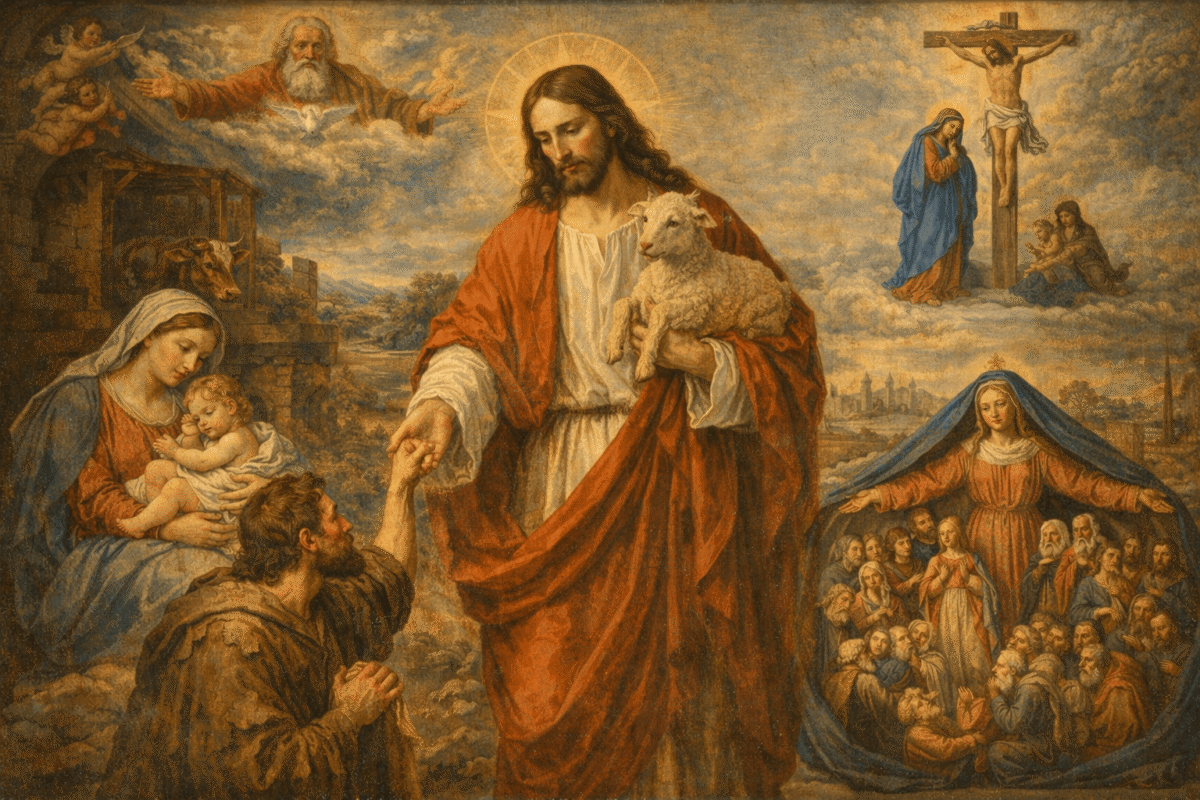
Haec est autem voluntas eius qui misit me Patris: ut omne quod dedit mihi non perdam ex eo.
Jn 6:39
In the great Bread of Life discourse, Jesus reveals His identity as the Bread come down from Heaven and the deep logic of His mission: to fulfill the Father’s will entirely. And the core of that will is crystal clear: to lose no one. This apparently simple statement contains the whole theology of salvation: the Father wills the recovery of every human being, and the Son came to accomplish exactly that. Mariology finds here a fundamental anchoring point: Mary, who said “let it be done to me according to your word” (Lk 1:38), embodied that same saving will of the Father in a unique and unrepeatable way.
I. The Father’s will as the center of Jesus’ mission
Jn 6:38-39 offers one of the densest statements of the Fourth Gospel: “I came down from Heaven not to do My own will, but the will of Him who sent Me. This is the will of Him who sent Me: that I should lose none of those He has given Me, but should raise them up on the last day”. The structure is clear: there is a will of the Father that precedes and grounds the Son’s mission, and that will has a precise content: the integral salvation of all humanity.
This subordination of the Son’s will to the Father’s is neither servile nor heteronomous: John presents it as a profound identity between the two wills. The Son wills what the Father wills because they share the same divine life, the same love, the same orientation toward the salvation of the world. The Father’s will is not an order external to the Son; it is the expression of the intra-Trinitarian communio that pours itself outward in creation and in redemption.
The Greek verb apoleso, “to lose”, carries an enormous theological weight in John. The lost one is he who turns away from the Fountain of life and perishes in definitive death (cf. Jn 3:16; 10:28; 17:12). Jesus’ promise is that none of those the Father entrusted to Him will reach that state: His mission is a mission of recovery, of gathering, of preservation. The Good Shepherd who gathers the sheep (Jn 10) and the High Priest who intercedes for all the disciples (Jn 17) are expressions of the same will to lose no one.
The theology of predestination finds here its most solid foundation: God wills all men to be saved (cf. 1 Tim 2:4), and that will is not a vague aspiration but an efficacious action that is realized in the person and the work of Jesus Christ. The question of human freedom does not annul this universal saving will; rather, it gives the measure of the seriousness with which God treats each person, as someone capable of freely responding to the love that precedes him.
II. Mary, image of the will that welcomes
The scene of the Annunciation is, in the mariological tradition, the moment in which the human will aligns itself perfectly with the divine will. “Let it be done to me according to your word” (Lk 1:38): Mary’s fiat is not a passive resignation nor a capitulation of the self; it is the freest and most conscious act in human history, by which a woman of Israel says “yes” to God’s proposal and thus becomes the point of entry of the Incarnation into the world.
But Mary’s fiat is not merely a single, past act: the tradition recognizes that Mary lived entirely oriented by the Father’s will. Mary’s obedience is not only that of the initial moment; it extends to her whole life, from the “yes” of the Annunciation to the silence of Calvary and the prayer of the Upper Room. Each stage of her existence was a new configuration of her will to the will of God, often in a context of obscurity and suffering.
Lumen Gentium 56 underscores that Mary “cooperated in human salvation by free faith and obedience”. This cooperation was neither accidental nor peripheral: it was structural to the divine plan. God willed that the Incarnation of the Word should depend on the free “yes” of a woman, which says a great deal about the way God accomplishes His saving will: not by coercion, but by covenant with human freedom.
It may be said that Mary is, in the history of salvation, the perfect model of the consonance between human will and divine will. Where Adam and Eve preferred their own will to God’s (cf. Gen 3), Mary preferred God’s will to her own. Where Israel resisted the divine plan (cf. Hos 11:2), Mary welcomed it entirely. She is the “daughter of Zion” in whom the covenant finally finds the faithful response it had awaited from the beginning.
III. “To lose no one”: the universal motherhood of Mary
Jn 19:26-27 narrates the moment in which Jesus, from the height of the Cross, entrusts the beloved disciple to Mary and Mary to the disciple: “Woman, behold your son… Behold your mother”. The tradition has interpreted this gesture as the institution of Mary’s spiritual motherhood over all disciples. “The beloved disciple” is not only John; he is the disciple of every age, the faithful one who stands beside the Cross and to whom Jesus entrusts His Mother.
This universal motherhood of Mary stands in direct continuity with the Father’s will to “lose no one”. Mary, who participated in Christ’s redemptive mission in a unique way, also participates in His mission of recovery. The tradition speaks of Mary as Mediatrix, not in the sense of a mediation parallel to that of Christ, but of a subordinate and participated mediation: she intercedes for her spiritual children with the authority of one who was associated with the work of redemption.
The Marian title Refugium peccatorum, Refuge of Sinners, expresses precisely this dimension. Mary is the refuge of all who have strayed from the way, of all who are at risk of being “lost”. Her motherhood is not selective; it is not restricted to the just or to the devout: it is universal like the saving will of the Father, because it is rooted in that same will and serves it.
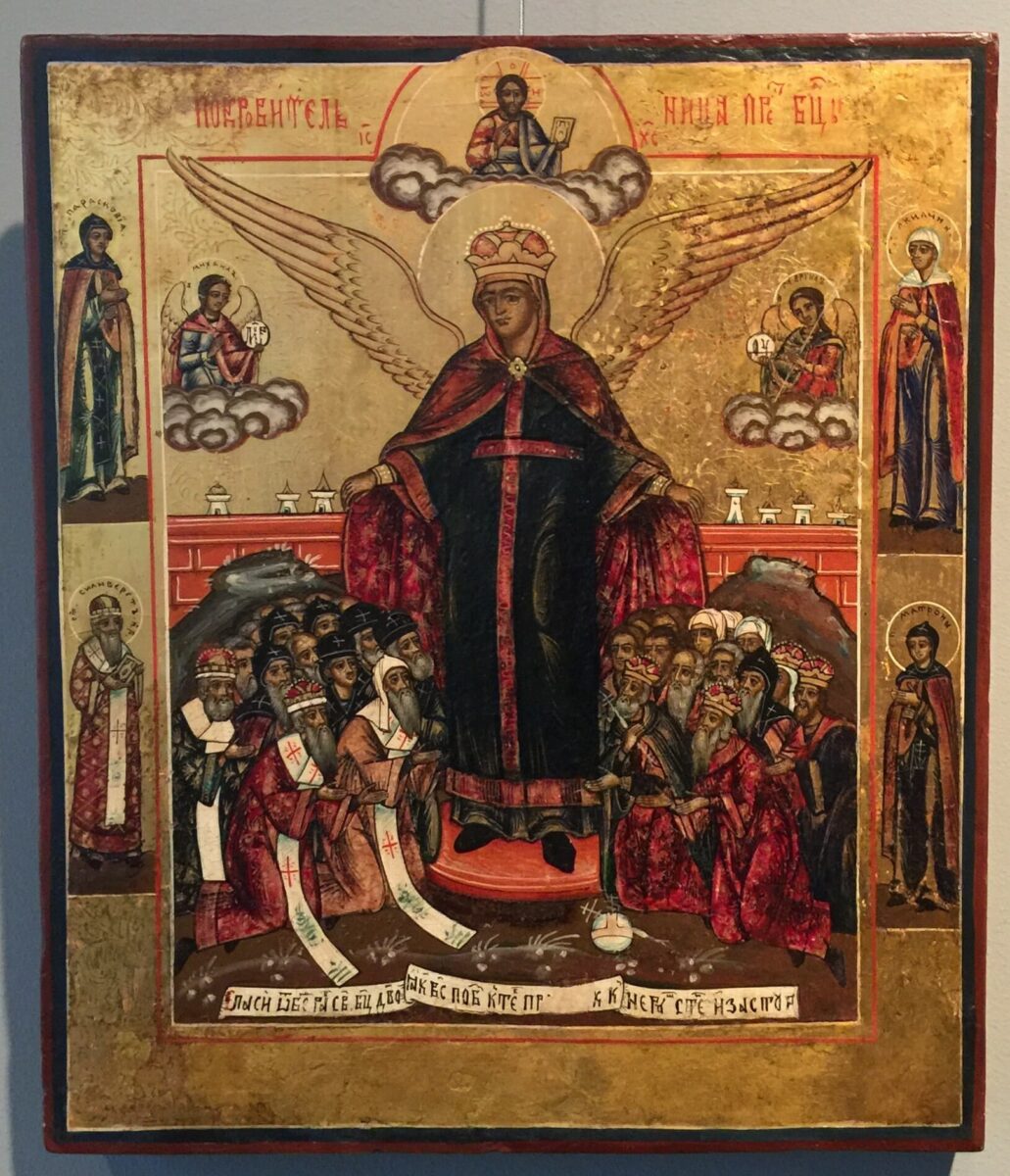
The Eastern iconography of the Theotokos who shelters all the faithful under her mantle, the celebrated icon of the Pokrov, expresses this conviction theologically: Mary spreads her mantle over all humanity, without discriminating between sinners and the just, because the mercy of the Father reaches them all and she is an instrument of that mercy.
IV. To rise on the last day: paschal hope and Mary
Jn 6:39 ends with an eschatological promise: “that I should raise them up on the last day”. Jesus’ mission is not only one of preservation in the present; it is one of future resurrection. Salvation has a bodily and definitive dimension that the resurrection of Christ inaugurates and that the universal resurrection will consummate. The Father does not merely will that no one be lost now; He wills that all live fully forever.
Mary is, in Catholic theology, the first fruits of this final resurrection. The dogmatic definition of the Assumption (Pius XII, Munificentissimus Deus, 1950) affirms that Mary was assumed “body and soul” into Heaven: she anticipates, in her own person, the definitive destiny of all redeemed humanity. What the Father promised to all, “to raise them up on the last day”, has already been accomplished in Mary in a full and definitive way.
This eschatological dimension of mariology is not a peripheral detail: it is the horizon that gives meaning to all Marian devotion. To look at Mary is not to look at the past; it is to anticipate the future. She is the image of what the Church will be, the symbol of what every Christian hopes for, the confirmation that the Father’s will to “lose no one” will reach its fullness on the last day.
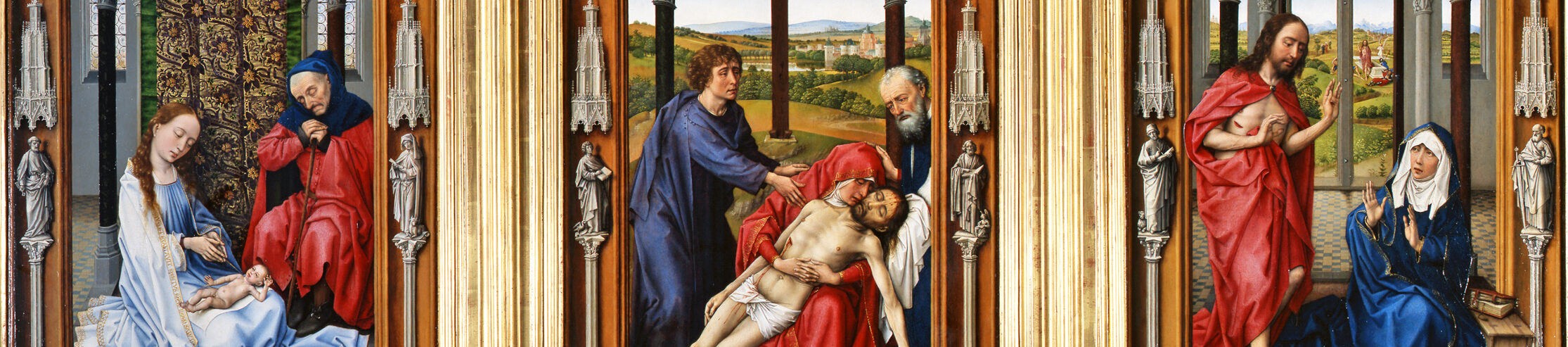
The paschal liturgy, which celebrates Christ risen and glorified, has in Mary its privileged Marian reference: she who welcomed the Incarnation with her “yes” is also the first to contemplate the glory of the Risen One. The tradition, though without explicit biblical testimony, has always intuited that it was to Mary that the Risen One appeared first, like the son who shows his mother the victory he has won. In this logic, Mary is the first living witness that the Father’s will to “lose no one” is a powerful will, one that overcomes even death.
Mary, who welcomed the Father’s will with her “fiat” and who participates in the Son’s mission of losing no one, is for the Church the living sign that salvation is possible, real, and definitive.
Postgraduate Program in Mariology
Would you like to deepen your formation in Mariology? Discover the Postgraduate Program in Mariology from Locus Mariologicus – an academic formation that unites theological rigor, spiritual life, and the living tradition of the Church.
Would you like to study Mariology seriously?
This article is born from the works in the library of Locus Mariologicus. The Postgraduate Program in Mariology takes you to the same source, with academic guidance: Scripture, the Fathers of the Church, and the Magisterium, from the first dogma to contemporary questions.



Responses