Mary in the Church of Ukraine

Mary in the Church of Ukraine
“The name alone of the Theotokos, of the Mother of God, contains the whole mystery of the economy of salvation”, says Saint John Damascene.
A brief history
The cult of the Mother of God has its beginning in the Rus of Kiev, today Ukraine, from the moment when the grand prince Saint Vladimir was baptized with his people, receiving the Christian faith brought from Constantinople. The oldest chronicles of the time describe the filial love and the trust in Our Lady shown by the princes, the clergy, and the faithful people. For example, in Kiev, which is the capital, there are many churches in honor of the Mother of God. Of these churches, 20% are dedicated to Our Lady!
The devotion remained constant even in the saddest centuries of history. The traditional liturgy is the Byzantine one, which is predominantly Marian. The faithful sense the Theotókos present in the church with invocations such as:
- the Queen of the world,
- the Mediatrix,
- the Hope of the despairing,
- the living Ark of God,
- the Glory of the whole universe,
- the invincible leader,
- the refuge of sinners.
As the doctrine of Jesus Christ was proclaimed, the Virgin Mary took ever greater possession of the hearts of Ukrainians. The Marian cult developed in the courts of the princes, among the clergy, and among the people.
What is its importance?
We can deduce this importance from the tradition still alive in the liturgy, in the miraculous icons, in the architecture of the churches, and in religious literature. Marian piety spread more and more among the people, even in the following centuries of Ukrainian history, despite having gone through various negative vicissitudes in its development.
Kiev-Rus’ was a very large country, with great Byzantine churches, which were built by the monarchs: Jaroslav, Danilo, Volodymyr.
In 1240 the Tatars devastated all of Eastern Europe. The city of Kiev was conquered and destroyed, even though it remained the cradle of Marian culture.
Mary in the liturgical tradition
Mary in the Byzantine-Slavic liturgy occupies the central place beside her Son Jesus Christ. Mary is invoked and praised in the liturgy, in the liturgical canons, in the Marian offices (Moleben), in the prayers of the faithful, and in the liturgical year, which has several feasts dedicated to her name. The cult of the Virgin Mary among the people of the Rus’-Ukraine was soon deeply received with all its prerogatives and attributes, without there being a theological controversy, as was then happening among other peoples. The people already sang to the Virgin Mary, invoking her: “It is right to call you blessed, O Deipara, all immaculate and Mother of our God. We magnify you, who are more honorable than the Cherubim and incomparably more glorious than the Seraphim: you who without corruption gave birth to God the Word, you, true Mother of God” (chant in the liturgy of the Mass, Dostojno jest…).
The Virgin Mary is acclaimed “all holy, all pure, immaculate, and without corruption”. Mother of God and mother of men. She is recognized with the cult of hyperdulia, that is, as the mother of the Lord, who is above the Angels and Saints.
The akathists
The Mariological originality of Ukraine is found in the religious chants, called akathists, published in the monastery of the Caves of Pecerska Lavra in 1606 and 1625. They are a collection of Marian chants that are sung in the monasteries and churches of Ukraine, translated from Greek and adapted to the needs of the Ukrainian Church. The Marian cult already developed in the Byzantine Office entered fully into the Metropolis of Kiev, both in the Polunoscnyci (Matins) and the Utrennia (Lauds), where in the verses of the Magnificat, Velycyt dusa moja Hospoda. At the Intermediate Hour the troparia and Kondakì corresponding to the Virgin are recited. In the Vecirnia (Vespers), in which the Troparion Ave Maria and Pid tvoju mylost (sub Tuum praesidium) are sung during Lent. So too at Compline the Mother of God is invoked for the forgiveness of sins. We also have the particular canon sung to the Virgin of the Odygytria (She who indicates the way).
In this Slavic office is contained all the theological and spiritual richness, the manifestation of the glory of Mary, from which the monk or the faithful enriches his religious spirit and rises to a greater trust in and gratitude toward the Mother of God.
Besides the liturgy we find prayers and religious chants in honor of the Virgin Mary developed within the Marian cult, composed by men of the Church of different ranks for different occasions.
In the hours of anguish the whole population was entrusted to the protection of the Virgin Mary, as a secure fortress against enemies. In these cases only God and His Mother could save them from destruction, as is affirmed by a historical source, which attributes these words to prince Mstyslav (1125-1139): “Lipo ny bylo, brate, uzijasse na Boziju pomoc i na molytvu Sviatyja Bohorodycy” (O brother, would it not be better to have recourse to the help of God and to the prayer of the Holy Mother of God).
Another form of Marian manifestation was the religious hymns, composed by poets and singers of the courts of the monarchs in homage to the Virgin Mary. Several are known, among them the Christmas songs (called Koladky, from the Lat. Calendae), which were sung during Christmas. There are records of these chants in the Rus’-Ukraine from the twelfth century, and they probably came from the Roman colonies of Chersonese, near the Black Sea. In these Christmas songs, the Marian theology of the divine motherhood is set forth, her place in the redemption and in the divine economy, according to the designs established by God. A particularity lies in the presentation of the maternal function of the Virgin replacing the function of the pagan goddesses, sung by the peoples who lived in the Rus’-Ukraine before accepting Christianity. Therefore, the Christmas songs (Koladky) were a source of meditation for the faithful. For the educated clergy and the Ukrainian nobility, a spiritual awakening of joy and happiness for the work accomplished by God through the Virgin Mary.
The miraculous icons in Ukraine
The first miraculous icon dates back to the tenth century in the church of the Assumption, called Desiatynna.
A second icon of the Virgin Mary is the one called Orante, which is found in the church of Saint Sophia in Kiev, located in the apse of the Sancta Sanctorum, which is why the wall is called Nerusyma (indestructible) (eleventh century).
Another icon of the Virgin Mary was called Odigytria, that is, she who indicates the way. In the spiritual sense Mary is the guide of the Christian people to God. Tradition holds that it was painted by the evangelist Saint Luke. It was donated by the Empress Anna to Saint Vladimir. In 1111 it was brought to Smolensk. This icon represents the Virgin with the Child Jesus in her arms, with her gaze turned toward the one who contemplates her. It has a majestic character, particularly emphasizing the divinity of the Child.
The famous icon of the Pyrotosca was traditionally attributed to the evangelist Saint Luke. In 1131 it was brought from Constantinople to Kiev by a merchant named Pyrotoscca. Prince Mstyslav built a church in Vyshhorod, the residence of the princes, where it was located. In 1155 prince Andrei Boholiubskyj, after having conquered the city of Kiev, took this icon with him and brought it to the city of Vladimir, where it remained until 1395. In 1514 it was taken to Moscow, where it is currently located in the Troitzka Gallery. Lord Robert Byron, after having contemplated it in the year 1933, wrote: This is one of those rare paintings where the religious formula has become the instrument of the manifestation of human feelings, which is possible only for great art: the mother caresses her son, their cheeks touch, the baby’s little fingers caress her neck… In those dark eyes and in that sad little mouth there live eternal sorrows and joys, the whole destiny of man. Such an image can only fill the eyes with tears and the soul with peace. I know of no other icon that was of the same artistic level.
The miraculous icon called Svinska was painted by the monk Alypij at the Pecerska Lavra. From this image, prince Romano Bryanskyj obtained the grace of recovering his sight. It is now located in Rostov. This icon was also called Ihor Otelovyc, because before dying (September 19, 1146) he prayed before it. The characteristic of this icon lies in the position of the Mother and the Son in a profusion of tenderness. That is why it is called Umelenja (the Tenderness). The image of the Virgin is depicted with the Son on her right arm, with a pensive face. The Son stretches out his arms toward his mother’s neck and rests his face against hers.
The miraculous icon of Polock is also called Eufrosina. It was brought from Ephesus (twelfth century), a copy of those of the evangelist Saint Luke, to the women’s monastery founded by Euphrosyne. In 1260 the prince of Galicia, Daniel, took it to Lviv, where it remained in the monastery of the Basilians and was then taken to Belz. In 1382 it came to be in Czestochowa. In the monastery of Nyzhhorod there is a miraculous icon brought around 1092 from Chersonese, painted by the monk Simeon. Another icon revered by the Ukrainian people, called Zarvanycica, dates back to the twelfth century. The church where the icon was kept was destroyed by fire, but the icon remained unharmed. Popular tradition venerates the icons Zydacivska (fifteenth century), Blacherna, Stradecka (thirteenth century).
Shrines are not lacking where the Virgin Mary appears, as at Kolomyj, whose church was destroyed by the Tatars. A second apparition is indicated at Pocaiv, where Our Lady appeared for the first time on April 17, 1198, and a second time in 1260. Pocaiv is the Marian center of continuous pilgrimages of both the Orthodox and the Ukrainian Catholics.
Mary as the moral figure of the people
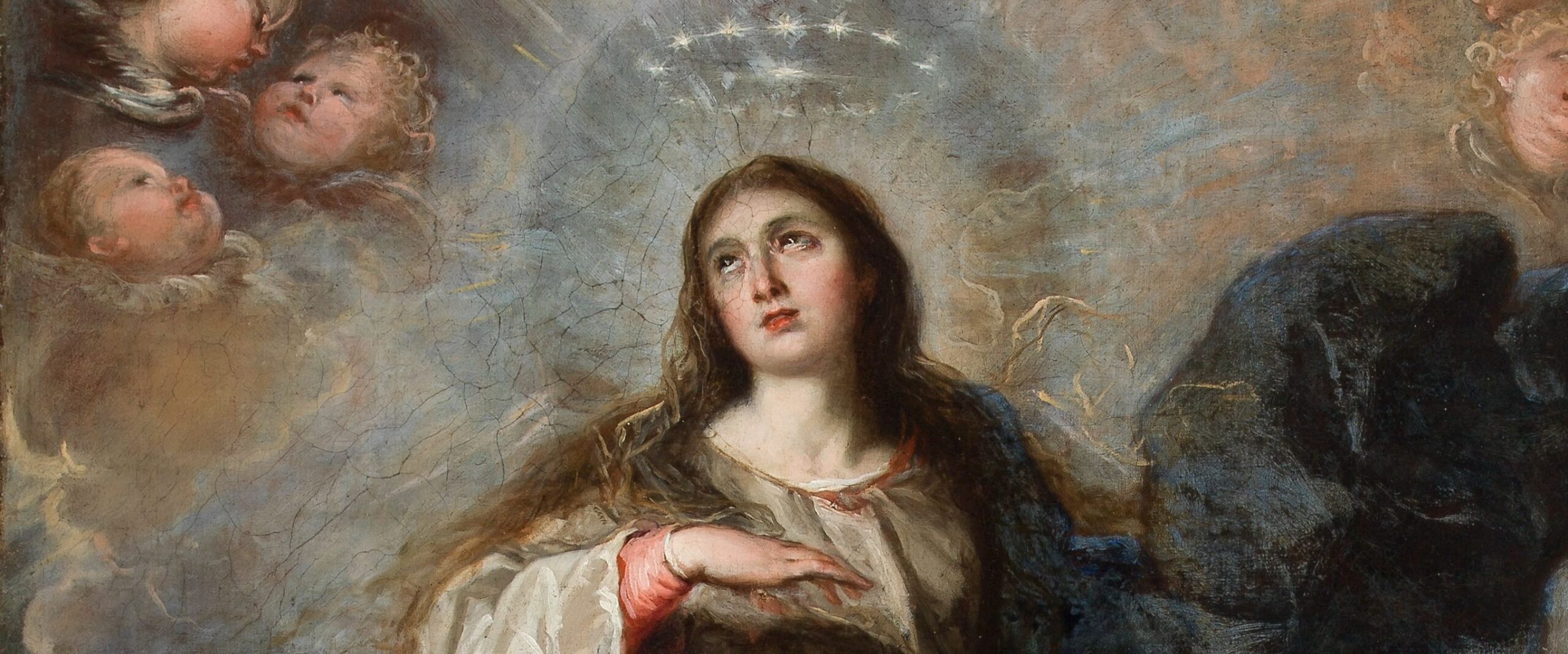
To understand the influence that Mary exercised over the Ukrainian people, it is necessary to relate the theological concept of her motherhood to the Church of Christ. Mary fulfills the function of maternal participation in the Church, as she did with her Son when he was a child. Men before God feel themselves to be children and therefore need the Mother who intercedes for them, listens to them, and helps them. For this reason the princes, the clergy, the monks, and the simple people had recourse to her, because in her they found the place of the wisdom, holiness, chastity, and virtue of God personified in her humanity.
Mary is therefore the heart of the Church, she is the triumph over evil, she is the most chaste, the most pure, she is the protectress and the consoler. The love of the Virgin Mary not only for her Son, but also for the Christian people, was a general conviction among all. For this reason, more often, instead of being called Queen Lady, she was called Mother by the people. In this maternal cult human motherhood developed, positively enriching the theological concept, as a good act, willed by God. The function of mother and wife faithful to her husband, as the Church is faithful to Christ, according to the teaching of Saint Paul to the Ephesians, completes the concept of the mother of Christians, who can do all things with her Son Jesus Christ.
The role of Mary in the life of the universal Church, including the Eastern Churches, is explored in depth in the encyclical Redemptoris Mater of John Paul II, which highlights the ecumenical and ecclesial dimension of Marian devotion.
Deepen your studies: explore Mariology, Marian Theology, Marian apparitions, and the Postgraduate Program in Mariology.
Postgraduate Program in Mariology
Would you like to deepen your formation in Mariology? Discover the Postgraduate Program in Mariology of Locus Mariologicus, an academic formation that unites theological rigor, spiritual life, and the living tradition of the Church.
Would you like to study Mariology seriously?
This article is born of the works in the library of Locus Mariologicus. The Postgraduate Program in Mariology takes you to the same source, with academic guidance: Scripture, the Fathers of the Church, and the Magisterium, from the first dogma to contemporary questions.




Responses