The Popular Christian Sense of the Immaculate Conception

The Popular Sense of the Immaculate Conception: Mary in the Heart of the People
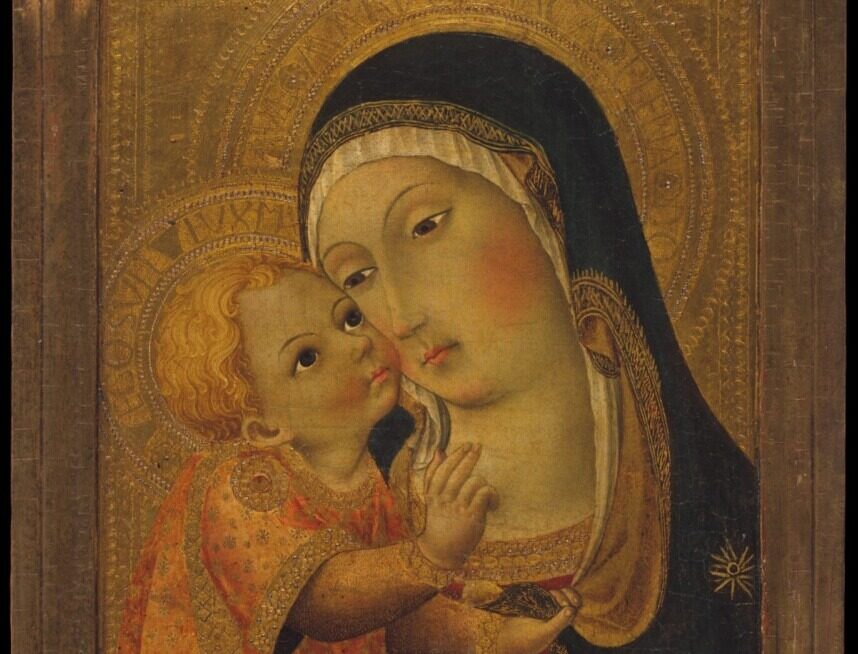
The popular Christian sense
In the history of the dogma of the Immaculate Conception, the precedence of the popular Christian sense, which, being inspired, progressively brings forth the truth about Mary implicit in revelation through the extraordinary role played by the faithful, stimulated the data of faith to such a point as to lead them to a dogmatic definition. Let us consider what happened on the Iberian Peninsula and afterward among the peoples evangelized in the overseas expansion, heirs of a Christian experience that was above all popular. The chivalric spirit that evokes the beloved woman, present in Saint Ignatius of Loyola, who was on the point of running his sword through a person who dared to offend the primordial purity of Mary. Also from this period is the need to combat the insinuations against Mary coming from the Jewish world, which, in order to defame Jesus, asserted Mary’s adultery with a Roman soldier named Pantera.
It will never be simple to document popular faith, since it is not expressed in documents but in facts, in cultic and artistic initiatives that are later documented and through whose reading one seeks to reach the primordial inspiration. Nevertheless, in recent decades, above all through the theological force of the CELAM documents, new perspectives on popular piety have been reached, together with its framework and its Christian value, which is not to be underestimated.
The earliest intuitions concerning the Immaculate Conception that we can date are found in the theme of Mary’s extraordinary holiness, which is already present in the second-century Protoevangelium of James and which echoes the popular atmosphere surrounding the singularity of the Mother of Jesus. In this writing, also known as the Nativity of Mary, we find a legend in which Mary’s conception takes place while Joachim is still in the desert, and therefore without the participation of a man and without legal contamination. Clearly, even though it does not speak of original sin in Mary, it is a reading that allows one to sense the necessity of Mary’s perfect and original holiness from her very conception.
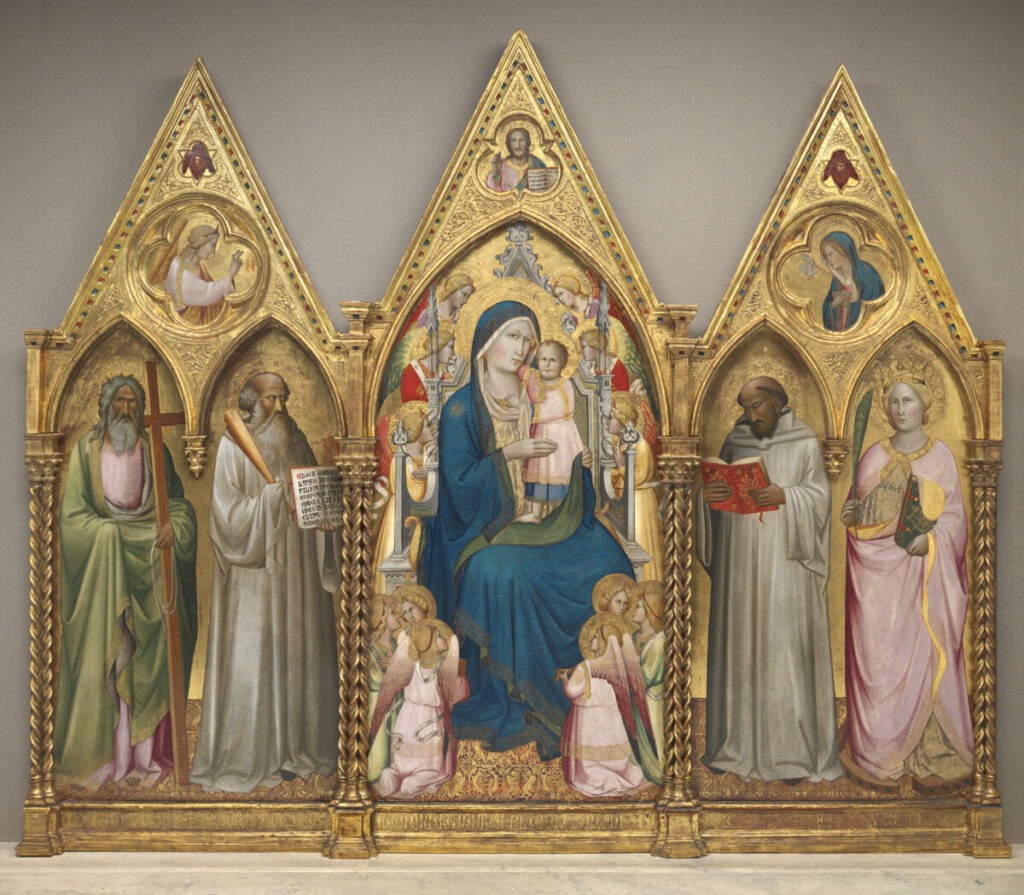
Clearly mirroring the virginal birth of Jesus, the intuition concerning Mary’s holiness is not devoid of theological meaning, for the Fathers of the Church with one voice call her All Holy, Tota Pulchra, Panagia, which confirms the theological conviction. However, it is only in the eleventh century that the Western form we know would come to have mature theological witnesses that confirm, and are inspired by, popular usage. In this century it is already common for the feast of the Conception of Mary to be celebrated, and when it was once denied, it set off a popular uprising against those who denied the immaculate conception of Mary. The Benedictine Eadmer of Canterbury (d. 1134), a disciple of Anselm of Canterbury, in his Treatise on the Conception of the Blessed Virgin Mary, contrasts the pure simplicity and humble devotion of the poor, who celebrate the feast of the Conception of the Mother of God, with the superior and self-assured learning of the wealthy churchmen who abolished the feast, declaring it devoid of foundation. The author places himself on the side of the simple, moved by an affection of piety and sincere devotion for the Mother of God, pronouncing Mary’s conception free from all sin.
Some centuries later, in 1435, we find the testimony of John of Romiroy, who at the Council of Basel appeals to popular devotion as the first motive that ought to lead the Fathers of the Council to put an end to the controversy over the Immaculate Conception. In this way the effect of scandal would be annulled, whereby, in order to deny the Immaculate Conception, it was asserted that Mary had been stained by original sin. But not even this theological position, supposedly correct because it was heir to a system of quantifiable grace and sin, managed to dampen the popular inspiration.
The history of the Immaculate Conception, somewhat as happens in the Mariology of our own day, had to reckon with the good sense of the Dominican Melchior Cano, a Dominican of the school of Salamanca, who maintained that a wise and competent theologian was required in order to assert the truth or falsity of propositions in matters of faith. Already in the seventeenth century we find faith in the Immaculate Conception as a universal and deeply rooted fact, justifying the creation of confraternities which, under the title of the Immaculate Conception, gradually added to the litanies the invocation Sancta Virgo praeservata. In this same period altars and chapels were dedicated to the Immaculate Conception, as were paintings such as the Puríssima by the painter Murillo (d. 1685).
Unprecedented in the history of the Church was the university movement of the seventeenth century in favor of the Immaculate Conception, with the oath even to the shedding of blood, votum sanguinis, as happens at the universities of Granada and Seville, among others. This movement came to spread among the religious orders, confraternities, and the faithful, erupting in controversies such as the famous one of L.A. Muratori (d. 1750), who considered it immature that anyone should place his own life in danger to defend the Immaculate Conception, given that it had not been declared a dogma of faith by the Magisterium. The response was not long in coming, and Saint Alphonsus Maria de Liguori (d. 1787) refutes Muratori’s opinion for two reasons: the consensus of the faithful and the universal celebration of the feast of the Immaculate Conception are valid reasons for such a proof of firmness in the faith. In the ninth century in Naples this feast was celebrated on December 9 as Conceptio Sanctae Mariae Virginis, in England from the eleventh century, and in the Universal Church from 1708 with Pope Clement XI.
The feminine presence deserves to be highlighted. Besides the well-known text wrongly attributed to Saint Catherine of Siena, which would refer to the Marian privilege as an error, we find the Revelations of Saint Bridget (d. 1373), considered authentic by the Council of Constance (1415) and which had a great influence on the Dominican Tommaso Campanella (d. 1639), for they dissociated the conjugal act of Joachim and Anne from an exercise of concupiscence, regarding it as an action of divine charity. Other women, such as the Portuguese Beatriz da Silva (d. 1490), founded congregations dedicated to the Immaculate Conception, favoring the spread of this Marian truth of faith.
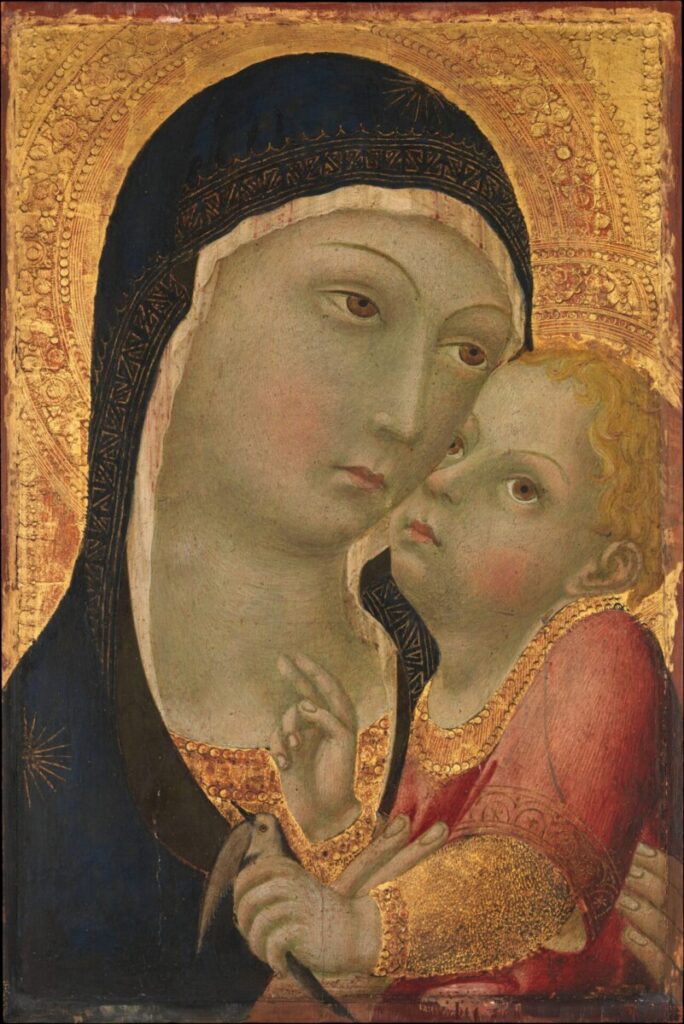
The consensus fidelium
When Pope Pius IX decided to proclaim the dogma, he was moved by the ecclesial fact in all its components. That is, in reality ecclesial practice is the first motive invoked by the Blessed for the dogmatic definition of the Immaculate Conception. In order to be able to question the Ecclesia about this datum of faith, letters were sent to all the Bishops of the world, with the Encyclical Ubi primum, asking them to mirror the sentiments of the clergy and of the faithful concerning the Immaculate Conception. The replies, for the most part favorable, confirmed the Papal intuition and paved the way for the preparation of the bull of definition.
This bull contains a particular structure, for it went through 9 revised versions which progressively shifted the first principle of the Immaculate Conception away from the historical-theological dimension, with an emphasis on the scriptural verses, which are in truth weak, toward present-day faith and the living tradition of the Church, both in its lay and in its clerical component. This inversion opened up a particular attention on the part of theology to what is the voice of the living Tradition as locus mariologicus. We may then conclude that, the designs of the Catholic world having been satisfied, the dogmatic definition is received with joy and that it receives the sensus fidelium as a constitutive element of the sensus Ecclesiae.
Popular devotion to the Immaculate Conception reflects the love of the Christian people for Mary. To go deeper, read the encyclical Redemptoris Mater by Saint John Paul II, on Mary in the heart of the Church and of the Christian people.
Deepen your studies: explore Mariology, Marian Theology, Marian apparitions, and the Postgraduate Program in Mariology.
Postgraduate Program in Mariology
Would you like to deepen your formation in Mariology? Discover the Postgraduate Program in Mariology of Locus Mariologicus, an academic formation that unites theological rigor, spiritual life, and the living tradition of the Church.
Learn more about the Immaculate Conception.
Would you like to study Mariology seriously?
This article is born from the works in the library of Locus Mariologicus. The Postgraduate Program in Mariology brings you to the same source, with academic guidance: Scripture, the Fathers of the Church, and the Magisterium, from the first dogma to contemporary questions.




Responses