Christmas and Adoration
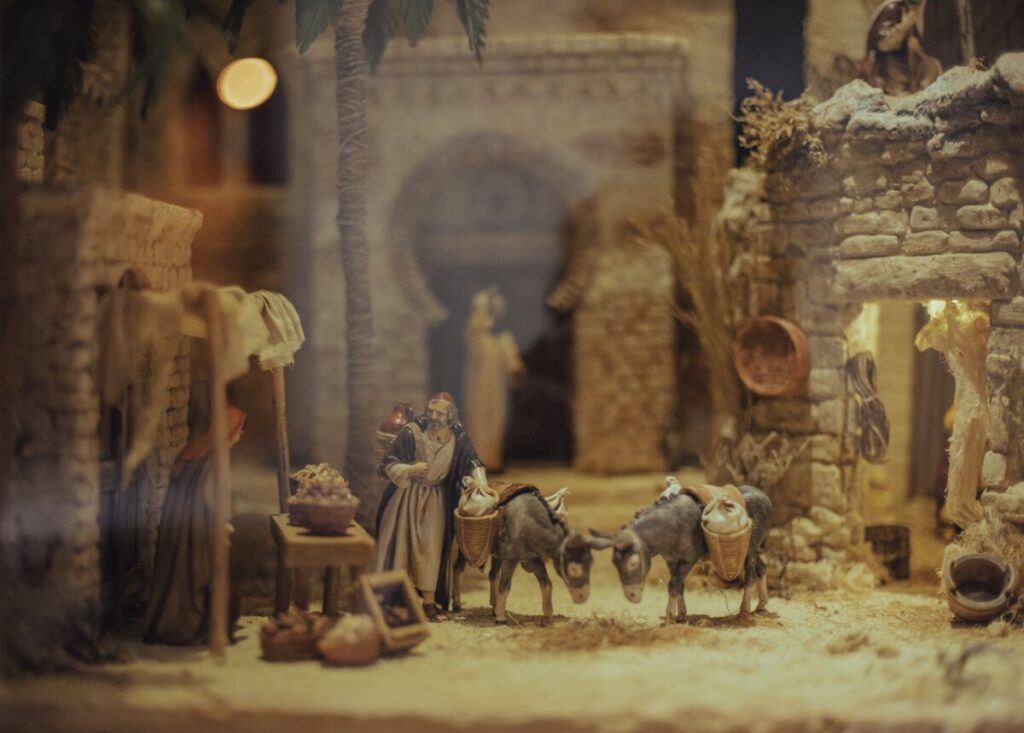
Christmas and Adoration: Mary before the Son of God
A meditation by Hans Urs von Balthasar in 1977.
Who was von Balthasar?
Hans Urs von Balthasar (Lucerne, August 12, 1905, Basel, June 26, 1988) was a Swiss priest, theologian, and writer. He is considered one of the most important theologians of the twentieth century.
Von Balthasar was a Jesuit until 1950. In that year he left the Society of Jesus, as a consequence of carrying out his mission, having become in Basel the friend and confessor of Adrienne von Speyr, a widow who had converted to Catholicism.
She was a Protestant physician who converted to Catholicism in 1940, was widowed twice, had chronic health problems and, through her mystical experiences, would have a great impact on Balthasar’s later thought.
Most of Balthasar’s writings have been translated into Italian, and the journal he founded together with Henri de Lubac, Karl Lehmann, and Joseph Ratzinger, Communio, currently appears in twelve languages.
He is the theologian who defended a theology on one’s knees, in which theological thought has to be bound to prayer and adoration.
Christmas and Adoration [full text]
Of the three Magi who visit the Child and his mother, it is said that “they fell down and adored him” (Mt 2:11). The same can certainly be said of the shepherds, and there is no representation of the Nativity scene that does not show us their gesture of veneration, because they know, from the words of the angel, that this child is the Savior, the Messiah, the Lord.
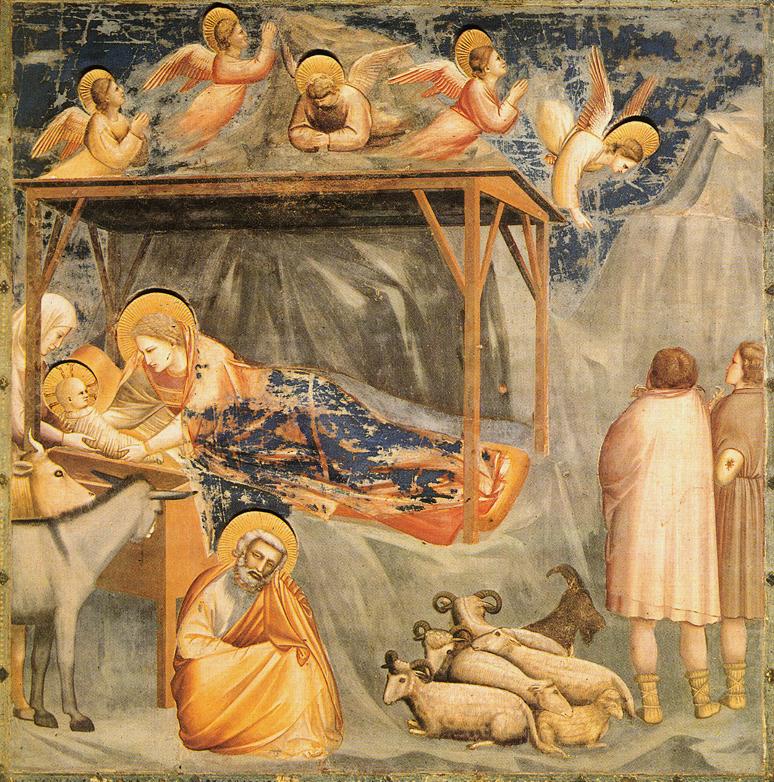
And how many ancient images also show us Mary in silent adoration before the Child, lying on the ground. Christmas is a season in which completely new opportunities are offered for the adoration of God such as the Old Testament always knew, for example in the Psalms, and thus also a completely new form: we are permitted and asked to adore God in this little child whom he has sent us.
This awakens such wonder that it also compels us to reflect in a new way on the act of adoration, an act that in our secularized age has become largely foreign to us.
If we still have a personal relationship with God, we pray mainly to ask him for something, and that is right. But we rarely thank him. Of the ten lepers healed by Jesus, after all, only one comes back to give thanks. Or we make an act of resignation to the eternal divine counsel in its incomprehensibility, if, for example, some suffering strikes us, and that too is right. But it is not the same thing: to resign oneself, to be content with one’s own destiny, is still not to adore.
What, then, is adoration?
God is unique and unrepeatable, and infinitely mysterious. So too the act by which we acknowledge him as God, as our God, with our whole being, is unique and therefore not easy to define: let us nevertheless try. It is to acknowledge that God exists only for himself, while every created reality exists only by virtue of his omnipotent will and action and therefore has its roots not in itself, but in Him, the one Unconditioned, Absolute. And therefore to acknowledge that God is truth pure and simple, that Truth in which every truth is true and, consequently, always right, whatever he may do or permit. That it is the greatest folly to argue with God, as though anyone could convince him of an error or an injustice, and that l’homme révolté destroys his own nature. Let us then acknowledge that God is the good pure and simple, that Good in which every good is good and therefore is not only always just, but is also, by his being and by his disposition, always worthy of being loved without condition, with the reverence and the abandonment of our whole heart.
How and where can I adore God?
Let us then acknowledge that God is purely and simply beautiful, that Beauty in which every beauty is beautiful and that, therefore, we cannot but agree with him enthusiastically and serve him in jubilation, as the Psalmist acclaims him in the exultation of the spirit and as Paul requires of the Christian: “Sing hymns of praise to God, filled with gratitude in your hearts” (cf. Col 3:16. Eph 5:19).
As absolute truth, God is according to Scripture “our rock” that cannot waver (cf. Deut 32:4. Ps 17:3. 30:4. 143:2). As goodness, he is our “shepherd”, the “wing under which we take refuge” (cf. Ps 22. Ps 60:5. 62:8. 90:4). As beauty, he is the Lord of “glory” [Herrlichkeit, δόξα. Cf. Ps 28:3. 18:2], he is our full beatitude and the enchantment that captivates us.
All this we already find in the Old Testament: the heart of the devout Israelite already abandons itself into the hands of God, turns back to him with gratitude and trust, in a reverence as deep as the abyss, which nevertheless knows no fear.
Act in this way, because God too is like this!
If God, then, is a child, by this he tells us: in all my omnipotence, which I truly am and possess, I am at the same time poor and humble and full of trust like this child; indeed, not only “like”: I really am this child.
And when Jesus later teaches, he will speak of the duty to put oneself in the last place, to serve, to give one’s life for one’s brothers: but this is not a moral teaching for men, but something that he himself does, and that he is, and therefore a manifestation of the heart of God, his Father.
And again, tremendous!, if Jesus suffers for sinners, and, bearing the weight of sin, no longer hears the Father, and cries out as one who has been abandoned, thirsting for God: again, God is like this too!
“God so loved the world” says the Gospel, “that for this he gave and exposed his only Son” (Jn 3:16), even to touching the point, a moment outside of time, of abandonment on God’s part. And if Jesus distributes himself as food and drink: God is like this too!
Indeed, it is the Father who offers us the Word and the flesh of God, this word and flesh stained with blood, which men tore and rent, in order to make us sharers in his eternal life. And if the heart of Jesus is pierced and, emptied, becomes a cavity into which one can put one’s finger (cf. Jn 19:34. 20:27), and man whole and entire, “Within Thy wounds hide me” (cf. the prayer Anima Christi): God is like this too! A wound that reaches the depth of the heart and in which we find healing.
The simplicity of the mystery of Christmas
To say such things is not exaltation, but a Christian reflection in all simplicity on the mystery of Christmas. The Word of God became flesh: flesh that nurses at the mother’s womb, that will then have to make its way amid the difficulties of life, that will have to suffer atrociously and die, and that nevertheless, in every condition in which it finds itself, is the Word of God and speaks to us of the essence of God, of his truth, goodness, and beauty.
Do we adore the flesh, then? No: it is God alone whom we adore, God, the one thing we certainly are not, God, the “wholly Other”, the one who exists of himself, the Almighty: but who was pleased to show us that he is omnipotent enough to be able to be even defenseless.
Blessed enough even to suffer. Glorious enough to be placed even in the lowest place of his creation. And God does not act “as if”: as if he were humble, a child, and poor. On the contrary, this is precisely his mystery: his riches consist in an eternal love that lavishes itself without holding anything back, and his power consists in the possibility of giving power and freedom in turn to other beings, whom he does not wish to dominate with his power, or with any power other than the powerlessness of his cross.
God knows the feelings of a son’s heart
And how could we think that God does not know in his heart, he who created sons, what the heart of a son feels?
And here we may ask: is there a god more mysterious and inconceivable than the God of Christians, precisely because he is a God who is not only distant but near, a God whom there is no need to seek above the clouds and to adore from an insurmountable distance, but who rather concerns us as man, even being man, and with all this does not cease to be truly God, the “wholly Other”, the Eternal, the Immortal, and the Omnipotent?
With the mystery of Christmas, this God has lost nothing of his indefinability; on the contrary, He has become far more elusive. Only now do we begin to understand how far divine omnipotence really reaches: the power to be even a defenseless child. And we cannot look away from this God, under the pretext that here “we no longer understand anything” (after all, is God really God, or only a man?).
Indeed, we are continually sent back, whether we wish it or not, to his presence among us: a presence that since the birth of Jesus remains before the eyes of all. However much we turn and turn again, the figure of Jesus always appears before us. We can become Marxists or we can become Buddhists: we do not escape Him.
Since the first Christmas, the history of the world has become something else. From now on, only a yes or a no is possible to this God who in Christ has become concrete. To be truly an atheist is possible only now. And the possibility of an adoration deeper than the Christian one, if this is authentic, is henceforth excluded.
The Magi, the shepherds, and Mary
The Magi, the shepherds, and Mary: they all adore the child, as later the disciples, on coming to faith, will adore the man Jesus, because they recognize that he is the personal Word, the expression, the “explanation” of God. There is no aspect of Jesus Christ that does not say: this is what God is like, this is what my and your heavenly Father is like, this is what our eternal Spirit is like. I am showing you so that you may know, and so that you too may seek to direct your life in the same direction: “Be perfect, as your heavenly Father is perfect, who makes his sun rise on the good and the evil” (Mt 5:48).
In the Incarnate Word, therefore, we can adore God in a new and Christian way, since this Word does not merely point to God from afar, but is itself the divine word, come from the mouth and the heart of God. “The Word was with God and the Word was God”, and this “Word became flesh” and “explained” that God whom no one has ever seen (cf. Jn 1:1, 14, 18).
But what about the rest of the world? About the men around us, about all our occupations? None of this is in any way God and therefore is in no way worthy of adoration. Is there not some truth in the cliché that in the depths of man there is something divine?
As Christians, we will answer: yes, every man has something divine. But not because of his nature, insofar as he is created, but because of the grace of God, in which all men are destined and chosen and called to be sons of the Father and brothers of Jesus and bearers of the Holy Spirit of God.
Many, probably most, know little or nothing of this vocation and live the time that passes as if there were nothing eternal. And so too, when they meet another man, they see nothing transcendent. They see his face, his manners, his agreeable and disagreeable traits; they like this, and that irritates them. They do not see that in Christ he is a son of the Father, who loves him because Christ has made himself his surety and has made him his brother. Or, if you prefer, a son whom the Father in turn has loved so much that he gave his Son Jesus Christ for him. Paying, therefore, says Paul, a high price for this love of his (cf. 1 Cor 6:20. 7:23).
In men such as these, men generally see nothing more than a fellow man, a random specimen among millions of others, minted in the same currency: a small coin. There are some who have been more successful: they have greater purchasing power, or greater value for the collector, than the others, the majority. The sociology and psychology that are fashionable today always start from the presupposition that “a man is a man”, that basically everyone is replaceable by everyone else, because in the end they are all made according to the same model, baked in the same mold, shaped on the same lathe.
Only the Christian has the possibility of perceiving in every man who comes to meet him something unique: a being whom God does not know summarily, as though he were a random specimen, and whom God loves in his unrepeatable and irreplaceable singularity. This possibility is given only from Jesus Christ onward. The voice of Heaven resounded over him: “You are my beloved Son, in whom is my good pleasure” (Mt 3:17. Lk 3:22). You and no one else. You, who can be equated with or exchanged for no one else. But in you, Jesus, all these men, in whose name you give your life, have become dear to me; each of them has acquired in you something of your singularity.
Conformed to the image of his Son
We are all, says the Apostle, “conformed to the image of his Son”, who for this reason became “the firstborn among many brothers” (Rom 8:29). And in God’s eternal thought we have never been anything but these beloved sons and daughters, “chosen in Jesus Christ before the foundation of the world to be holy before him” (Eph 1:4).
If this is true, and in fact it is, then what does the Christian see in his fellow man? Not a specimen of a problematic, cheap, and supremely imperfect humanity. Rather, despite all his faults, a unique and unrepeatable piece whom God loves personally with an equally unique love, no matter how soiled or buried the image of God may be in him. But the love that loves this man is worthy of being adored. We are not saying, it would be ridiculous, that men should adore one another. We mean only one thing, serious and laden with consequences: each one can and must become for the other an occasion for adoring God’s love for us, for each individual as God sees him.
Thus, on the one hand, there is no need to raise any dividing wall between the moments we set aside for prayer and (it is to be hoped) for the adoration of God. On the other, everyday life, in which we have to think about completely different matters. Of course, if in our days we do not set aside a free moment to direct our thoughts expressly and directly to God, remembering his eternal love for each one of us, nothing of the kind will come to mind when we meet others in the confusion of everyday life.
But once, meditating on the mystery of Christmas, we have penetrated to find the love of God, that love which deserves our adoration, there is no longer any reason for us to leave aside this attitude of adoration during our day: for not only are we constantly surrounded by this mystery, but every encounter with any man sets it back before our eyes.
There is a wonderful ancient Latin hymn for the adoration of the Blessed Sacrament, which was once found in every prayer book. Its first stanza runs like this:
Adoro te devote, latens Deitas quae sub his figuris vere latitas tibi se cor meum totum subjicit quia te contemplans totum deficit.
We could translate these words like this: “I devoutly adore you, O hidden Godhead, who truly lie concealed beneath these figures; to you my heart submits itself wholly and entirely, because, contemplating you, it wholly faints away”.
The figures of the world
Well, it seems to me that the expression “these figures” can be read as referring not only to the species of bread and wine in which the divinity is hidden, but also to all the figures of the world: in the first place those of men, then also the others, which are created for man and form part of his earthly house. Whoever is able to see the world with this attitude and, thanks to this gaze, is able to withstand the trial of the world — of a man such as this it will be said that he walks in the presence of God.
Many are of the opinion that, in order to reach this point, a long preparation is necessary, a diligent exercise of meditation techniques. I do not believe this. It is enough for us to recall with simplicity our faith, which at Christmas receives its visible pledge: “God so loved the world”, and each one of us individually, “giving us his only Son for this” (Jn 3:16) and for each one of us. This wholly given Son stands before our eyes. Here at Christmas, here on the cross, here on Easter day. Here, on all the holy days of the Church’s year.
We cannot end our contemplation of Christmas without a final thought. The Son was not forced by the Father to become incarnate in this way, to make himself this child who stands before us: he is in fact the same and only God with the Father, as perfectly free and sovereign as the Father and the Holy Spirit are. He, the Son, offered himself from eternity, in divine freedom, to act as surety for the Father’s creation. And it is on the basis of this offering that the triune God was able to dare to create a world such as it in fact became, and even to call it “very good” (Gen 1:31).
The Son, on the cross, will make a single bundle of all the indescribable sorrows of the world and will take it upon himself, presenting to the Father the proof that in the midst of abandonment by God one can still love and adore God above all things.
But what happens in the meantime in the heart of the Father?
Has the Son’s offering of himself not touched him from eternity and pierced him to the depths?
Must he not have remained ab aeterno full of wonder that such a thought could have arisen from the abyss of divine freedom?
Of course, all this is said in very human words, but how else are we to express it, if we wish to remain faithful to the idea of the opposition of the divine persons or hypostases within the one divinity?
And if now, on the Holy Night, the work is done, and the Father sees his Son lying before him, a child, and already marked by the hour of the darkness to come: is this wonder of the Father not to be designated a very lofty form of adoration?
And how could the Father not adore the miracle of the Son’s divine love, just as the Son in his earthly life constantly adored the Father and His will, which is one with his love?
“May Thy name be glorified, may Thy kingdom be made manifest, may Thy will be done on earth as it is done in heaven” (Mt 6:9-10): this is certainly a prayer of adoration. And how could the Holy Spirit, who is the expression and witness of the mutual love of the Father and the Son, not adore in his turn this eternal mutual adoration?
In the unfathomable depth of his essence, God is a miracle. He is so for himself in the mystery of his tri-personality. God never grows accustomed to God. Everything in him is an eternally present event: the generation of the Son from the Father and the procession of the Holy Spirit, a flame that bursts forth from the ever new interpenetration of the love of the Father and the Son. And all this is, in the eyes of God himself, worthy of adoration.
We cannot, therefore, think that to adore God means to fulfill a problematic duty. With adoration we only enter into the truth, the goodness, and the beauty of God himself. And we do nothing other than fulfill the law of the truth, the goodness, and the beauty of our own existence: since God “is not far from each one of us. In him we live and move and have our being, for we are his offspring” (Acts 17:27-28).
To go deeper into Mary’s presence at Christmas and Christmas devotion, consult the apostolic exhortation Marialis Cultus by Paul VI, on the Marian feasts in the liturgical year.
Deepen your studies: explore Mariology, Marian Theology, Marian apparitions and the Postgraduate Program in Mariology.
Postgraduate Program in Mariology
Would you like to deepen your formation in Mariology? Discover the Postgraduate Program in Mariology of Locus Mariologicus, an academic formation that unites theological rigor, spiritual life, and the living tradition of the Church.




Responses