Mary, Crossroads of All Vocations
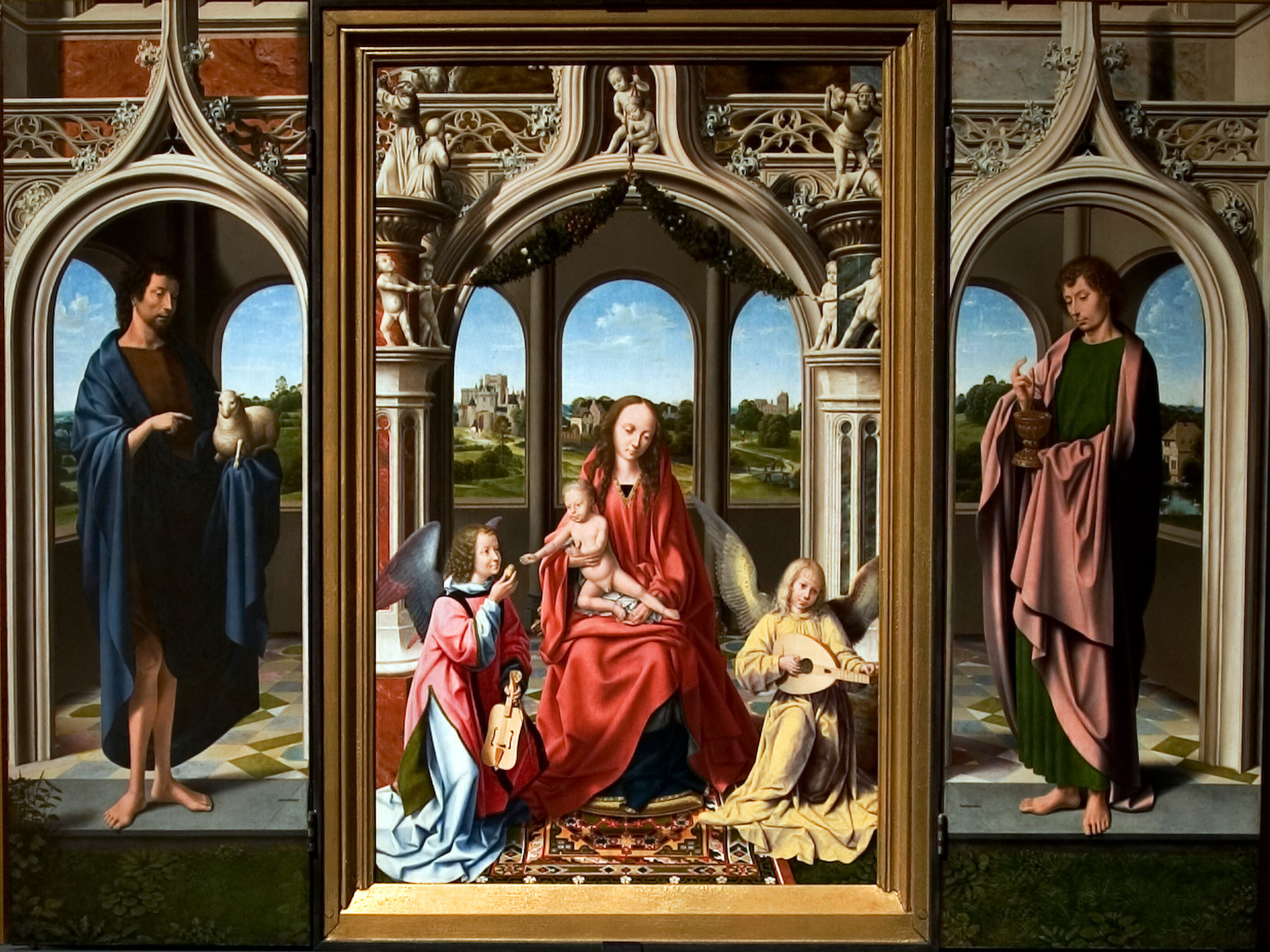
Mary, Crossroads of All Vocations: the Fiat as Model
- When we speak of vocation, do we think only of priests and nuns, or are we able to recognize the call inscribed in every baptized person?
- Am I aware that my life is a personal response to God’s invitation, or do I live as an anonymous spectator within the Church?
- What keeps me today from pronouncing my fiat before God with the same freedom and trust as Mary?
The reality of vocation today is seen differently than in the past; with the help of psychology and the great development of the biblical sciences, a new horizon has finally been opened: the personal path of each baptized person who responds to the will of God.
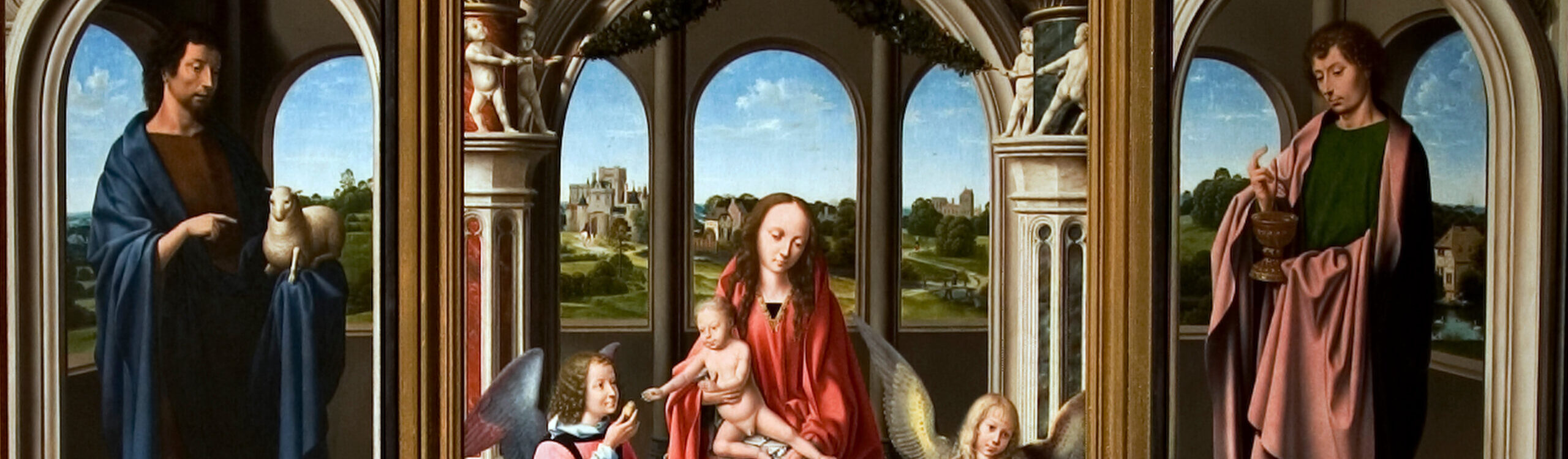
Even before names, colors, and formulas, there exists the individual person within the ecclesial community with a particular call, personal and not diluted in the immensity of charisms that would turn the person into an anonymous number. The Holy Spirit leads each person individually along an ecclesial path, so as to affirm his or her fiat.
The dizzying lack of priests, friars, nuns, and missionaries has led us to have to rethink what vocation ultimately is, and there the sleeping giant of the laity has risen like a mountain through the new ecclesial communities and not only that… the specific role of each one of us in the life of the Church!
Who knows whether it is God’s will that the Church rediscover the vocation of the baptismal priesthood and with it foster an ecclesial life more consistent with the Gospel, where the baptized are not mere spectators but front-line collaborators in the work of salvation?
Let us pose a question:
- is a vocation a personal fact or a communal and personal one?
- When we say the word vocation, are we aware that we are speaking of the baptized and not only of those who live the evangelical counsels?
Vocation is a great mystery of faith in which the protagonist is the One who calls in a manner that is: free and sovereign according to His unsearchable will.
The response is personal, because He does not call us anonymously, creating a life project that is not outside us, but in the fibers of our being.
The response is unrepeatable, because we were created to do or to be something for which no one else had been created. My place is as important as each and every other vocation.
The response is an aspect of divine revelation in which the dialogue between God, man, and the world takes place, a dialogue that mirrors the divine plan in order to orient existence.
Without the Word there is no call!
The response is a dynamic reality, because it is realized in the continual calling and in the continual response that begins in time and ends in eternity.
All the elements presented converge in the person of Mary, who stands at the crossroads of all vocations, and it is through an understanding of Mary’s vocation that one understands the vocation of the Mariologist and of the scholar of Mariology.
Mary on the Path of Vocation
- Have I been listening to God’s small everyday calls, or do I wait only for great extraordinary signs?
- Do I know how to discern what concrete mission falls to me, within my community, as a service of love?
- What in Mary, the humble and courageous handmaid, illuminates the way I understand my vocation?
Faith is already a call to respond to the Word of God.
In the life of faith, each of the faithful receives successive calls (vocations, inspirations) to fulfill some mission or task, always at the service of the ecclesial and human community, that is, for us men and for our salvation. Among the various appeals or inspirations, there is one more concrete for each of the faithful that habitually orients the specific path of holiness and of the apostolate.
It is at that moment that we can speak of:
the lay vocation, a greater insertion into human structures.
the vocation to the consecrated life, the profession of the evangelical counsels.
the priestly vocation, to act in the name of Christ the Priest and Good Shepherd and to live as He did.
On this path, Mary, the Mother of Jesus and Teacher of the Apostles, is the model of every Christian vocation. She makes herself present, in an active and maternal way, throughout the vocational process or journey of each person and of each community.
MARY’S VOCATION, IMAGE OF THE CHURCH
- Is my yes to God total and permanent, like Mary’s, or only partial and conditioned by my own convenience?
- In what way can Mary’s life, made of silence, work, and fidelity, inspire my life of faith today?
- Am I willing to welcome Mary into my “home” like the beloved disciple, living a real communion with her in the following of Christ?
After the Annunciation (cf. Lk 1:26ff.), Mary always appears attentive to every call of God, so as to let herself be surprised by His love. Her life is totally given over, to live from surprise to surprise: the visit to Elizabeth, life in Bethlehem, the exile in Egypt, life in Nazareth, the public life of Jesus, on Calvary, at Pentecost. Her yes (Lk 1:38) reflects an attitude of permanent response to any sign of God’s call, which encircles us through people, through events, through the needs of the community.
That is why Saint John Paul II, in his Encyclical on the Rosary, reminds us that “all humanity is as it were concentrated in the fiat with which [Mary] promptly corresponds to the will of God” (Rosarium Virginis Mariae 20).
There is a moment in the evangelical following of Christ that only the evangelist Saint John handed down to us at the end of the passage on the wedding at Cana: “after this he went down to Capernaum with his mother, his brothers, and his disciples” (Jn 2:12).
This attitude of following is a consequence of having accepted the mystery of Jesus’ words: “his hour has not yet come” (Jn 2:4). It is equivalent to an attitude of fidelity to the covenant: “do whatever he tells you” (Jn 2:5. Cf. Ex 24:7). This means that Mary’s life is indissolubly united to the life of Christ.
Mary, the Woman, the New Eve, associated with Christ the Bridegroom, is a figure of the Church and, consequently, of every vocation. She is, as Saint John Paul II tells us when he treats of priestly formation, “the human person who more than any other corresponded to God’s call, who became the handmaid and disciple of the Word to the point of conceiving in her heart and in her flesh the Word made flesh in order to give Him to humanity” (Pastores Dabo Vobis 82). And further, in the same Post-Synodal Apostolic Exhortation he adds: “in intimate communion with Christ, Mary, the Virgin Mother, was the creature who above all lived the full truth of her vocation, because no one like her responded with so much love to the immense love of God” (Pastores Dabo Vobis 36).
In Mary of Nazareth all vocations are summed up, vocations that are always made concrete in service to Jesus of Nazareth, present in our brethren, above all in those most in need.
- The priestly dimension appears in the oblation of Christ already from Mary’s womb (cf. Heb 10:5-7).
- The dimension of the consecrated life tends to be a life hidden with Christ in God (Col 3:3), as Mary’s life was.
- In all lay life, involvement in ordinary work must be evident, as when Mary prepared the daily bread, putting the leaven mixed with three measures of flour (Mt 13:33).
The biblical figures related to Mary highlight some aspects of her vocation of association with Christ. The figure of Joseph is the most significant, as a generous response to God’s surprise:
- Joseph, son of David, does not fear to take Mary, his wife, because what is begotten in her comes from the Holy Spirit (Mt 1:20).
- He takes the child and his mother (Mt 2:13, 20).
- The figure of Elizabeth is related to Mary’s faith: Blessed is she who believed (Lk 1:45).
- The figures of the shepherds and of the magi recall the encounter with Jesus and with his mother (Lk 2:16; Mt 2:11).
- Simeon and Anna are instruments for making known the mystery of Jesus born of Mary (cf. Lk 2:25-38).
- The beloved disciple is the most concrete example of welcoming into his intimacy the one who is in communion of life (cf. Jn 19:27).
The Church, as a family, finds in Mary the model of family life in all its aspects:
She lived an ordinary life in her home at Nazareth (Lk 1:36):
she faced with her husband Saint Joseph all the vicissitudes of the birth of the child Jesus.
she presented the Son to the shepherds (cf. Lk 2:16) and to the magi (cf. Mt 2:11).
she offered God made man in the temple, according to the law (cf. Lk 2:22).
she lived her mystery with wonder (cf. Lk 2:33).
she assiduously celebrated with him the annual feast of Passover (cf. Lk 2:41).
she shared with Saint Joseph the sorrow of his absence (cf. Lk 2:48).
she accompanied the upbringing of Jesus until he was thirty years old (Lk 2:40-52; 3:23).
Her exemplary life as Joseph’s wife helped her to understand the concrete needs of the newlyweds at Cana. There Jesus called her woman (Jn 2:4), with the nuance of one who, being daughter of Zion (cf. Zeph 7:14; Lk 1:28ff.), prefigured the reality of the Church as a bride.
In this continual accompaniment, Mary’s motherhood in relation to Jesus received a new ecclesial dimension at the foot of the cross, which was symbolized through her heavenly pilgrimage toward the Heavenly Jerusalem (cf. Rev 12:1).
Mary is the model and help of the vocation of the whole Church, being at the same time a consecrated virgin, a faithful bride, a fruitful mother, and a participant, in a particular way, in the priestly reality of Christ.
THE VOCATION OF THE CHURCH IN ITS MARIAN DIMENSION
- Do I understand my vocation as a privilege or as a call to love and to service?
- What does it mean, concretely, for me to “do whatever He tells you”?
- Am I perhaps afraid to say a free and total yes like Mary, because that would commit me irreversibly?
Vocation is always a gratuitous call, a gift of God: Christ called those whom He willed (Mk 3:13) and bore witness that it was His own initiative: You did not choose me, but I chose you (Jn 15:16).
God’s gifts make collaboration and an adequate response possible. If the harvest is great and the laborers are few, we are therefore invited to pray the Lord of the harvest to send laborers into his harvest (Lk 10:2).
The vocational response must be endorsed and accompanied by a right intention, which takes concrete form in adequate and consistent motivations:
- the glory of God in the liturgy.
- the expansion of the Kingdom of Heaven in mission.
- zeal for those most in need in charity.
It must also be a free and relatively mature response, without serious psychological or sociological conditioning, bearing in mind that freedom is a permanent process of truth in offering oneself to the service of the Father’s will.
To maintain this response consistently presupposes a suitability translated into physical, psychic, intellectual, and moral qualities, in harmony with the specific vocation to which one has been called and which one desires to follow.
God willed Mary’s free and responsible yes (Lk 1:30). For all this Saint Paul VI affirmed that “from the consent of the handmaid of the Lord, humanity begins its return to God” (Marialis Cultus 28). Initiative and responsibility are an integral part of the response to a vocation.
When the Virgin, at Cana, invited the servants to follow Jesus’ instructions (“do whatever he tells you” Jn 2:5), the Christological dimension of the response to vocation became evident.
In reality, the first Covenant was sealed with a yes in Exodus, with the response of the People of Israel to Moses concerning the Covenant of Sinai: “we will do what he tells us” (Ex 24:7). The new Covenant follows the same rule, as a continuation of the first and as the fullness and fulfillment of the promises: “Let it be done to me according to what you have said”, (Lk 1:38. Cf. Ex 24:7).
The follow me (Jn 1:43) that Christ addresses to his first disciples is the point of reference of every Christian vocation. It is a gaze of love (cf. Mt 10:22) or even a declaration of friendship: “you will be my friends” (Jn 15:14). The old and the new Covenant are a pact of love, to which Mary, in the name of all, responded with an unconditional and generous yes.
The goal of every vocation is always relational: to be with him (Mt 3:14). The first ones called thus began their vocation: “they stayed with him” (Jn 1:39). Jesus wished to sum up this relational attitude with these words: “you are with me from the beginning” (Jn 15:27).
So too those who are called, wishing to be a vocational instrument for others, follow the same rule, inviting them to encounter Christ: “we have found the Messiah… he led them to Jesus… Come and see” (Jn 1:41, 46). Mary’s invitation at Cana consists in placing the servants in relation with Christ (cf. Jn 2:5). And she herself followed Christ with his disciples (cf. Jn 2:12).
The diversity of vocations and the difference among them cannot be clarified in human terms of privilege. In reality, every vocation tends to make the person called an expression of God’s Love at the service of the brethren. In the ecclesial community, the greatest is the one who loves most. That is why, for Saint John Paul II, rightly “love embraces all vocations” (Novo millennio ineunte 42), following the thought of Saint Thérèse of Lisieux, who wanted to be love in the heart of the Church.
The perfect model of the spiritual and apostolic (lay) life is the Blessed Virgin Mary, queen of the apostles, who, living on earth a life common to all, taken up with solicitude and work, was always intimately united to her Son and cooperated in an altogether singular way in the work of the Savior. It is this crossroads of the mystery that the current Magisterium finds in Mary’s vocation, and in our vocation in relation to Mary.
Mary and the specific vocations: priesthood, consecrated life, and laity
The priestly vocation finds in Mary a particular help for representing Christ with authenticity and consistency:
- by participating in his being (consecration).
- by prolonging his work (mission).
- by living in harmony with his pastoral charity (spirituality).
The priest:
participates in the priestly consecration of Christ, accomplished in Mary’s womb.
prolongs the salvific action of Christ, who willed and wills to associate the Virgin of Nazareth with it.
lives in harmony with the sentiments of Christ, which make him responsible (as the beloved disciple) for receiving her into his intimacy, carrying out the ministry of loving her and of making her loved by all the faithful.
It is a call to live with docility and generosity according to what one is and does. On this aspect, the Second Vatican Council, when it spoke about priestly ministry and life, made clear that: “they find a marvelous example of this docility in the Blessed Virgin Mary, who, guided by the Holy Spirit, dedicated herself totally to the mystery of the redemption of men. She, whom priests ought to love and venerate with filial devotion and worship, as the Mother of the supreme and eternal priest, as Queen of the Apostles and help of their ministry” (Presbyterorum Ordinis 18).
And further, in the decree on Priestly Formation: “let them love and venerate with filial trust the Most Holy Virgin, who was given as a mother to the disciple by Jesus Christ dying on the cross” (Optatam Totius 8).
Mary is the “Mother of the Eternal Priest and, therefore, Mother of all priests. In a special way she has a preference for priests, who are the living image of Jesus” (Pius XII, Menti nostrae, on the holiness of priestly life). For this reason, priests “must venerate and love her with filial devotion and worship”, as Mother of the Supreme and Eternal Priest, Queen of the Apostles, and sustainer of their ministry (Presbyterorum Ordinis 18).
Marian priestly spirituality is expressed through identification with the Christian life of Mary as:
- Virgin of listening,
- Virgin of the Word,
- Virgin in prayer.
- Virgin who offers.
Saint John Paul II also adds, in the post-synodal exhortation on priestly formation: “Every aspect of priestly formation can be referred to Mary. The Most Holy Virgin continues to watch over the development of vocations and of priestly life in the Church” (Pastores Dabo Vobis, 82).
The vocation to the consecrated life in its various forms is an ecclesial identification with the apostolic life (cf. Vita Consecrata, 93), with the particularity of following a fundamental charism and of assuming special commitments to a life according to the Gospel before God and the Church (consecration).
The model is Mary of Nazareth (Vita Consecrata, 18), recalling and giving meaning to her spousal dimension and to her spiritual and apostolic fruitfulness (Vita Consecrata, 34).
Every vocation and, in a special way, the vocation of evangelical radicalism, follows “the example of Mary of Nazareth, the first disciple, who accepted to place herself at the service of the divine plan with the total gift of herself” (Vita Consecrata, 18). According to the Gospel of John, the evangelical following of the apostolic group began after the miracle of Cana: “Jesus manifested his glory and his disciples believed in him. After this he went down to Capernaum with his mother, his brothers, and his disciples” (Jn, 2:11-12).
Now that we have been able to understand Mary’s vocation in each of the states of life in the Church, priestly, consecrated, and lay, the question remains: and what about the vocation to Mariology?
MARIOLOGISTS AND SCHOLARS OF MARIOLOGY IN THE SEARCH FOR MARIOLOGICAL TRUTH
- What is my true relationship with the truth: do I seek to understand it, or do I settle into personal and superficial opinions?
- Am I willing to unite intellectual research to prayer, as Mary united faith and reason in her heart?
- If Mariology is not capable of leading to the truth that Mary lived, what would it be good for?
Among the vocations aroused by the Spirit in the Church, that of the theologian stands out, and still more that of the Mariologist or scholar of Mariology who, in a particular way, has the task of acquiring, in communion with the Magisterium and as such within the content of the magisterial documents, an ever deeper understanding of the Word of God contained in inspired Scripture [biblical Mariology] and handed on by the living tradition of the Church [the history of Mariology down to our own day].
By its nature, faith appeals to the intelligence, because it unveils to man the truth about his destiny and the way to reach it. When we are not able to understand with the intelligence the truths about Mary within the Mystery of God, all that remains for us is to walk toward the truth, without which we are blind.
Even though revealed truth is superior to our language, and our concepts are imperfect before its greatness, which is ultimately unsearchable (cf. Eph 3:19), the Handmaid of the Lord recognizes its grandeur. Truth attracts and appeals to reason, which is the instrument offered by God so that we may walk toward the truth, as Mary did, entering into its light and thus becoming capable of understanding, to a certain extent, that which is believed. We know that Mary has faith; we know that she is part of the revealed mystery, and so she is part of what we believe.
Mariological science responds to the invitation of truth, seeks the understanding of faith, and helps the Ecclesial Community, in accordance with the commandment of the Apostle (cf. 1 Pet 3:15 “always be prepared to make a defense to anyone who asks you for a reason for the hope that is in you”), to give reasons for its hope, to those who seek it and also to the undecided who ask for an explanation of the truth.
The work of the Mariologist and of the scholar of Mariology thus responds to the internal dynamism of our faith, because Mary’s presence communicates itself in every sphere of faith, of the life of communities, of the great ecclesial events, of the Shrines, of the liturgical Year, of the revealed mysteries, among others.
When we seriously meditate on the reason for which the path was created, we understand that it was in order to perceive the truth, and that was Mary’s path. No creature has been so close to, so united with the truth as Mary. And our desire is to recognize the truth, but in a profound way, in order to find salvation there (cf. 1 Tim 2:4, “who desires all men to be saved and to come to the knowledge of the truth”).
It is not possible to betray the commandment that the Lord left when he sent his apostles to make “disciples” of all nations and to teach them (cf. Mt 28). Mariology seeks the “reason of faith” in Mary, and to offer this reason as an answer to those who seek it is an integral part of obedience to this commandment, because men cannot become disciples of the Teacher of Truth if the truth contained in the Word of faith, who is her Son, is not presented to them (cf. Rom 10:14ff.)
If Mariology is not capable of expressing the truth that Mary lives, what is it good for?
Mariology offers its contribution so that faith may become communicable, and so that the intelligence of those who do not yet know Mary’s Son, Jesus, may seek Him and find Him. Mariology, which obeys the impulse of truth, tends to communicate itself; it is born of love and of its dynamism, a fruit of the Holy Spirit.
And how are we to recognize?
In the act of faith, Mary knows the goodness of God and begins to love Him, but love always desires to know ever better the one whom it loves. From this twofold origin of Mariology, inscribed in the interior life of some members of the ecclesial community and in their missionary vocation, Mary being the first missionary, derives the way in which Mariology must be elaborated in order to understand itself as a vocation: study and Proclamation.
Since the aim of Mariology is the Truth through Mary in order, like her, to reach the living God and His plan of salvation revealed in Jesus Christ, the Mariologist and the scholar of Mariology are called to intensify their life of faith and always to unite their Mariological research to prayer. They will thus be more open to the “supernatural sense of Mariology” on which we depend and which presents itself to them as a sure norm for guiding Mariological reflection and for verifying with exactness its conclusions, which the understanding of faith has made it possible to reach.
Over the centuries Mariology has progressively constituted itself as a true scientific body of knowledge. It is necessary that the Mariologist and the scholar of Mariology be attentive to the requirements of the way of knowing proper to their discipline, to the requirements of critical rigor, and consequently to the rational verification of all the stages of their research, so that they may be able to balance the truth revealed and lived by Mary with the contemporary ecclesial situation.
The Mariologist and the scholar of Mariology must discern in themselves the origin and the motivations of their critical attitude and allow their gaze to be purified by faith, as Mary’s was in her celebrated question at the Annunciation. Mariological commitment demands a spiritual effort that consequently leads to sanctification, because Mariology is a place of encounter with God.
If on the one hand truth transcends human reason, on the other hand revealed truth harmonizes profoundly with it. This supposes that reason is naturally ordered to truth, so that, illumined by faith, it may penetrate the meaning of Revelation. Human reason is capable of attaining truth, to a greater or lesser degree, and the first step is that of conceiving God from creation; Mary is creation and as such is a path of reception.
Mariology’s capacity to understand the meaning of Revelation requires the use of archaeological, ethnographic, historical, and psychological acquisitions that provide a solid and harmonious knowledge of time, of the world, and of God, and that can be taken up into reflection on revealed doctrine. When we travel through a historical Mariology we realize that revelation is historical, and that it was communicated to us through the history of salvation.
In this perspective, it is the task of the Mariologist and of the scholar of Mariology to take up, from the culture of their own environment, Mariological elements that allow them better to illuminate certain aspects of the mysteries of faith.
In this regard, it is important to underline that Mariology’s use of conceptual elements and instruments coming from philosophy, sociology, and anthropology or from other disciplines requires a discernment whose ultimate normative principle is revealed doctrine: do they help or not to understand the mystery?
In the final analysis it is Revelation that must supply the criteria for the discernment of these conceptual elements and instruments, and not vice versa.
The Mariologist and the scholar of Mariology, never forgetting that they too are members of the Ecclesial Community, must nourish respect for it and strive to communicate to it a Mariological teaching that in no way injures the doctrine of faith about Mary.
The freedom of Mariological research is exercised within the faith of the Church
When different opinions are reached, something that frequently presses upon the conscience of the Mariologist and scholar of Mariology, these opinions cannot bear fruit if they are not accompanied by the patience of personal opinion and of theological proposal. One sows and another reaps!
The new Mariological proposals put forward by the understanding of Mary’s faith are an offering made to the whole Church. Many corrections and broadenings of perspective are needed, in fraternal dialogue, before the moment arrives when the whole Church can accept them. Let us think of the Immaculate Conception.
Consequently, Mariology, as a most disinterested service to the community of the faithful, essentially involves, according to Saint John Paul II, objective debate, fraternal dialogue, openness, and a readiness to modify one’s own opinions.
The freedom of Mariological investigation, which is rightly esteemed by the community of men of science as one of its most precious goods, means a readiness to welcome the truth just as it presents itself at the end of an investigation, even if the initial idea was a different one. This requirement is linked to method, which, if it is not developed correctly, may lead to readings of the faith that are completely incoherent, anachronistic, and ill-adjusted, wounding the name of Mary.
In Mariology, this freedom of investigation is inscribed within a rational body of knowledge whose object [Mary] is given by Revelation, handed on and interpreted in the Church under the authority of the Magisterium, and received by faith.
A proposal for Mariological construction
- Do I see Mariology as a cold task of erudition, or as a place of real encounter with God?
- How can I contribute so that Mariological study may be not only science, but also a testimony of faith that nourishes the Church?
- Am I willing to cultivate a Mariological solidarity, sustained by prayer and by ecclesial communion?
As in all Christian vocations, the ministry of the Mariologist and of the scholar of Mariology, besides being personal, is also communal and ecclesial. That is, it is exercised in and for the whole Church and is lived in solidarity with those who have received the same vocation.
Mariologists and scholars of Mariology must be conscious of the close bonds of solidarity that unite us to one another in the service of the body of Christ and of the world. In many different ways, colleagues in advanced formation courses, at Symposia, in commentaries in the world of the Internet, as collaborators in research, and as writers and teachers, support, encourage, and inspire one another.
Mariologists and scholars of Mariology also serve as guides and mentors for those, university students, those engaged in pastoral work, members of the new communities, and also Pastors, who aspire to become Mariologists or scholars of Mariology. Moreover, these bonds of solidarity extend in space and time, uniting Mariologists and scholars of Mariology from different countries and cultures, as well as Mariologists and scholars of Mariology belonging to different epochs and contexts.
This Mariological solidarity is truly useful when it promotes the knowledge and the observance of the criteria of Catholic Mariology [Sacred Scripture, Tradition, Liturgy, and Magisterium]. No one better than our colleagues can help us, as Catholic Mariologists and scholars of Mariology, in the attempt to offer the best possible service, in accordance with the true characteristics of their vocation.
Today, in research and publications, collaboration is ever more widespread, both in the Mariological field and in the interdisciplinary one. Opportunities for interventions, seminars, and conferences should be promoted, which can strengthen mutual knowledge and appreciation among Mariologists and scholars of Mariology coming from the most diverse areas, beyond theological institutions and faculties.
Opportunities for interdisciplinary meetings and exchanges among Mariologists and scholars of Mariology, philosophers, natural and social scientists, historians, and so forth should also be encouraged, since Mariology is a science that develops in interaction with other sciences, and these do the same in fruitful exchange with Mariology.
By the nature of their mission, Mariologists and scholars of Mariology often operate at the frontiers of the Church’s experience and reflection. In particular, given the great number of lay Mariologists and scholars of Mariology who have experience in particular areas of interaction between the Church and the world, between the Gospel and life, with which ordained Mariologists and scholars of Mariology and religious Mariologists and scholars of Mariology may not be so familiar, it often happens that, in the presence of new circumstances or questions, Mariologists and scholars of Mariology give an initial articulation of the faith that seeks understanding.
Mariologists and scholars of Mariology need and deserve to be supported by the prayer of the whole ecclesial community, and above all by mutual prayer, in their sincere efforts on behalf of the Church; but in such circumstances the careful observance of the fundamental criteria of Catholic Mariology [Sacred Scripture, Tradition, Liturgy, and Magisterium] is particularly important.
One last word…
- What do I in fact seek in my life: security, prestige, or the Truth that Mary points out to me?
- Do I have the courage to accept that my vocation, like Mary’s, is to be a response of love to the Mystery of God?
- Today, before this reflection, what is my yes?
Mariology is not only science, but also wisdom, with a particular role in the relationship between all human knowledge and the Mystery of God. The human person is not content with partial truths, but seeks to unify the various elements and areas of knowledge into one.
The understanding of the ultimate truth of all things and of human life is present in Mary as in no other creature. This search for wisdom undoubtedly animates Mariology and places it in close relation with spiritual experience and with the wisdom of the saints.
In a broader sense, however, Catholic Mariology invites everyone to recognize the transcendence of the ultimate Truth, which can never be fully comprehended or known. Mariology is not only wisdom in itself, but also an invitation to wisdom for other disciplines.
The presence of Mariology in scientific debate and in university life potentially has the beneficial effect of reminding everyone of the sapiential vocation of human intelligence, recalling the significant question posed by Jesus in the first words He pronounced in the Gospel of John: WHAT ARE YOU LOOKING FOR? (Jn 1:38).
The relationship between Mary and ecclesial vocations is explored in depth in the Apostolic Exhortation Redemptoris Mater by John Paul II, where Mary appears as the model and mother of all vocations in the Church.
Deepen your studies: explore Mariology, Marian Theology, and Marian apparitions and the Postgraduate Program in Mariology.
Formation in Mariology: The Locus Mariologicus Institute offers the Postgraduate Program in Mariology, articles, and academic resources on Mariology, Marian apparitions, and Marian Theology.
Postgraduate Program in Mariology
Would you like to deepen your formation in Mariology? Discover the Postgraduate Program in Mariology of Locus Mariologicus, an academic formation that unites theological rigor, spiritual life, and the living tradition of the Church.
Would you like to study Mariology seriously?
This article is born of the works in the library of Locus Mariologicus. The Postgraduate Program in Mariology takes you to the same source, with academic guidance: Scripture, the Fathers of the Church, and the Magisterium, from the first dogma to contemporary questions.




Responses