Si mundus vos odit: Mary and Witness in Persecution
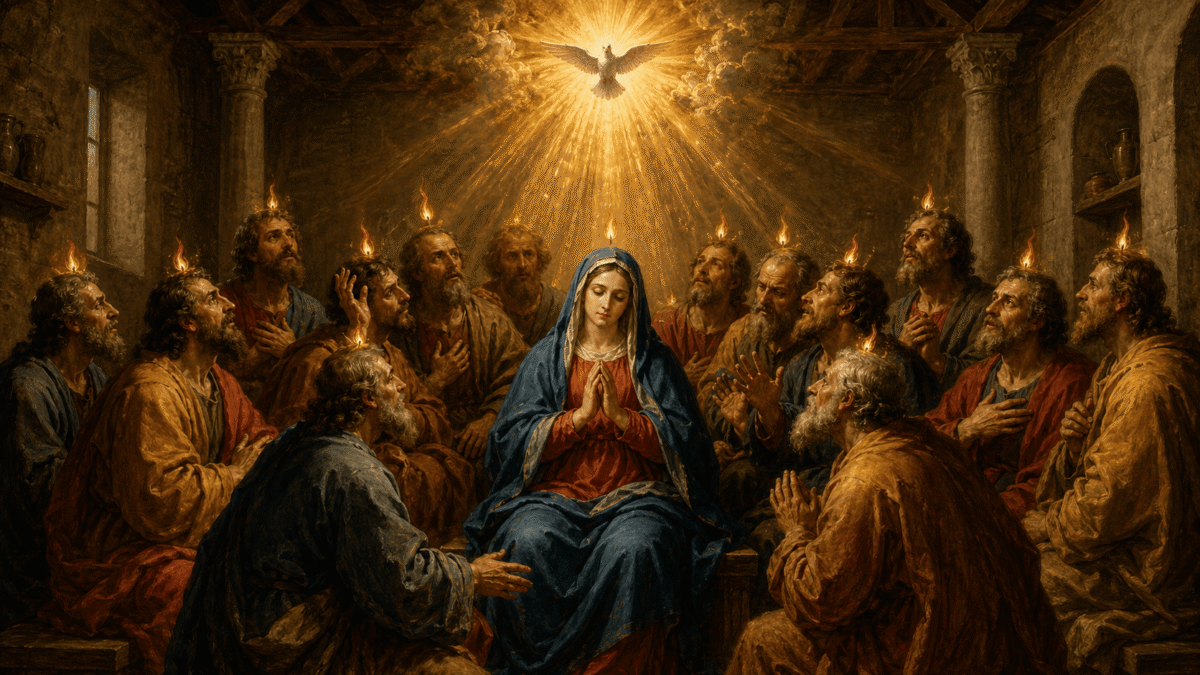
Si mundus vos odit, scitote quia me priorem vobis odio habuit.
Jn 15:18
“If the world hates you, know that it hated me first.” Jn 15:18-25 introduces into the farewell discourse the reality of conflict: the disciples of Jesus will not be “of the world,” and for this reason they will be hated by the world. This statement, which might seem pessimistic, is in truth a word of comfort and of guidance: persecution is not a sign of fault; it is a sign of fidelity. Mariology finds in this text a profound point of meditation: Mary knew this “hatred of the world” in a real and prolonged way, and her fidelity in that adversity is the model for the persecuted Church of every age.
I. “The world” in John: a theological category
The “world” (kosmos) in John is not the physical world, the creation that “God so loved that He gave His only Son” (Jn 3:16). It is the “world” as a human order organized in the refusal of God, the “mentality of the world” that prefers darkness to light (Jn 3:19), that chooses self-sufficiency instead of dependence on God. This “world” is not a geographical or ethnic entity; it is an existential choice: it is possible to be “in the world” without being “of the world” (Jn 17:16).
The hostility of the “world” toward the disciples of Jesus is, according to Jn 15:19, a consequence of election: “You are not of the world. It was I who chose you, taking you out of the world. That is why the world hates you.” Persecution is not random; it is the predictable response of the “world” to those who refuse its logic. Whoever lives according to the logic of the Gospel, service instead of power, forgiveness instead of revenge, poverty instead of accumulation, inevitably provokes the hostility of those who live according to the opposite logic.
This Johannine sociology of conflict has historical confirmation. The persecution of the Church is not only a first-century phenomenon; it runs through the whole of Christian history and continues in the twenty-first century: Christians persecuted in the Middle East, in China, in North Korea, in sub-Saharan Africa. The number of martyrs in the twentieth century was greater than that of all the preceding centuries together, which paradoxically confirms the vitality of the Gospel. The most persecuted Church is often the most alive.
The Johannine distinction between “being in the world” and “being of the world” has a specific Mariological dimension. Mary lived “in the world,” in Nazareth, in Bethlehem, in Egypt, in Galilee, in Jerusalem, but she was never “of the world” in the Johannine sense. She who was preserved from original sin lived in the world without its logic of self-sufficiency and refusal of God. This “otherness” of Mary in the world, which Eastern iconography expresses in her serene impassibility, is the model of Christian presence in the world: inserted but not absorbed, present but not surrendered.
II. Mary in the flight into Egypt: persecuted beside the Son
Mt 2:13-15 recounts the flight into Egypt: Herod wants to kill the child, and the Holy Family has to flee by night. This persecution, the first “hatred of the world” that the Son receives, directly affects Mary: she is the mother who carries the persecuted Son, who abandons her home, who lives in exile because of who the Son is. The persecution of the Son falls upon the Mother: the “world” that hated Jesus “first” persecuted Mary as well.
Tradition has identified the Holy Family as the first refugees of Christian history. This dimension is increasingly explored in contemporary Mariology: Mary, who fled with the persecuted Son, is the figure of all the persecuted, of all refugees, of all those who have had to abandon their land because of faith or violence. Devotion to Mary in contexts of migration and of refugees, very much alive in Latin America, in Africa, and in Asia, is rooted in this real identification: Mary knows, from her own experience, what it is to be persecuted and displaced.
The typology of Egypt in biblical theology is rich: Egypt is the place of exile, of slavery, but also of the providence of God who saves (Joseph in Egypt, Gen 37-50). The flight of the Holy Family into Egypt is at the same time a return to exile (Israel in Egypt) and a fulfillment of the promise (the new Israel that comes out of Egypt, Hos 11:1 quoted in Mt 2:15). Mary and Joseph, with the Child Jesus, “retrace” the journey of Israel, confirming that Jesus is the fulfillment of the history of Israel, including its dimensions of suffering and of exile.
The prophetic dimension of this initial persecution points to the whole mission of Jesus: He who begins persecuted in Bethlehem will end crucified in Jerusalem. The “hatred of the world” that strikes Him from birth does not diminish with time; it intensifies until the Cross. Mary accompanies this course of growing persecution: from the nocturnal flight into Egypt to the “stabat Mater dolorosa” of Calvary. Her fidelity to the persecuted Son is the concrete form of the “abiding in love” that Jn 15:9 asks for.
III. “It hated me first”: Christ’s solidarity with the persecuted
Jn 15:18: “Know that it hated me first.” This statement is not merely rhetorical consolation; it is a real solidarity. Jesus does not ask His disciples to endure a persecution He has not known; He asks them to share what He Himself endured. This solidarity in persecution has a profound mystical dimension: the Christian martyr does not suffer “instead of” Christ nor “for” Christ in the sense of a substitute; he suffers “with” Christ, participating in His passion.
Paul expressed this principle forcefully: “In my flesh I complete what is lacking in Christ’s afflictions for the sake of His Body, which is the Church” (Col 1:24). This statement is paradoxical: how can anything be “lacking” in the afflictions of Christ, which are infinitely sufficient? It makes sense precisely within this Johannine logic: the afflictions of Christ are sufficient for redemption, but they need to be “completed” in the concrete history of His members, so that each generation may experience the solidarity of the Lord in persecution.
Mary is the first and the most perfect model of this solidarity. She who suffered “with” the Son, beside the Cross, in exile, in persecution, is the most authoritative intercessor for the persecuted. She knows, from within, what it is to suffer “with Christ.” And her intercession before the risen Son has the credibility of one who passed through persecution without wavering. The martyrs of every age have invoked Mary as their companion in persecution precisely for this reason.
The apparition of Lourdes (1858) took place at a moment of growing persecution of the French Church on the part of the secularist State. The figure of Mary appearing to Bernadette, a poor child, without schooling, socially marginalized, has a prophetic dimension: the “world” that “hates” the Church cannot prevent the presence of Mary beside her most vulnerable. Every apparition approved by the Church bears this sign: the presence of the Mother precisely there where persecution seems most intense.
IV. Maria Regina martyrum: the Queen of Martyrs and hope in persecution
The Marian title Regina Martyrum, Queen of Martyrs, does not refer to the fact that Mary was martyred in the sense of the shedding of blood. It refers to the fact that she lived the “martyrium” in the fullest sense: faithful witness to Christ to the end, through the suffering of Calvary. The martyr is, etymologically, the “witness.” And no human being was a fuller witness to Christ than Mary.
Christian martyrs throughout history have always recognized in Mary their Queen and model. The letters of the martyrs of Lyons (A.D. 177), preserved by Eusebius of Caesarea, reveal a filial devotion to Mary among the first martyrs. The acts of the martyrs of Japan (17th c.), of Mexico (20th c.), of the martyrs under communism, all bear witness to the invocation of Mary at the supreme moment of testimony.
The promise of Jn 15:26-27, the Spirit who “will bear witness” to Jesus and the disciples who “will bear witness,” points to the structure of the Christian martyrium: it is always a twofold witness, that of the Spirit and that of the believer. Mary, who received the Spirit at the Annunciation and who was present at Pentecost, is the one who most fully lived this twofold witness: that of the Spirit within her and her own in her fidelity to the Son.
The persecuted Church of the twenty-first century finds in Mary, Queen of Martyrs, her closest companion. She who “abided” in the love of the Son even when the world hated Him and killed Him is the guarantee that “abiding” is possible, not by human strength, but by the grace of the same Spirit who filled her. The “martyrdom” of Mary, the total witness of her life to the Son, is the horizon that the whole persecuted Church has before it: not immediate victory, but the fidelity that the Risen One will definitively confirm.
Mary, who knew the “hatred of the world” beside the persecuted Son, is the Queen of Martyrs and the companion of all who bear witness to Christ in adversity.
References
- Second Vatican Council, Lumen Gentium, n. 58 (1964).
- John Paul II, Veritatis Splendor, n. 90-94 (1993).
- Benedict XVI, Deus Caritas Est, n. 40 (2005).
- R. Laurentin, Lourdes: Dossier des documents authentiques, vol. I (1957).
- P. Poupard (ed.), Dictionnaire des Religions, art. “Martyre” (1984).
Postgraduate Program in Mariology
Would you like to deepen your formation in Mariology? Discover the Postgraduate Program in Mariology of Locus Mariologicus – an academic formation that unites theological rigor, spiritual life, and the living tradition of the Church.
Would you like to study Mariology seriously?
This article is born of the works in the library of Locus Mariologicus. The Postgraduate Program in Mariology takes you to the same source, with academic guidance: Scripture, the Fathers of the Church, and the Magisterium, from the first dogma to contemporary questions.




Responses