Josephology: The Theological Study of Saint Joseph
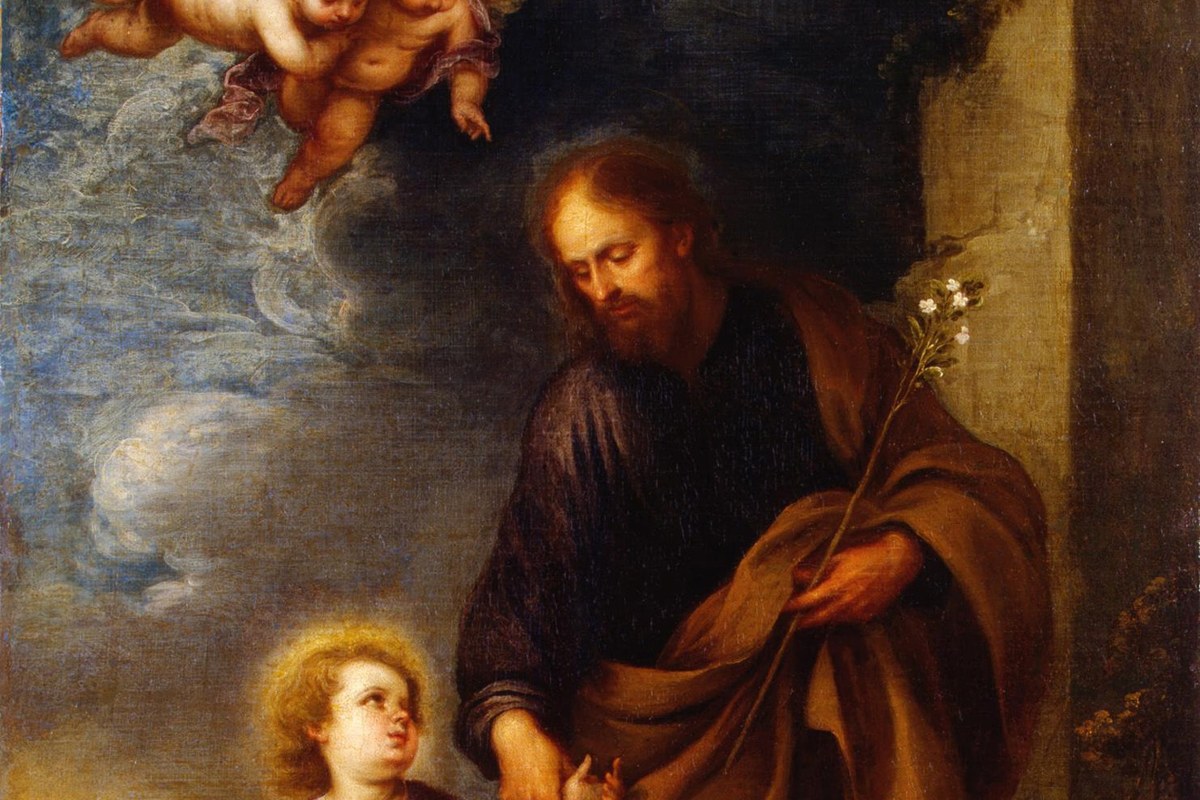
By Prof. Dr. Daniel C. Afonso · Updated
Josephology is the branch of Catholic theology that systematically studies the person, mission, and veneration of Saint Joseph, husband of the Virgin Mary and legal father of Jesus. Just as Mariology is the theology of Mary, Josephology is the theology of Saint Joseph: it investigates his election, his marriage to the Mother of God, his fatherhood over the incarnate Word, his holiness, and his patronage over the universal Church. This is not a matter of isolated devotion, but of a theological discipline with its own sources – Scripture, the Fathers of the Church, the liturgy, and the papal magisterium – and with a precise place in the edifice of the faith, between Christology and Mariology. This page is the pillar that organizes the Josephology section of Locus Mariologicus.
What Josephology is
The basis of Josephology is biblical, and here a principle of method applies: Scripture says little about Joseph, but that little is decisive. Matthew 1-2, Luke 1-2, the sayings at Nazareth about the “carpenter’s son” (Mt 13:55), and the episode in the Temple (Lk 2:41-52) form a revealed corpus sufficient for a complete theological profile. On this scriptural foundation rise the patristic, liturgical, magisterial, and spiritual levels of the discipline: without biblical Josephology, everything else would be left hanging in the air.
The dogmatic anchor is Joseph’s unique insertion into the mystery of the incarnation. Saint John Paul II formulated it precisely in the apostolic exhortation Redemptoris custos:
It was precisely in this mystery that Joseph of Nazareth “shared” like no other human person, except Mary, the Mother of the Incarnate Word. He shared in this mystery together with Mary, involved in the reality of the same salvific event, and was the guardian of the same love. (Redemptoris custos, no. 1)
Francis confirmed the weight of this datum in the apostolic letter Patris corde: “After Mary, the Mother of God, no saint occupies so much space in the papal magisterium as Joseph, her spouse” (Patris corde, prologue). Josephology is the scientific organization of this datum. Joseph is not an extra in the Nativity scene: he is, with Mary, the guardian of the mystery of God made man.
A brief history of the discipline
The foundations are patristic. Redemptoris custos recalls that it is above all in the annunciation to Joseph (Mt 1:20-21) that “the central core of biblical truth about Saint Joseph” is contained, the moment of his life to which the Fathers of the Church refer in particular (RC 2). The same exhortation recalls that Saint Teresa of Jesus, the great reformer of the contemplative Carmel, became a promoter of the renewal of devotion to Saint Joseph in the West (RC 25).
The modern magisterium built the doctrinal body of the discipline in datable stages. On December 8, 1870, by the decree Quemadmodum Deus of the Sacred Congregation of Rites, Pius IX solemnly declared Joseph patron of the Catholic Church and raised his feast of March 19 to the rank of a double of the first class. John Paul II summarizes the act: “In difficult times for the Church, Pius IX, wishing to entrust her to the special protection of the holy patriarch Joseph, declared him ‘Patron of the Catholic Church’” (RC 28). In 1889, Leo XIII dedicated to him the encyclical Quamquam pluries, which grounds all of Joseph’s dignity in two sources, his marriage to Mary and his fatherhood over Jesus: “De estas fuentes ha manado su dignidad, su santidad, su gloria” (QP 3, official Spanish version). In 1909, the Apostolic See approved the Litany of Saint Joseph. In 1989, on the centenary of Quamquam pluries, John Paul II published Redemptoris custos, the most complete doctrinal synthesis on the saint. On December 8, 2020, on the 150th anniversary of the patronage, Francis published Patris corde and proclaimed a jubilee year dedicated to Saint Joseph. In 2021, the Congregation for Divine Worship and the Discipline of the Sacraments added seven new invocations to the litany, among them Custos Redemptoris, Serve Christi, and Minister salutis, the last taken from Saint John Chrysostom.
There is, therefore, no Josephology apart from the magisterium: the documents from Pius IX to Francis form the reference corpus of the discipline and outline its research program. It is to them that the articles in this section constantly return.
The major themes of Josephology
Joseph’s fatherhood
This is the central theme. Joseph did not beget Jesus, and yet his fatherhood is not a pious fiction. Redemptoris custos is categorical:
In it, Joseph is the father: his fatherhood, however, is not merely “apparent,” or only “substitute”; rather, it is fully endowed with the authenticity of human fatherhood, the authenticity of the paternal mission in the family. (Redemptoris custos, no. 21)
The Catechism takes up this datum by calling Joseph the “legal father” of Jesus and by teaching that the Son’s submission to Mary and Joseph “was the perfect fulfillment of the fourth commandment” (CCC 532). Giving Jesus his name (Mt 1:21, 25) is an effective exercise of this fatherhood, which links the whole hidden life of the Savior to Joseph’s custody.
The marriage to Mary
Fatherhood does not hover in the air: “As can be deduced from the Gospel texts, Joseph’s marriage to Mary is the juridical basis of his fatherhood. It was to assure fatherly protection for Jesus that God chose Joseph to be Mary’s spouse” (RC 7). Jewish betrothal already conferred on Mary the full status of wife, so that Joseph is true husband and true legal father even before they lived together. The figure of Joseph is inexplicable outside this spousal relationship.
The patronage over the Church
Leo XIII argues that the house of Nazareth, which Joseph governed with a father’s authority, contained within itself the nascent Church, and that it is therefore fitting that he should now protect the Church of Christ with his heavenly patronage (QP 3). This is the theological reason for the title proclaimed by Pius IX in 1870 and celebrated by Francis in 2020.
Devotion to Saint Joseph
Liturgy and piety translate the doctrine: the Solemnity of March 19, the Memorial of the Worker of Nazareth, the litany approved in 1909 and expanded in 2021, the invocation of Joseph as patron of a happy death (CCC 1014), and the practices of consecration. Here Josephology meets its most popular ground, which it has the duty to purify and to ground.
Reading guide: the fifteen articles of the series
The Josephological series of Locus Mariologicus unfolds each of these themes in articles of their own. Here is the annotated map:
- Who Was Saint Joseph: the biblical and historical profile of the carpenter of Nazareth, the starting point for the whole study.
- The Betrothal of Mary and Joseph: Jewish betrothal and the true marriage that grounds all of Joseph’s dignity.
- The Fatherhood of Saint Joseph: why Joseph is the true father of Jesus without being his biological father.
- The Dreams of Saint Joseph: the nocturnal revelations of Matthew 1-2 and the theology of the obedience of faith.
- The Silence of Saint Joseph: not a single word of his was recorded in the Gospels, and this silence has “a special eloquence” (RC 17).
- Saint Joseph the Worker: human work brought close to the mystery of redemption from the workshop of Nazareth (RC 22).
- Sleeping Saint Joseph: the devotional image of the saint who listens to God in his sleep, and its biblical foundation.
- Redemptoris custos: a reading guide to John Paul II’s exhortation (1989), the magna carta of modern Josephology.
- Patris corde: the seven facets of a father’s heart according to Francis (2020).
- Saint Joseph, Patron of the Church: from the decree Quemadmodum Deus (1870) to the present day.
- The Transitus of Saint Joseph: Joseph’s death between Jesus and Mary, and the patronage of a happy death.
- Consecration to Saint Joseph: the history, foundation, and practice of filial self-offering to the holy patriarch.
- Litany of Saint Joseph: the invocations of 1909 and the seven added in 2021, explained one by one.
- Go to Joseph: the typology of the patriarch Joseph of Egypt (Gen 41:55) applied to the husband of Mary.
- Prayers to Saint Joseph: the main prayers of the tradition, with text and commentary.
For an overview in encyclopedia-entry format, see also the encyclopedic article on Saint Joseph.
Josephology and Mariology
In an institute of Mariology, the question is inevitable: why study Joseph? Because one does not reach Mary without passing through her husband, nor Joseph without passing through his wife. “Together with Mary, Joseph is the first guardian of this divine mystery” (RC 5), and his response to the angel, a “most pure ‘obedience of faith’” (RC 4), mirrors Mary’s readiness at the Annunciation. Joseph’s fatherhood presupposes the divine motherhood of the Theotokos, his chaste marriage safeguards the perpetual virginity of Mary, and together with Jesus they form the Holy Family, the original cell of the Church. The two disciplines are sisters: Mariology is the older and more developed, Josephology the younger, but the method is the same: to read a concrete person within the one mystery of Christ.
May this pillar page serve as a gateway. John Paul II hoped that Saint Joseph would become “for all a singular teacher in the service of Christ’s saving mission” (RC 32). To study Joseph rigorously is a way of obeying him.
Frequently asked questions
What is Josephology?
Josephology is the branch of Catholic theology that systematically studies the person, mission, and veneration of Saint Joseph, husband of Mary and legal father of Jesus. Its sources are Scripture, the Fathers of the Church, the liturgy, and the papal magisterium. It is a sister discipline of Mariology and, like it, is ordered to the one mystery of Christ.
What is the difference between Josephology and Mariology?
Mariology studies the Virgin Mary and Josephology studies Saint Joseph, her husband. Mariology is older and more developed, while Josephology was consolidated above all through the modern magisterium, from Pius IX to Francis. Both use the same method: reading a concrete person within the one mystery of Christ.
What is the theology of Saint Joseph?
It is the ordered reflection on Joseph’s place in the plan of salvation: his true marriage to Mary, his real fatherhood over Jesus, his holiness, and his patronage over the Church. The most complete doctrinal synthesis is the exhortation Redemptoris custos by John Paul II (1989), taken up by Francis in Patris corde (2020).
Is Saint Joseph the true father of Jesus?
Yes, in the legal and human sense, though not the biological one. Redemptoris custos (no. 21) teaches that Joseph’s fatherhood is neither apparent nor substitute, but endowed with the full authenticity of the paternal mission. The juridical foundation of this fatherhood is Joseph’s marriage to Mary (RC 7).
What are the main Church documents on Saint Joseph?
The major milestones are the decree Quemadmodum Deus (1870), by which Pius IX declared Joseph patron of the Catholic Church, the encyclical Quamquam pluries by Leo XIII (1889), the apostolic exhortation Redemptoris custos by John Paul II (1989), and the apostolic letter Patris corde by Francis (2020). In 2021, seven new invocations were also added to the Litany of Saint Joseph.
Would you like to go deeper into Josephology?
Locus Mariologicus is preparing the Josephology class – the scientific study of Saint Joseph in Scripture, Tradition, and the Magisterium. Join the waiting list and be notified when registration opens.
Responses