Nativity of Mary: a Mariological view

Nativity of Mary: a Mariological view of the birth of the Virgin
If for a single moment ecclesial Tradition did not exist, could we speak of the Nativity of Mary?
In reality it is not a biblical datum. However, it is a historical datum: if Jesus is truly man, He owes it to a true mother of a true history located in space and time, which derives from another preceding history, the birth of Mary.
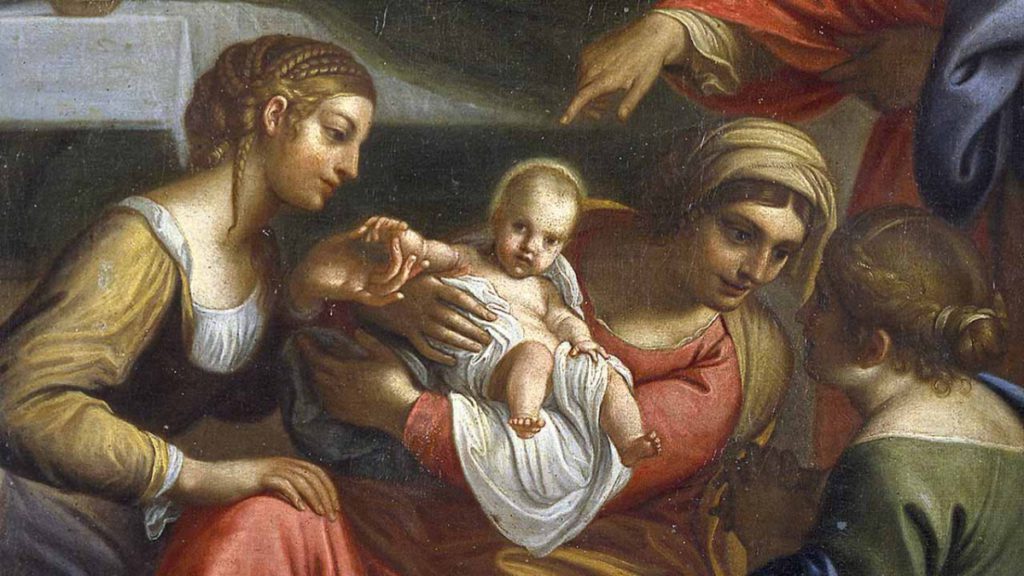
This simple reasoning is at the same time a challenge to the typical phrase “where is that in the Bible?” Perhaps because the sense of the Word of God and of the history of salvation is still a mirage in which the various figures exist, suspended in the clouds of religious thought, without having a face, a history, a death and a hope. Having specified the context of our article, we situate ourselves in Jerusalem, the city of God for the Hebrews, where in worship we see the anamnesis (remembrance) of the ancient Covenant in the Temple and where we have the mimesis (representation) of the new Covenant with the birth of the new Ark of the one and eternal Covenant of God with mankind. In this Holy City the typologies shape and structure the language of the feasts and of the shrines. For if we have a liturgical feast of the death of Mary, how could we not have one of her birth? It would be impossible to think that the goal of pilgrimages to the holy places would not be willingly repeated in its liturgy in the other parts of Western and Eastern Christianity.
On the history of the Nativity of Mary we find the first indications in the fifth century, and it was later introduced in Constantinople in 555 with the record of a hymn to the nativity composed by Romanos the Melodist (d. 560). In the Latin Church we have to wait for Pope Theodore (642-649) to see this feast enter our liturgical calendar.
For the ancient Church, a liturgical feast was a memorial. Thus, the nativity is the fulfillment of the messianic oracles of the prophets and of the preparations of the ancient Covenant. If we look at the development of the liturgy, everything starts from the Pasch of Christ and everything leads to it. All the events that over the centuries led us to the Pasch begin to be celebrated. In this sense the Mother, the Apostles, the Church of Jerusalem draw into the cosmic liturgy that celebrates salvation all the people who collaborated in the work of Jesus. Since this was a community coming mostly from Judaism, the tradition of the figures of the Old Testament and of the oracles became a presence in the mystery of salvation being celebrated.
For Jesus to be truly the One whose coming the oracles announced, it was necessary that throughout His life it be shown that the Scriptures were fulfilled, and it is in this context that the Nativity of Mary must be read. Jesus is the son of David because He is the legal son of Joseph, without our knowing whether Mary was a descendant of David or of priestly stock. However, one revealing fact remains surprising to our own day: the blessings were transmitted strictly through the male bloodline, but in the genealogy of Jesus four women appear.
In reality, the Christian centuries saw in Mary only her religious and spiritual aspect, whereas today there is a tendency to focus on the history and the anthropology of Mary. All these women help us to understand that in the Kingdom of the Messiah Jesus, woman has a privileged place in the encounter between the divine and the human, as happened with Mary, who was anticipated in her motherhood by those who, alongside the Patriarchs and Kings, secured the male child who continued the line of descent.
The event not recorded in the written tradition of the Word could not fail to happen, for her ancestry is the patriarchal ancestry and that of the royalty of Israel, where the feminine figures of the ancient Covenant prepared the birth of the dawn of the new times.
Let us think for a moment of the liturgy of the Nativity. We begin the first reading with the Prophet Micah announcing that from Bethlehem will come forth the Ruler of Israel, from a mother who gives birth to the One who will be Peace. Another option in the liturgy is that the first reading be from the Letter to the Romans, where it is described how predestination to divine sonship justifies man before God so that he may be glorified, for everything happens within the plan of God. Finally, the Gospel is taken from Matthew and presents the vocation of Joseph to receive so special a pregnancy, in which the Mother conceived, by the love of the Holy Spirit, that promised Emmanuel, for everything in the oracle of Is 7:14 had to be fulfilled: “Behold, the virgin shall conceive and bear a son. He shall be called by the name of Emmanuel, which means: God is with us”.
All this could not have happened without the birth of the Virgin. Looking at archaeology, we see how next to the pool of Bethesda we find the house where Mary was born, as the physical origin of the feast, converted into a place of worship in the first half of the fifth century. Probably, knowing that the Spirit of God is creative, we must also connect the Nativity to a new mode of commemoration: the three great births, December 25: Jesus, June 24: John the Baptist, and nine months after the Immaculate Conception, on September 8: Mary. The placing of this feast within our complex liturgical calendar must keep in mind that, in relation to the feast of the Koimesis (Dormitio) celebrated on August 15 (the day of the dedication of the Basilica), there also had to be a corresponding dedication of the Basilica of the Nativity. Moreover, we recall that the Byzantine liturgical year begins on September 1, so that the birth of Mary at the dawn of the redemption is of radiant value. The Pasch of the Theotokos (August 15) practically concludes the liturgical year, reopening with the Christmas-manifestation cycle, which has as its object the closeness to the mystery of the Incarnation, read in the light of the Pasch, for there is no Messiah without the Paschal Mystery that completes His coming in the womb of Mary.
To deepen the theology of the Nativity of Mary, consult the encyclical of John Paul II: Redemptoris Mater on Mary in the fullness of time and in the history of salvation.
Deepen your studies: explore Mariology, Marian Theology, Marian apparitions and the Postgraduate Program in Mariology.
Postgraduate Program in Mariology
Would you like to deepen your formation in Mariology? Discover the Postgraduate Program in Mariology of Locus Mariologicus, an academic formation that unites theological rigor, spiritual life and the living tradition of the Church.
Would you like to study Mariology seriously?
This article is born of the works in the library of Locus Mariologicus. The Postgraduate Program in Mariology brings you to the same source, with academic guidance: Scripture, the Fathers of the Church and the Magisterium, from the first dogma to contemporary questions.




Responses