Mary and Those Who Fell Asleep in Hope: Part I

Mary and the faithful who fell asleep in the hope of the Resurrection
Establishing concepts.
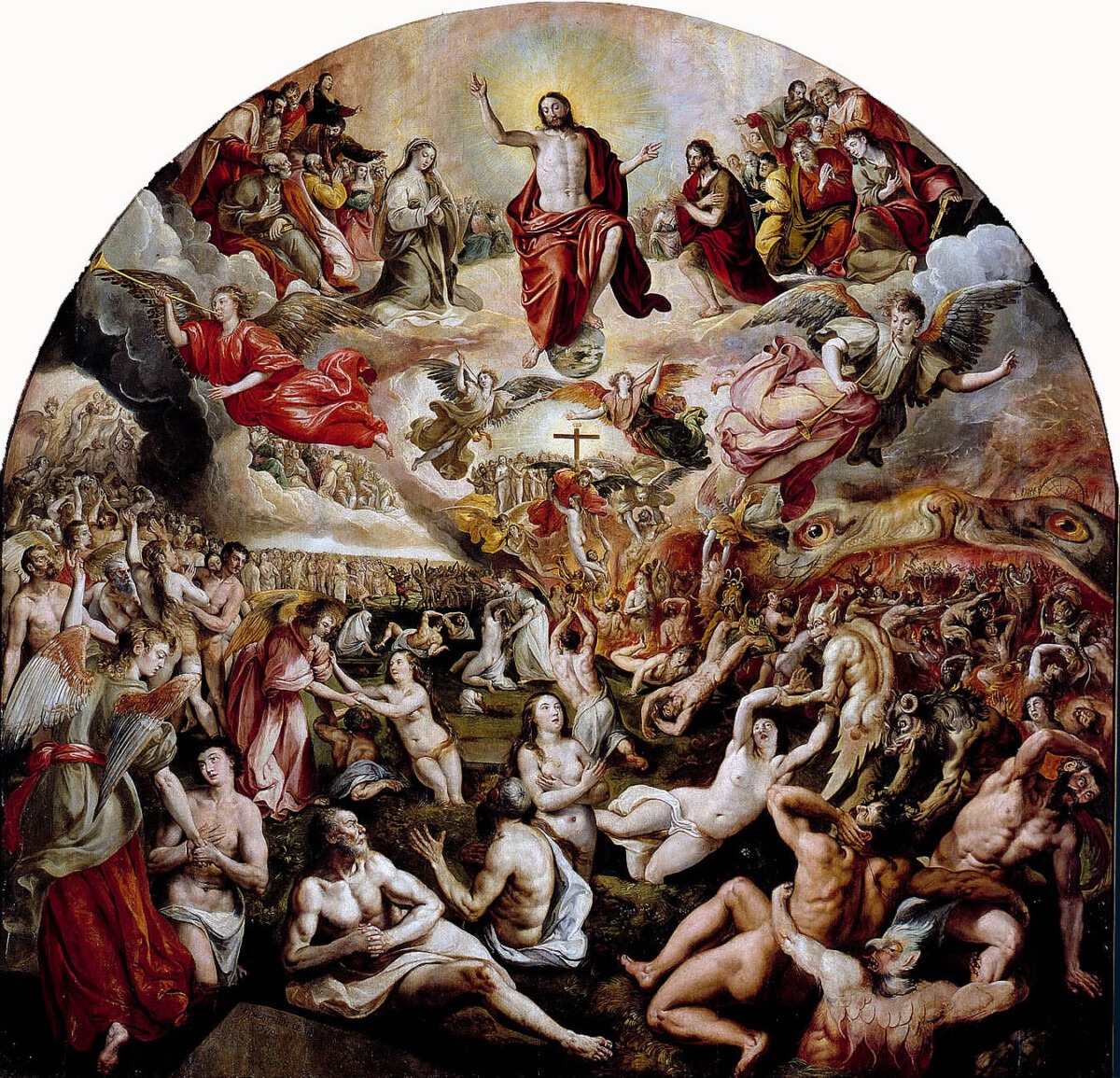
By heaven we understand the place where God sits upon the throne: “The Lord is in His holy dwelling, in heaven is God’s throne. His eyes observe, His eyelids question human beings” (Ps 11:4). “The heavens are the heavens of the Lord, but the earth He has given to the children of Adam” (Ps 115:16). It is from this same place that God comes down: “the Lord came down upon Sinai, upon the top of the mountain. The Lord called Moses to the top of the mountain, and Moses went up” (Ex 19:18-20). Yet it is the Scriptures that acknowledge that heaven and earth cannot contain God: “But is it possible that God dwells on earth? If the highest heavens cannot contain Him, how much less this house that I have built”! (1 Kgs 8:27). To this paradox concerning the ‘indwelling’ of God it is also added that Christian hope foresees, at the end of time, new heavens and a new earth: “What we await, according to His promise, are new heavens and a new earth, in which righteousness will dwell” (2 Pet 3:13). Briefly, we may conclude that heaven is the state in which the blessed will dwell forever with God through the glorified humanity of Christ: “then we, the living, who are still alive, will be caught up together with them on the clouds, to meet the Lord in the air. And so we shall always be with the Lord” (1 Thess 4:17). “And after I have gone and prepared a place for you, I will come back and take you with me, so that where I am you also may be” (Jn 14:3).
By hell we understand the state in which demons and sinners who died without repentance suffer forever, varying according to the sins committed, since they are excluded from the presence of God. These ecclesial notions are based on passages of the New Testament, such as Mt 13:36-43; 25:31-46, and insist on the possibility of hell for those who with real malice refuse to love God and neighbor. Yet a bond exists between God and man, which is saving love: “but when all things have been subjected to Him, then the Son Himself will also be subjected to the One who subjected all things to Him, so that God may be all in all” (1 Cor 15:28). “this is good and pleasing to God our Savior. He wills that all be saved and come to the knowledge of the truth. For there is one God and one mediator between God and humanity: the man Christ Jesus, who gave Himself as a ransom for all. This was the testimony given at the proper time” (1 Tim 2:3-6).

By purgatory we understand the purification (katarsis) that is the state of those who die in communion with God, but still need their personal sins to be expiated (through the merits of Christ) and must grow spiritually before they can enjoy the beatific vision. Although we may cite numerous verses of Sacred Scripture such as 2 Macc 12:38-46, Mt 5:25-26, 1 Cor 3:11-15, these cannot define an identity of purgatory (= purification). To understand its meaning we will have to rely on elements of the Christian Tradition such as divine justice, the Christian prayers for the dead, from the second century onward, and the Eucharistic celebration for the dies natalis (day of birth) of those who fell asleep in hope. Fathers of the Church such as Clement of Alexandria (d. 215), Origen (d. 254), John Chrysostom (d. 407), Tertullian (d. 225), Cyprian (d. 258), Augustine (430) wrote about the various modes of purification after death and about our communion through prayer with our dear departed. Prayer for the dead spread above all in liturgical settings in the Christian West and East. At the Council of Lyon (1274) and later at that of Florence (1438-1445) there began to be affirmed the idea of a purifying suffering borne after death by those who are not yet worthy of the beatific vision, and the value of prayers and good works as suffrage for those who endure such suffering. We must understand that there is no mention of the fire of purgatory in these Councils. In the Protestant Reformation, Martin Luther (1483-1546) would reject the value of indulgences for the dead and even the existence of Purgatory. The Counter-Reformation of the Council of Trent (1545-1563) would vigorously reaffirm the doctrine of purgatory, still without making clear its duration and nature, the value of prayers and above all of the Eucharist for all those who remain in Purgatory. In our own day we find the Second Vatican Council (1962-1965) affirming the communion of the Pilgrim Church with all those who are purified after death, reaffirming the conciliar declarations of Trent and Florence, when it says: “until the Lord comes in His majesty and all His angels with Him (cf. Mt 25:31) and, death having been conquered, all things are subjected to Him (cf. 1 Cor 15:26-27), some of His disciples are pilgrims on earth, others, having passed from this life, are being purified, others, finally, are glorified and contemplate ‘clearly the triune and one God, as He is’. All of us, however, share, though in different ways and degrees, in the same love of God and neighbor, and all of us sing to our God the same hymn of praise. For all who are of Christ and have His Spirit are united in one Church and joined to one another in Him (cf. Eph 4:16). And so the union of those who still walk upon the earth with the brethren who have fallen asleep in the peace of Christ is in no way interrupted; rather, according to the constant faith of the Church, it is strengthened by the communication of spiritual goods. For the blessed, being more intimately united with Christ, more firmly establish the Church in holiness, ennoble the worship that she offers to God on earth, and contribute in many ways to her fuller building up in Christ (cf. 1 Cor 12:12-27). Received into the heavenly homeland and living with the Lord (cf. 2 Cor 5:8), they do not cease to intercede, through Him, with Him and in Him, on our behalf before the Father, presenting the merits they attained on earth, thanks to the one mediator between God and men, Jesus Christ (cf. 1 Tim 2:5), serving the Lord in all things and completing what is lacking in the sufferings of Christ, for the sake of His body which is the Church (cf. Col 1:24). Our weakness is thus greatly helped by their brotherly solicitude”. In reality, Purgatory is today understood as a final process of loving maturation, albeit painful, before seeing God face to face. With the Last Judgment purgatory will cease to exist.
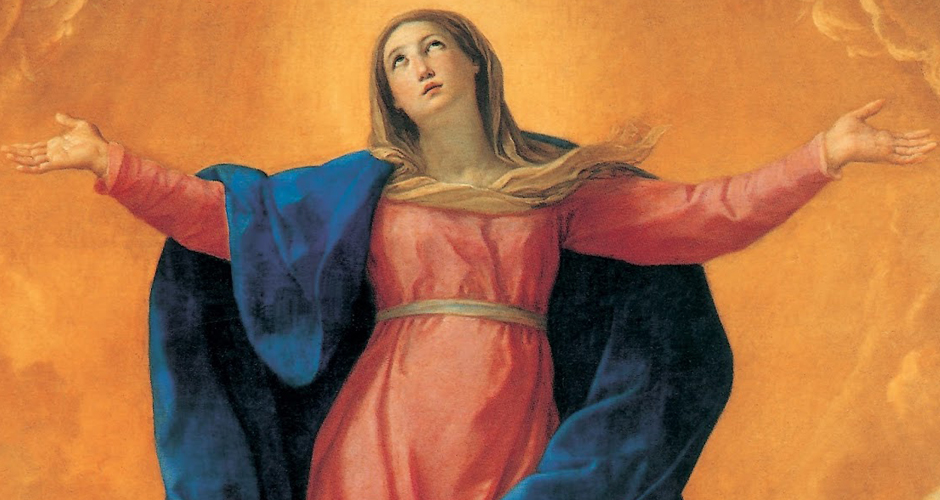
Mary’s relationship with eschatological hope is explored in depth in the encyclical Redemptoris Mater of Saint John Paul II, which presents Mary as an icon of Christian hope in the resurrection.
Deepen your studies: explore Mariology, Marian Theology, Marian apparitions and the Postgraduate Program in Mariology.
Postgraduate Program in Mariology
Would you like to deepen your formation in Mariology? Discover the Postgraduate Program in Mariology of Locus Mariologicus, an academic formation that unites theological rigor, spiritual life and the living tradition of the Church.
Would you like to study Mariology seriously?
This article is born from the works in the library of Locus Mariologicus. The Postgraduate Program in Mariology takes you to that same source, with academic guidance: Scripture, the Fathers of the Church and the Magisterium, from the first dogma to contemporary questions.




Responses