Saint Gregory of Nyssa: A Great Face of Mariology
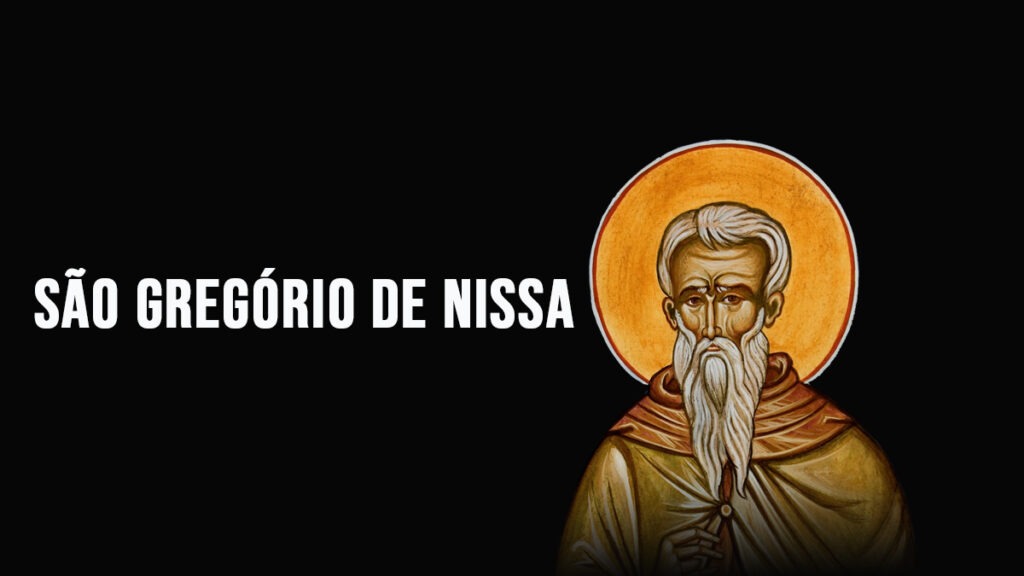
Today we celebrate an outstanding figure of Mariology: Saint Gregory of Nyssa, thinker and mystic of the fourth century. At a time when the Arian heresy, which denied the divinity of Christ, was being fought through the spread of the conciliar provisions of Nicaea, we find Gregory. This Father of the Church proclaims the full divinity of Christ, His eternity, His consubstantiality with the Father. Conversely, Eunomius of Cyzicus was putting forward the Arian heresy through an insidious rationalism, and there was also the spreading heresy of Apollinaris, which refuses to recognize in the incarnate Word a normal and complete human nature.
In the face of this attack on true humanity and true divinity, a development of Mariological truth then becomes necessary, one that Saint Gregory knew how to undertake. A monk of ascetic life, the Nyssen was consecrated Bishop of Nyssa in 371, where he vigorously opposed Arianism. In 376, a synod of Arian bishops deposed him as bishop with the connivance of the imperial court, but this affront would not last long, for with the death of the emperor Valens in 378 Gregory was restored to his episcopate in Nyssa. In 381 the Council of Constantinople took place, in which he made a decisive intervention, and later, in the last year of his life, he would take part in the Synod of Constantinople in 394.
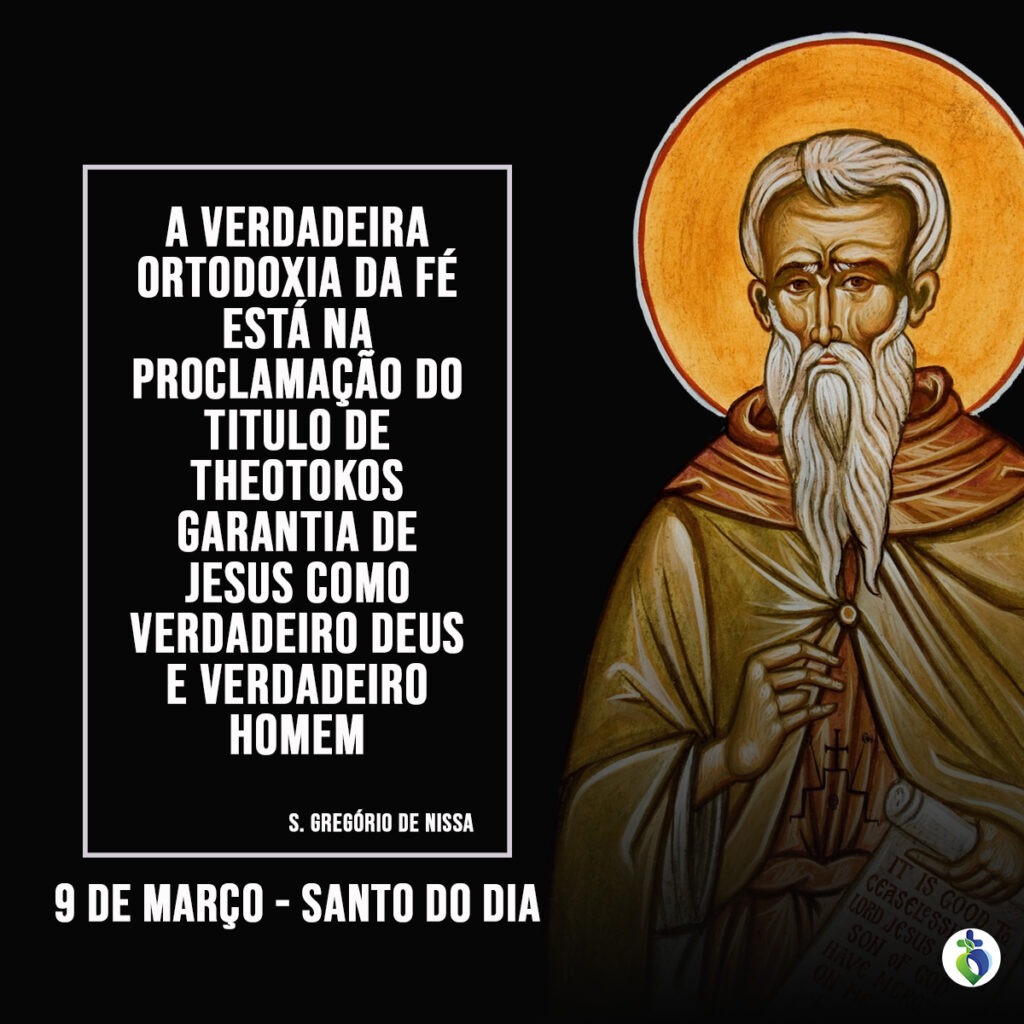
On the Virgin Mary, Gregory sets out his Mariological thought in a homily on the birth of Christ, in the treatise on Virginity, in the Commentary on the Song of Songs, in the life of Saint Gregory Thaumaturgus, and in the polemical works against Eunomius and Apollinaris.
The author’s Mariological thought is in general developed in order to safeguard the hypostatic union of the human nature and the divine nature of the incarnate Word. The heresy of Apollinaris held that in the human nature of the Word there existed only the body, deprived of a rational soul, since the latter depended solely on the divine Word. In order to safeguard the perfect and complete humanity of Christ, Gregory will insist on the true and real motherhood of Mary, and he writes:
“Like all those who profess the right faith, I too declare that I believe that the same one (Jesus) is God and man. Not in the way Apollinaris thinks. In truth, reality is not as he sees it, that is, that the divinity becomes something earthly and the humanity something heavenly. On the contrary, it is the power of the Most High that, through the Holy Spirit, covered human nature, and in this way it was formed. This means that the portion of flesh was fashioned in the immaculate Virgin. This is the reason why the One who was born is called Son of the Most High. Indeed, the divine power makes possible a certain affinity of human nature with God, while the flesh makes possible for God a certain kinship with man” (PG 45,1136).
From Gregory’s words we can deduce that the true incarnation in the womb of the Virgin Mary corresponds to true divine motherhood. In this sense the title Theotokos is a criterion of orthodoxy, for as the Nyssen says:
“If we proclaim aloud and bear witness that Christ is the power and wisdom of God (cf. 1 Cor 1:24), ever immutable, ever incorruptible; that whoever dwells in a mutable and corruptible body does not, however, remain unclean, but rather even the one who is unclean is purified, what is our incorrect will, and why do we let ourselves be carried away by hatred? What do these new altars raised against us mean? Perhaps because we proclaim a different Jesus? Do we perhaps point to another? Do we by chance proclaim a different Scripture? Has any of us dared to call the Virgin Theotókos the mother of a man, as we have heard some do irreverently?” (PG 46, 1024).
As we can see from Gregory’s testimony, the struggle is heated because it does not respect Sacred Scripture. The human nature of Christ was not a pre-existing reality, but was assumed in the womb of Mary and possessed the requisites of a human being bound to body and soul. Moreover, the Son of Mary is the new man, the perfect one, for this is what the Nyssen affirms:
“When the Holy Spirit came upon the Virgin and the power of the Most High overshadowed her, the new man was formed in her. He was called new because he was fashioned from God not according to human custom, but otherwise, so that he might become a dwelling place of God not made by human hands, since the Most High does not dwell in works made by human hand, that is, in works prepared by men. Then Wisdom built herself a house (Prov 9:1), and the power formed within it an image, like a kind of seal. Then the divine power mingled with both of the elements that make up human nature. I mean the soul and the body, uniting itself equally to the one and the other. Both of these elements are subjected to death because of disobedience: for the soul, death consists in separation from true life. For the body, it is corruption and dissolution. Death must therefore be driven out by the joining of these two elements with life. And just as, therefore, the divinity united itself to both elements of man, in both were manifested the remarkable signs of a superior nature” (PG 46,316).
As we might expect, Saint Gregory, when he points to the ‘prodigies of a superior nature’, is referring to the prodigy of Mary’s virginity. The virginal birth of Jesus had been prefigured in the messianic prophecies of the Old Testament. Obviously the prophecy of Isaiah was not forgotten when the Nyssen illustrates:
“Listen to Isaiah, who proclaims: ‘a child is born to us. A Son is given to us’ (Is 9:6). Learn from the same prophet how the child was born, how a son was given to us. Was it perhaps in conformity with the law of nature? The prophet denies it. The Master of nature does not obey the laws of nature. But how was the child born? Tell me. The prophet answers: ‘Behold, the virgin shall conceive and bear a son, and they shall call Him Emmanuel’ (Is 7:14), which translated means: God-with-us. Oh, marvelous event! The Virgin becomes a mother and remains a virgin! Observe this novelty of nature. All other women, as long as they remain virgins, do not become mothers. When one becomes a mother, she does not preserve her virginity. Here, on the contrary, the two terms are attributed to the same person. It is the same woman who presents herself, in fact, as Mother and as Virgin, since neither did virginity prove an obstacle to her childbearing, nor did motherhood eliminate virginity. It was indeed fitting that the Redeemer, having entered human life in order to make us all incorruptible, should Himself take His origin from an incorruptible generation. In reality, following our way of speaking, the woman who has had no relations with a man is held blameless” (PG 46,1133-1136).
Many more Mariological writings can be found in the work of Saint Gregory. However, the one that came to mean most from the liturgical-iconographic point of view was the reading of the Old Testament theophany of the burning bush in a Marian key. Thus the Bishop of Nyssa speaks to us:

“It seems to me that even beforehand Moses had come to know this mystery through that light in which God appeared to him, when he saw the bush burning without being consumed (Ex 3:1ff). Moses said: ‘I want to draw near to see this great vision’. I believe that by the term ‘to draw near’ he meant to indicate not a question of place but an approach in time. What in fact was prefigured in the flame and in the bush, once the intervening time had run its course, was openly manifested in the mystery of the Virgin. As on the mountain the bush was burning but was not consumed, so the Virgin gave birth and was not corrupted. Nor does the likeness to the bush seem to you unfitting, prefiguring as it does the body of the Virgin, who gave birth to God.”
Saint Gregory attributes great value to the sign, which is capable of arousing astonishment and admiration in the one who observes it attentively, fundamental dispositions for drawing near to the supernatural. The sign, in reality, through its sensible contents, introduces us into the vision of faith of the divine mystery and helps us to acquire a certain mystical intelligence.
Gregory’s explanation of the mystery of the birth is clearly of a moral nature, for according to the Fathers of the Church Jesus is born to free men from the corruption of evil. Virginal incorruption is therefore part of an incorruptible generation and of a birth that is likewise incorruptible, one that indicates physical and moral integrity and, as such, Holiness, the goal of all human existence.
Postgraduate Program in Mariology
Would you like to deepen your formation in Mariology? Discover the Postgraduate Program in Mariology of Locus Mariologicus, an academic formation that unites theological rigor, spiritual life, and the living tradition of the Church.
Would you like to study Mariology seriously?
This article arises from the works in the library of Locus Mariologicus. The Postgraduate Program in Mariology takes you to that same source, with academic guidance: Scripture, the Fathers of the Church, and the Magisterium, from the first dogma to contemporary questions.



Responses