They saw the Child with Mary His mother (Mt 2:10-11)

They saw the Child with Mary His mother: exegesis and Mariological reflection
“Some Magi came from the East to Jerusalem and asked: Where is the king of the Jews who has been born? We saw His star in the East and have come to adore Him… When they saw the star, they experienced a great joy. They entered the house, saw the Child with Mary His mother and, prostrating themselves, they adored Him. Then they opened their treasures and offered gold, frankincense and myrrh”. (Mt 2:1-10)
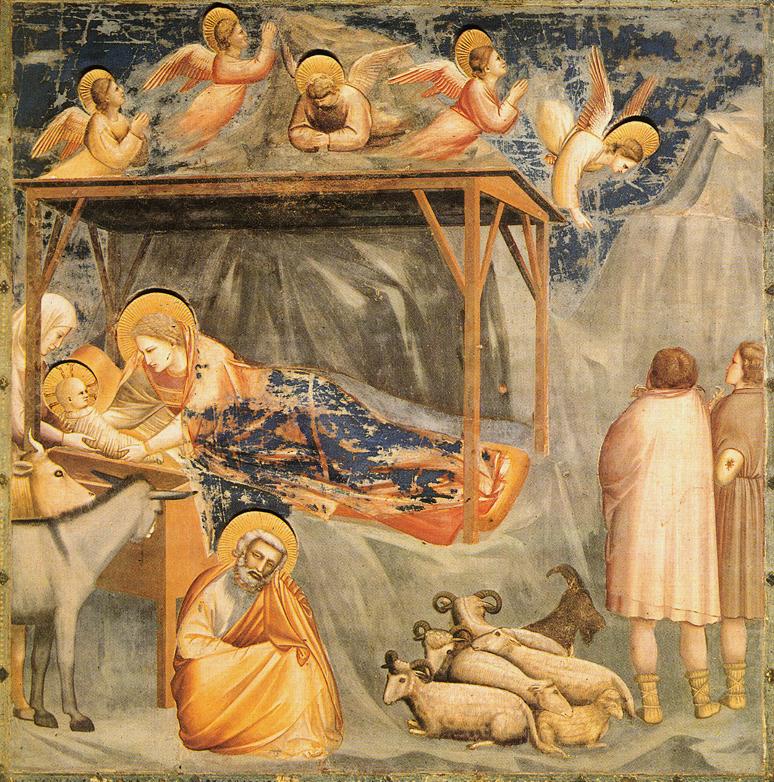
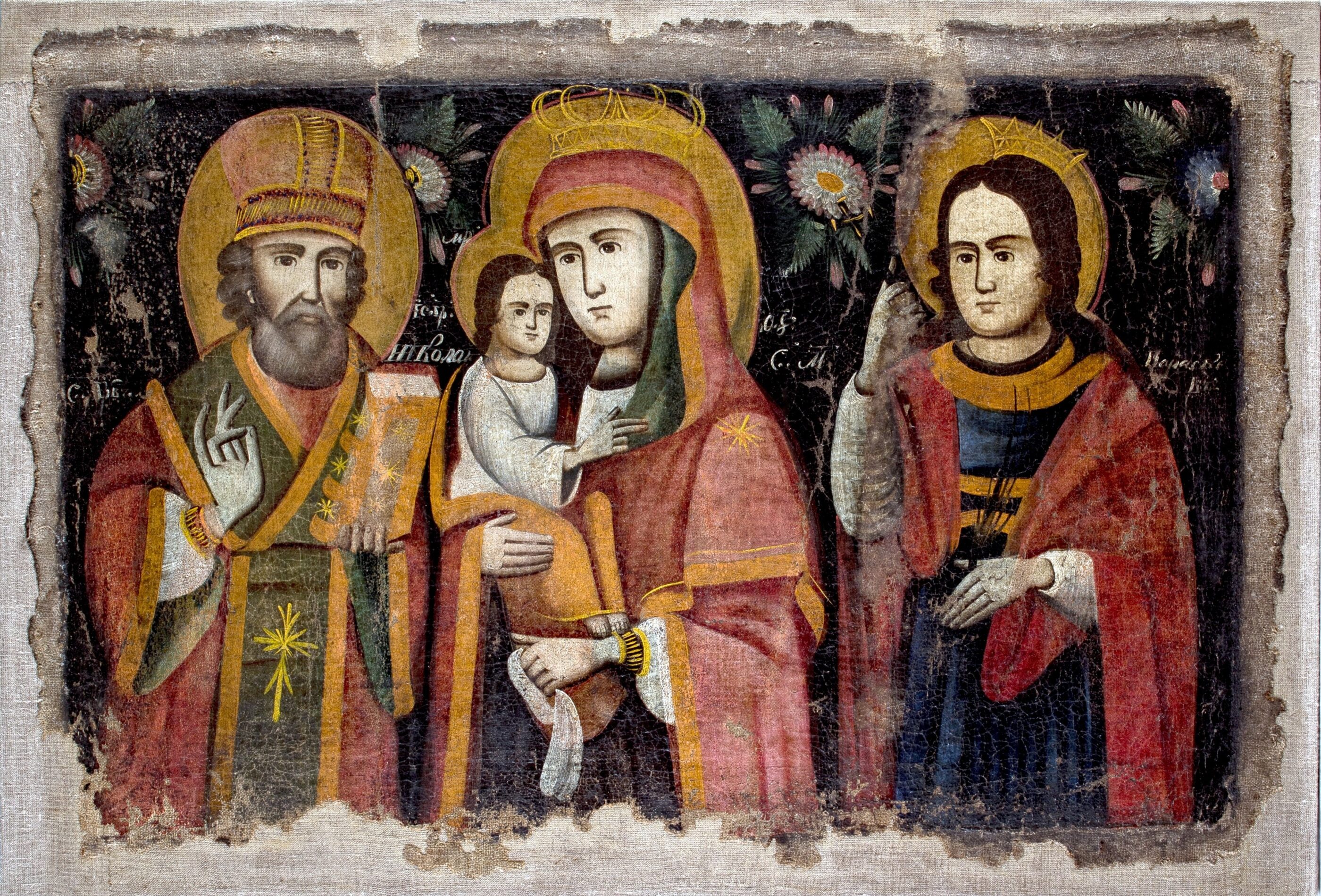
In early Christian art, the Magi present gifts to the Child, who is in the arms of His Mother, seated on a throne with steps (the wooden door of Santa Sabina in Rome, around 430). At other times, the Mother of God is at the center, symmetrically surrounded by the Magi and the shepherds. Sometimes, as at Santa Maria Antiqua in Rome (eighth century), the first magus-king kneels before Mary and the Child, while Joseph stands behind the Virgin and an angel points to the star and the way.
In the Middle Ages, especially on the tympana of the Gothic cathedrals, the representation of the adoration of the Magi framed portraits of the Virgin, while on later altarpieces the setting of the scene began to be enriched with details.
In the Renaissance, the centrality of the Mother with the Child was diminished by the taste for the luxurious garments of the Magi and for the curiosities of their exotic retinue. Curiosities that were accentuated in Baroque art, which exaggerates the scenographic aspect (cf. Tiepolo in his “Adoration of the Magi” in Munich, 1753).
In any case, the central axis of the famous narrative of the Magi lies in that verse: “They saw the Child with Mary His mother and, prostrating themselves, they adored Him”. The Theotókos appears here in her fundamental role of bringing forth and offering to the world her divine Son.
Matthew’s account (2:1-12), often read superficially as an Oriental fable full of exotic scents and colors, is in fact filled with symbolism and allusive theological references, a mosaic of biblical quotations and themes. We are before, as in the rest of the gospel of Jesus’ infancy, a Christological synthesis distributed along the fine threads of a weave with very broad and flexible historical meshes and very dense and taut patterns of thought.
A wrong way of reading and meditating on this page is to lose sight of Christ and Mary and to let oneself be won over too much by the Magi. This temptation has existed from the beginning: in the Roman catacombs these figures appear in the frescoes as early as the second century, two centuries before the shepherds, who were altogether ordinary and modest. Tradition made them kings, numbered them as three, made them racially differentiated (white, yellow, black), gave them different names according to pagan cultures (in the West Caspar, Melchior and Balthasar), spread their relics from Milan to Cologne, and in the three gifts saw special signs (gold for the kingship of Christ, frankincense for His divinity, myrrh for His passion and death).
The heart of the passage, however, is Christ and the question to which a twofold answer is given: where is Christ born and where does He come from? Both answers are given through the quotation of the prophet Micah, a text we already know and which Matthew quotes and adapts in verse 6: “And you, Bethlehem, land of Judah, are by no means the least among the principal cities of Judah, for from you shall come forth the Leader who will shepherd my people Israel” (Mic 5:1).
Bethlehem, the city of David, and the Davidic descent are the two answers offered: Jesus Christ is the royal Davidic Messiah, announced by the Scriptures. Now let us highlight another fact. Within the narrative and in counterpoint, light and darkness are opposed to each other, representing good and evil, the two camps of history. The great struggle of human history is projected onto the child Jesus and His mother, personified in Herod and in the Magi.
The city of David, Bethlehem, is opposed to Jerusalem, the city of Herod. The murderous search of Herod is contrasted with the loving search of the Magi, fear is replaced by joy, the question “where is the king of the Jews?” is followed by the joyful “they saw the Child and His mother”. The night is overcome by the star that lights up the darkness, the star points the way but also disappears, the chief priests and scribes know the truth about the Messiah but do not know how to recognize Him. Thus, alongside the welcome, rejection emerges, personified in Herod, in the priests and in “all Jerusalem”.
But the high point is represented by the light. Indeed, in the background of the narrative hovers the star, about which theology tells us much more than astronomy does. Some have had recourse to a “nova” or a “Supernova”, that is, to one of those faint and distant stars that suddenly, for weeks or months, grow in visual intensity because of a colossal internal explosion. Some rely on Halley’s comet (which, however, appeared in 12/11 B.C.) and others speculate about an astral conjunction of Jupiter and Saturn, and so on. In fact, the most illuminating reference is the Bible, perhaps the oracle of the magus Balaam, a pagan like the Magi, who blesses Israel by divine calling, saying: “a star rises from Jacob, and a scepter is raised from Israel…” (Num 24:17). The passage had become a messianic text in Judaism. Revelation calls Christ “the morning star” (Rev 2:28; 22:16). Light then becomes the summary of the Nativity of Christ within the whole Christian tradition.
We wish to focus on this theme, which involves Mary and her Child. The date of Christmas, December 25, as is well known, was chosen to replace the pagan feast of the Sun God, at least from the fourth century onward. Saint Leo the Great, still in the fifth century, took issue with a practice of the Roman Christians steeped in paganism: they “before entering the basilica of the Apostle Peter at Christmas, would stop on the steps, turn toward the rising sun and, bowing their heads, would bow down before it in homage to its shining disk” (Sermon 27 on the Nativity). His conclusion also holds good for us today: “Let the light of the heavenly body act upon the senses of your body, but with all the ardent love of your soul receive within you that light which enlightens every man who comes into this world!”.
Thus it was that the oldest Christian mosaic, that of the mausoleum of the Giulii (third century), portrayed Christ-Sun, shining on His triumphant chariot. Thus it was that Mary, like the Church, was represented as the moon in the medieval tradition and was sung as the “morning star” in the Litany of Loreto, following the title attributed to Christ by Revelation, as mentioned above. Thus it was that in an ancient Roman sepulchral inscription, the baptized person buried there was called hêliópais, “son of the sun”.
When the thirty races of the Agon of the Sun were held in Rome, when the people prostrated themselves before the rising sun at dawn, the Church gathered to celebrate the manifestation of the true sun that came forth from the womb of Mary. Christmas night was lit up by the “splendor of Christ, the true light of the world”, as the liturgy said.
In the Fathers, the womb of Mary becomes parallel to the womb of the earth, that is, the tomb: from both, Christ comes forth radiant unto life. It is not by chance that in the ancient Christian tradition Christmas and Easter were closely linked. In a Greek Christmas sermon wrongly attributed to John Chrysostom, the luminous and “springlike” gift of the Nativity of Christ through Mary is exalted as follows:
“After the cold season of winter, the light of gentle spring shines forth, the earth sprouts and turns green with grasses, the branches of the trees adorn themselves with new buds and the air begins to grow bright with the splendor of the sun. But for us there is a heavenly spring: it is Christ, who rises like a sun from the womb of the Virgin Mother. He dispelled the cold and stormy clouds of the devil and awakened to life the drowsy hearts of men, dissolving with His rays the mist of ignorance”.
The symbolism of light, which marks the encounter between God and man at the birth of Christ, leads us to another dominant image in the narrative of the Magi, which is the way. The star indicates a way and a kind of cosmic revelation, just like the pillar of fire that guided the children of Israel in the Exodus. In fact, in the gospel text it is called “His star” (the Messiah’s). The geographical framework that sustains the whole of Chapter 2 of Matthew is full of names: the East (Babylon or Persia for the Magi), Jerusalem, Bethlehem, Judea, Egypt, Ramah, Galilee, Nazareth. But it is not a fixed topographical map. Biblical space is dynamic, based on Abrahamic, exodic and eschatological typology: “We are always strangers as our fathers were”, David confesses (1 Chr 29:15), and the Letter to the Hebrews warns us: “We have here no lasting city, but we seek the one that is to come” (13:14).
God too is a pilgrim with His people, a nomad with them through the movable sanctuary of the ark of the covenant. He is also “the guest who goes on his way”, knocking at the door to be welcomed at table (Rev 3:20). He is the shepherd who walks with His flock, allowing the sun to beat down on Him too and thirst to grip His throat (Ps 23). Soon, in the narrative of Matthew, He will become a refugee in the Son who will know the bitterness of persecution and exile.
The journey of the Magi thus symbolizes the Christian life understood as following, as search, as a way in the footsteps of Christ, as detachment from things and from inertia. Those who are convinced that they possess everything and hold the monopoly of the truth are like the priests of Jerusalem, cold exegetes of a Word that neither involves nor converts them. Those who are very well established in the Jerusalem of history do not seek the heavenly Jerusalem. Those who are settled in their own city have no need of Bethlehem: indeed, Bethlehem seems to them an insignificant little provincial town.
Yet, with the Magi, “many will come from the east and from the west and will sit at table with Abraham, Isaac and Jacob in the Kingdom of heaven” (Mt 8:11). Among them, some still have a hesitant faith and, as Paul said in his discourse at Athens, they “grope” in search of God (Acts 17:27). Yet there is also the clear-sighted Christian who, even with the silences of God and the temporary darkening of the star, remains faithful and in the end reaches the “Child and His mother”.
The final scene of the narrative of the Magi is significant: they are portrayed as perfect faithful, “prostrate in adoration” (v. 11). The purpose of their pilgrimage was not to seek out a famous figure to question or to watch spectacular displays. No, they state without hesitation to those who question them: “We have come to adore Him” (v. 2).
This ought to be the motto of every pilgrimage, even of the one that many often undertake to the Holy Land or to Marian shrines. We should not go in search of apologetic or spectacular miracles. Instead, we should come to the holy places and shrines in order to see the Child and His Mother and to adore the Lord Jesus. The appeal that closes one of Isaiah’s songs could ideally sum up the two symbolic dimensions of the narrative of the Magi that we have highlighted, those of light and of the way: “House of Jacob, come! Let us walk in the light of the Lord!” (Is 2:5).
The light of Christ will progressively be reflected upon us and will enlighten us, transforming us into the image of His glory, steeping us in immortality. His star will make us shining stars: “The wise will shine like the splendor of the firmament. And those who led many to justice, like the stars, for all eternity” (Dan 12:3). Let us love in the Virgin the reflection of the light of God in its purest form. Let us love in her the figure of the Church that You gave us as a mother and of which You want us to be children. Mary gives the Church a face of tenderness and of gentle light. For wherever You were, Mary was with You, in the light of Your face, from the manger to the cross, and neither could the Magi distract her from the first, nor the soldiers draw her away from the second. So must Your Church be, enlightened by Your face and always close to You, a faithful mother who never turns away from You.
The iconography of the Virgin of the Magi is steeped in light, but it is also a clear expression of faith in Christ, to which all the peoples of the earth are called. The discovery that the Magi make before this image, at first sight so everyday and familiar, will inspire the Christian tradition to celebrate the joyful arrival of the nations to Christ. The liturgy of the Epiphany, so solemn in the Churches of the East, bears witness to this. Among the many witnesses, we would like to choose a less well-known voice. Under the patronage of Theophilus of Alexandria, who died in 412, there has come down to us a sermon on the flight of the Holy Family into Egypt, certainly later (sixth-seventh centuries), intended to be delivered at the shrine of Mount Coscam in Egypt, in memory of the legendary stay of the child Jesus as a refugee with His parents in that place.
Here is how Pseudo-Theophilus exalts the meeting of the Magi with the Child and His Mother: ‘They were filled with great joy because they saw the child and, adoring Him, they exclaimed: Blessed are You, O great King, who will dissolve all the kingdoms of the world! You have come into the world to break every power of the enemy, as we find written in the books of our ancient fathers, who went before us!’.
The moment of this decisive encounter, sketched in a few lines by Matthew, will blossom in an impressive way from the pen of one of the great Fathers of the Church: Ephrem the Syrian (fourth century). It is a soghitha, that is, a dialogue hymn, whose protagonists are Mary and the Magi. The Mother of Jesus addresses them and reveals to them her whole story and the mystery of her son. At first it is the Magi who exalt Jesus, while Mary reacts with humility, almost testing them. Then she questions them about the reason for their strange choice to travel in search of the child. She also lays bare her fears:
I am afraid that Herod, that enraged dog, may pursue me with his sword and pluck the sweet grape even before it has fully ripened… Jerusalem is a river of blood where the good are killed. As soon as he learns of the baby, he will look for Him. Speak in secret, do not raise your voices!’. In the end, she fully reveals the mystery of the Son, in an intense dialogue that culminates in an ending of peace: ‘Take peace to your lands, may there be great peace in your land… Let Persia rejoice at your announcement, let Assyria be glad! May the Kingdom of my Son shine forth!….
Since we cannot quote the poem in full, which consists of 53 stanzas, we cite only a few passages from the initial dialogue between Mary and the Magi.
- Mary: I have no royal treasures, nor have I ever had wealth. My house is humble and my dwelling is poor. Therefore, do not call my son a king!
- Magi: Your son is a great treasure, a wealth that enriches everyone…
- Mary: You see that the child is quiet and that the mother’s house is empty and poor. There is nothing royal here. How then can He be a king?
- Magi: Yes, it is true, we see a quiet child, gentle and humble, as you say. Yet we have seen Him light up the stars in the sky to announce a message.
- Mary: Seek that king among the nations and then adore him. Perhaps you have taken the wrong road and the king who has been born must be another!
- Magi: Believe us, young woman: the star led us, experts that we are, to your son without ever straying from the way, to bring us directly here!
- Mary: My son is small, He wears no crown and possesses no throne. What do you find in Him that you come to offer treasures as to a king?
- Magi: He is small because He willed it so, and He is a gentle and humble child as long as He does not manifest Himself. A time will come when all the crowns will bow down to adore Him.
- Mary: My son has no armies, neither legions nor hosts, and He lies quiet in the shadow of His poor mother…
- Magi: The armies of fire of your son range through the heavens. One of them came to us and called us, sowing terror in our land… Your son is ancient, O Virgin, more ancient than the days and older than all. Adam is younger than He is, and it is your son who governs all creatures!
Deepen your studies: explore Mariology, Marian Theology, Marian apparitions and the Postgraduate Program in Mariology.
To deepen the reflection on the presence of Mary beside the Child Jesus in Mt 2:10-11, see the Encyclical Redemptoris Mater by Pope John Paul II.
Postgraduate Program in Mariology
Would you like to deepen your formation in Mariology? Discover the Postgraduate Program in Mariology of Locus Mariologicus, an academic formation that unites theological rigor, spiritual life and the living tradition of the Church.
Would you like to study Mariology seriously?
This article is born of the works in the library of Locus Mariologicus. The Postgraduate Program in Mariology takes you to the same source, with academic guidance: Scripture, the Fathers of the Church and the Magisterium, from the first dogma to contemporary questions.

Responses