The divine motherhood of Mary (January 1)
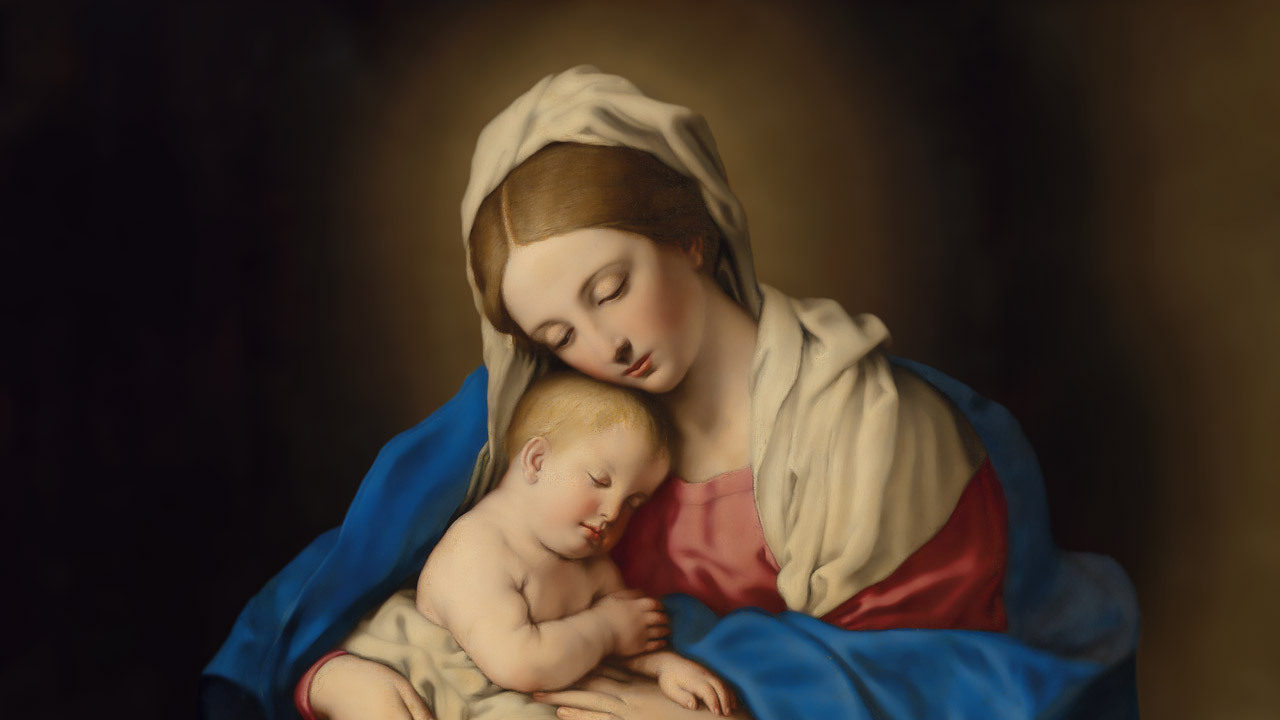
Historical aspect
On the octave of Christmas, and precisely on January 1, when the civil year begins, the “new” renewed Roman Missal celebrates the Solemnity of the Blessed Virgin Mary, Mother of God, thus taking up again an ancient custom of the Church, both Eastern and Western.

Indeed, even before the Council of Ephesus (431) the Church honored the Virgin Mary and invoked her as Mother of God. In fact, the cult and the devotion of the Christian people toward Our Lady are explained precisely because she is the Mother of the Lord Jesus. This privilege lies at the basis of all the other graces with which her person was enriched, so that it constitutes the fundamental characteristic of the person of Mary.
In the liturgy, from ancient times, the Virgin Mary was celebrated with the title of Mother of God, even when there was no particular day dedicated to this celebration. It is enough to consider that we find the expression “the Blessed Virgin Mary, Mother of God” in the “Canon” of the Mass at least from the fourth century, and therefore the Mother of the Lord was remembered every day at the most solemn moment of the Eucharistic celebration.
Every Marian feast or celebration was an occasion to exalt and to bring into relief this singular and unique privilege of Our Lady: to have begotten in the flesh the Son of the eternal Father. For this reason, little concern was shown at first for dedicating a proper feast to the Virgin Mary as Mother of God. The whole Marian liturgy, in fact, is a hymn of praise and of exaltation of the divine motherhood of Mary, to which are bound all the other privileges that preceded and followed the existence of Mary.
Only in 1931 did Pope Pius XI, on the occasion of the fifteenth centenary of the celebration of the Council of Ephesus, extend the liturgical celebration of the Mother of God to the whole Church, fixing the date on October 11, as was done in some places.
That date, however, October 11, is recent and has very little historical foundation. The ancient liturgical texts, among which the Gregorian Sacramentary deserves to be recalled, testify that on the octave of Christmas the role and the mission of the Mother of the Lord Jesus were remembered in a particular way.
Subsequently, the Gallican liturgy influenced the Roman liturgy, so that, little by little, the octave of Christmas became the celebration of the memorial of the Circumcision of the Lord, although clear references to Our Lady, Mother of God, were never lacking. In this perspective, that celebration was received into the liturgical reform of Saint Pius V, after the Council of Trent, in the Missal and in the Lectionary.
The “New Missal” of the renewed liturgy, promoted by the Second Vatican Council, took up again and “dusted off” the original content of the Marian solemnity of the divine motherhood on the octave of Christmas.
Theological and ascetical reflections on the divine motherhood of Mary
Today the liturgy celebrates Mary, Mother of Jesus, Man and God. The holy Gospel attests this clearly. Nevertheless, only with the Council of Ephesus (431) is there the explicit and solemn declaration of the Magisterium. Faith in the incarnation of the Word and in the unity of the divine Person of Jesus Christ progressively brought about an understanding of the doctrine of the divine motherhood of Mary.
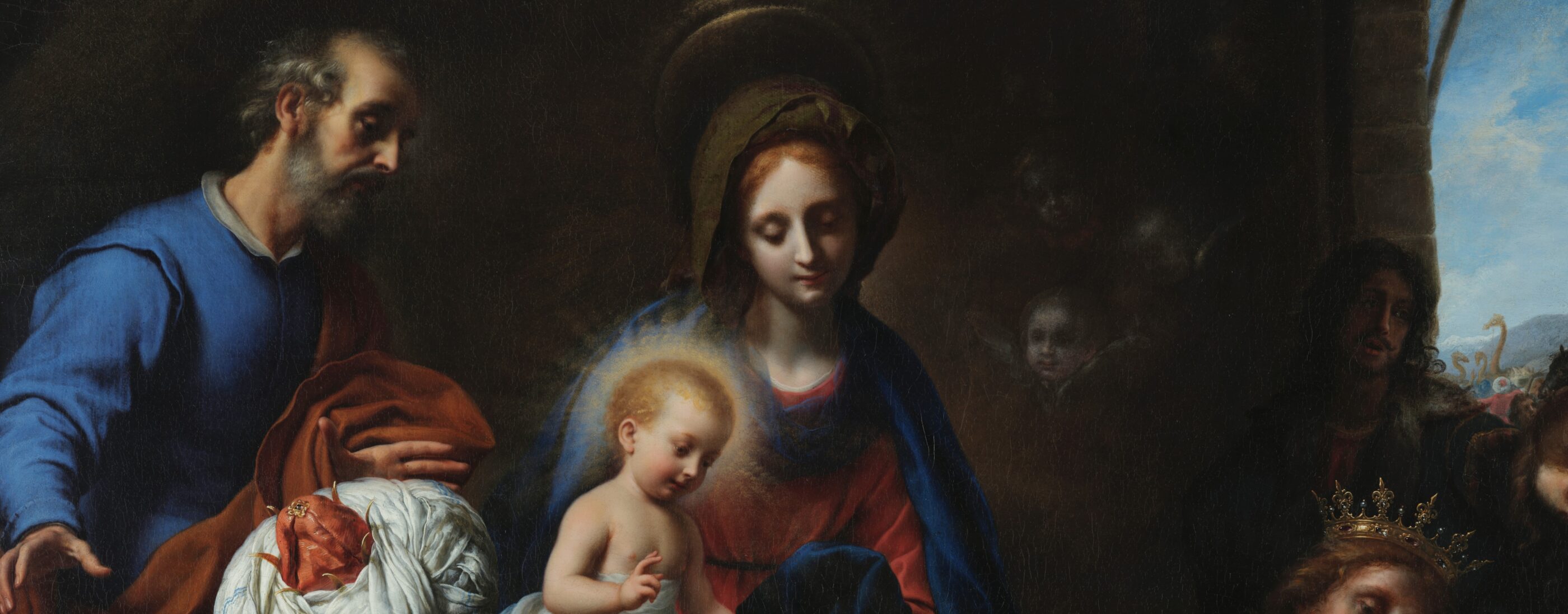
Today the Church celebrates not something abstract or an airy idea, but a concrete fact of the history of salvation and a foundational mystery of the Christian faith: Jesus Christ, Man and God, is born of Mary, the humble Virgin of Nazareth. The Second Person of the Most Holy Trinity, without ceasing to be God, begins to be man through Mary, thus establishing salvation for the human race: a stupendous mystery by which the humanity of Christ is raised to divinity in the one Person of the Word, so that salvation is worked from within.
The liturgical texts, besides the physical and spiritual motherhood of Mary, bring into relief and highlight her perpetual virginity. In Our Lady, in fact, the two prerogatives, motherhood and virginity, are celebrated together and are never separated, because they integrate and qualify each other reciprocally. The Gospels testify to this, and the Church has always held that the true mystery of the Mother of the Lord cannot be understood if these two privileges of hers are separated: divine motherhood and perpetual virginity. Mary, therefore, is indeed Mother, but a Virgin Mother. She is a virgin, but she is the Virgin Mother.
To express the concept of the divine motherhood at the Second Vatican Council, the bishops employ three terms (in chapter VIII of Lumen Gentium, entirely dedicated to Our Lady, we find: Mater Dei three times, Dei Genitrix three times, Theotòcos [Theotókos] or Deipara six times): Mother of God, Genetrix of God, and she who generates or bears God, this last being the most frequent.
The term Mother of God, used for the first time in the West by Saint Augustine, expresses the formal constitutive element of the divine motherhood, that is, it indicates the two terms of the real relation that binds the mother to the Son. The terms Genetrix of God and she who generates God, on the contrary, underline the foundation of that relation: “Mary begot on earth the Son of God” (LG 63).
The three terms complete one another reciprocally and technically express the real relation that unites Mary Most Holy to God, her Son. Motherhood, considered in itself, is nothing other than the relation of the mother to the child and of the child to the mother, founded upon generation.
Motherhood must be referred to the person and not to the nature, for fatherhood and motherhood are personal relations. Mary, being Mother of the human nature assumed by the Word, is rightly called Mother of the Person of the Word, to whom, by the hypostatic union, belongs the humanity received from Mary.
This motherhood is a real, stable and special relation, founded not only on the moment of generation, but on a permanent relationship. In Mary we find all that is human in motherhood and something more, for she generates a divine and pre-existent Person.
This Son depends on His mother according to the flesh, but, in the ontological order, she depends on Him as her Creator. This motherhood, however, does not destroy the psychology of Mary nor introduce violence, for God transfigures with grace the natural affections that He Himself created.
On the psychological level, the divine motherhood was the fruit of a free and conscious consent (cf. Lk 1:28-30). That consent is a theological act of faith and of love. The maternal love of Mary becomes adoration as well (cf. Saint Basil of Seleucia, Om. V in PG 85, 448 AB).
Mary is called to be Mother so that the Incarnation willed by God may be accomplished. The Word did not will to assume an adult body directly created (cf. Gen 2:7), but willed to be born of a woman (Gal 4:4), as a shoot of the stock that was to be saved (cf. Is 11:1).
Mary is not a passive means, nor a mere instrument. This is not a question of an abstract motherhood, but of a conscious, free and holy cooperation with the saving action of God.
The choice of Mary comes from the gratuitous benevolence of God, but it is coherent with the plan of salvation. The angel greets her as full of grace (Lk 1:28), the Lord is with her (Lk 1:28), the Holy Spirit comes upon her (Lk 1:35). She is blessed among women (Lk 1:42) and she proclaims herself blessed for having believed (Lk 1:48).
Mary conceives Christ freely, by faith, even without understanding everything from the beginning (cf. Lk 2:50). For this reason the Fathers affirm that she conceived first in her heart and then in her womb (cf. Saint Augustine, Sermo 315, 4. Saint Leo the Great, Sermo I In Nativitate). The Second Vatican Council takes this up again: “The Blessed Virgin Mary received the Word with her heart and with her body” (LG 64).
Mary is chosen as Daughter of Zion, set within the chosen people. Her Fiat becomes the consent of humanity called to be prolonged in the Church.
In this perspective, the function of the motherhood stands out (cf. Lumen Gentium 53 and 67), its character of service (cf. Lk 1:38; Lk 1:48) and its living out in poverty and humility (cf. Lk 2:24).
To choose a mother is to choose a historical condition. Christ chooses to be born among the poor. In this choice the “admirable exchange” between Creator and creature is accomplished, by which humanity is raised up.
Finally, two pastoral emphases: to entrust the new year to the maternal protection of Mary and to recall the World Day of Peace, instituted by Paul VI, as a concrete commitment of each of the faithful to peace.
The dogmatic definition of Mary as Theotokos by the Council of Ephesus (431) is analyzed in depth in the Apostolic Exhortation Marialis Cultus of Paul VI, which grounds the Solemnity of January 1 in the most ancient liturgical tradition.
Deepen your studies: explore Mariology, Marian Theology, Marian apparitions and the Postgraduate Program in Mariology.
Marian academic resources: Deepen your formation in Mariology and Marian Theology with the Locus Mariologicus Institute. Postgraduate Program in Mariology: academic formation of excellence.
Postgraduate Program in Mariology
Would you like to deepen your formation in Mariology? Discover the Postgraduate Program in Mariology of Locus Mariologicus – an academic formation that unites theological rigor, spiritual life and the living tradition of the Church.
Would you like to study Mariology seriously?
This article is born of the works in the library of Locus Mariologicus. The Postgraduate Program in Mariology takes you to that same source, with academic guidance: Scripture, the Fathers of the Church and the Magisterium, from the first dogma to contemporary questions.
Responses