The Number of Apparitions of the Virgin Mary
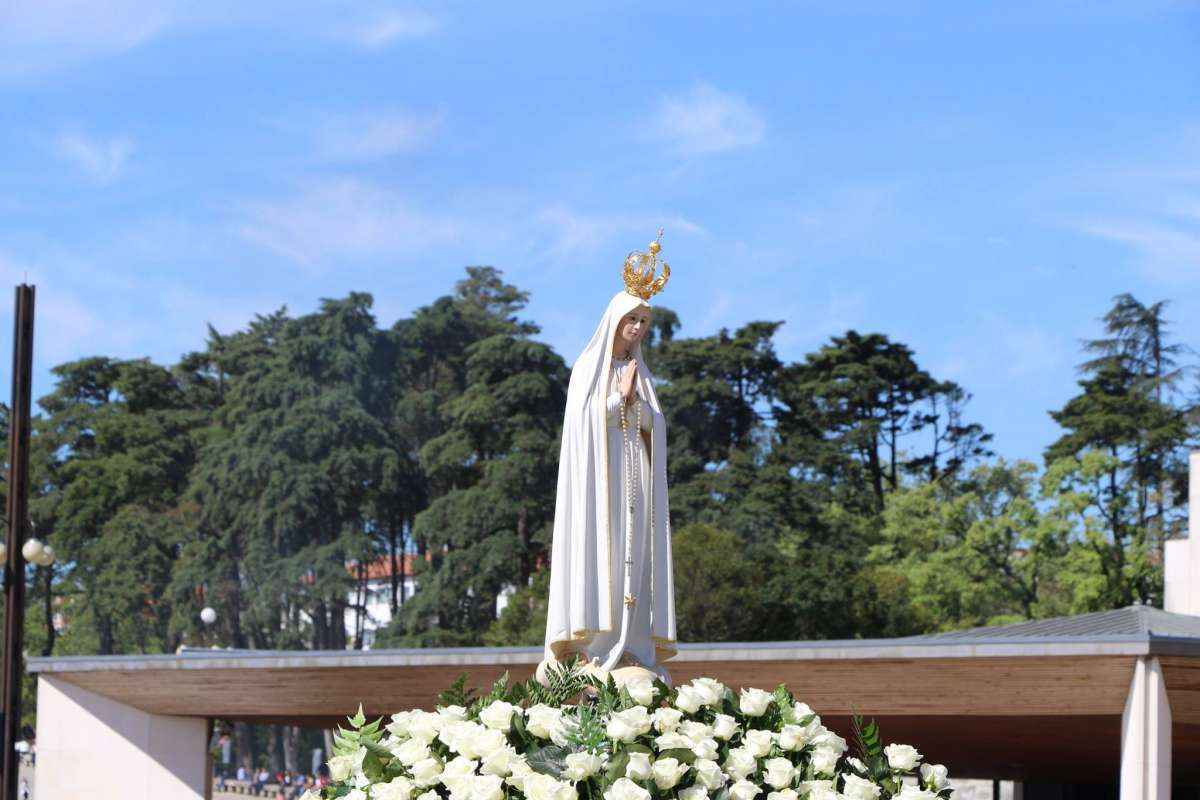
Marian Apparitions Through the Centuries: A Historical Overview
Marian apparitions are not exclusive to our own time. Many authors of Christian antiquity, among them also Fathers of the Church, recounted extraordinary apparitions of the Virgin.
The first historically verified account goes back to Gregory of Nyssa, who died in 392 and who reports an apparition of Mary to Gregory Thaumaturgus, which occurred in the year 231, as attested in collections of Marian texts of the first millennium and in patristic studies devoted to his figure.
The historian Sozomen, who died around 450, in his Ecclesiastical History, conceived as a continuation of the Ecclesiastical History of Eusebius of Caesarea and dedicated to the emperor Theodosius II, states that apparitions of the Mother of God in Constantinople were already common. He further observes that the group led by Gregory Nazianzen, which frequently gathered in a small house, had begun to be distinguished from the others also by the benefits flowing from these apparitions, according to the testimonies preserved in the Marian tradition of the first millennium.
Sulpicius Severus, who died between 420 and 425, recounts an apparition of Mary to Saint Martin of Tours, as documented in the Latin Marian texts of the first millennium and confirmed by patristic research. Gregory of Tours, who died in 594, reports an apparition to an architect who was building a temple in honor of the Virgin, in the context of his work Libri Miraculorum, a collection of prodigious events linked above all to the veneration of Marian relics, in which is also found the first testimony, in the whole Christian West, of the Assumption of the Virgin into heaven. John Moschus, who died in 619, in his work Pratum Spirituale, describes apparitions of Mary to the abbot Cyriacus, in defense of the faith against the heresy of Nestorius, and to the blasphemer Gaianus, with the aim of converting him, according to the Byzantine Marian texts of the first millennium and the patristic studies concerning them.
Others who write about Marian apparitions include Pseudo-Theophilus of Alexandria, in his Homilia de fuga in Aegyptum, Bede the Venerable, in the Latin Marian texts of the first millennium, John of Salerno, in the Vita Sancti Odonis, and Pseudo-Basil of Caesarea, of the seventh century, who states that he saw the Virgin at the moment when he was preparing to dedicate to her the first church of Philippi, according to the testimonies preserved in the Eastern tradition and in patristic literature.
The remote origins of many shrines of antiquity or of famous temples are likewise attributed to apparitions of the Virgin. The Shrine of the Pillar, in Zaragoza, for example, is said to have arisen from an apparition to Saint James the Greater, the evangelizer of Spain, on January 20 of the year A.D. 41, according to historical tradition. The great basilica of Le Puy was built to commemorate the apparition of the Mother of God to a woman named Vila, suddenly healed of a grave illness, as indicated in specialized lexicons on Marian apparitions, and the admirable cathedral of Chartres was erected in 1028 by Saint Fulbert for the same reason, according to the same historiographical tradition.
The second millennium is marked by increasingly documented apparitions and by an impressive growth of the phenomenon, especially from the nineteenth century onward. According to data provided by Billet in various studies, from the beginning of the twentieth century until 1990, 527 apparitions and other prodigious Marian events were recorded, distributed across 70 nations, as summarized by Stefano De Fiores in his work of historical-salvific Mariology. Two German authors, in an extensive volume of a compilatory character, list chronologically, from the origins of Christianity to our own day, more than a thousand apparitions and extraordinary interventions of the Virgin, organized by century and year, as presented in the work Erscheinungen und Botschaften der Gottesmutter Maria, published also in an Italian edition with an equivalent title.
For an up-to-date theological analysis of the discernment of Marian apparitions, see the Norms for the Discernment of Supernatural Phenomena published by the Dicastery for the Doctrine of the Faith in 2024.
Deepen your studies: explore Mariology, Marian theology, Marian apparitions, and the Postgraduate Program in Mariology.
To deepen the theological study of the apparitions of the Virgin Mary and their role in the history of salvation, see the Encyclical Redemptoris Mater of Pope John Paul II.
Postgraduate Program in Mariology
Would you like to deepen your formation in Mariology? Discover the Postgraduate Program in Mariology of Locus Mariologicus, an academic formation that unites theological rigor, spiritual life, and the living tradition of the Church.
See the complete list of Marian apparitions recognized by the Church.
Deepen your study of the Perpetual Virginity of Mary.
Would you like to study Mariology seriously?
This article is born of the works in the library of Locus Mariologicus. The Postgraduate Program in Mariology takes you to the same source, with academic guidance: Scripture, the Fathers of the Church, and the Magisterium, from the first dogma to contemporary questions.





Responses