The Mother of the Church in the Roman Catholic Liturgy

The Mother of the Lord in the Roman liturgy today
Mary is fundamental in the liturgical year, for, as Sacrosanctum Concilium no. 103 says:
In celebrating the annual cycle of the mysteries of Christ, holy Church venerates with special love the Blessed Mary, Mother of God, who is inseparably united to the saving work of her Son. In Mary she (the Church) admires and exalts the most sublime fruit of the redemption and joyfully contemplates, as in a most pure image, that which she herself desires and hopes to be.
With this in mind, the General Roman Calendar (last updated in 1969) was revised, and this made it possible to insert the memory of the Mother more organically and with a closer connection into the annual cycle of the mysteries of the Son (Marialis Cultus 2). The figure of Mary shines in all its richness in the solemnities, feasts, and memorials expressly dedicated to her. The formularies of the Mass and of the Office have been profoundly renewed or enriched with biblical and euchological texts.
But her memory is not limited to Marian celebrations. Indeed, Advent is “a particularly favorable time for venerating the Mother of the Lord” (Marialis Cultus 3). While from the First Sunday onward the hymns and the antiphons of the Gospel canticles of Lauds and Vespers, and of Daytime Prayer, mention the Virgin, her memory gains prominence from December 17 to 24, as it does on the Fourth Sunday of Advent, and we must not forget that the month of the Lord’s birth begins with the Solemnity of the Immaculate Conception.
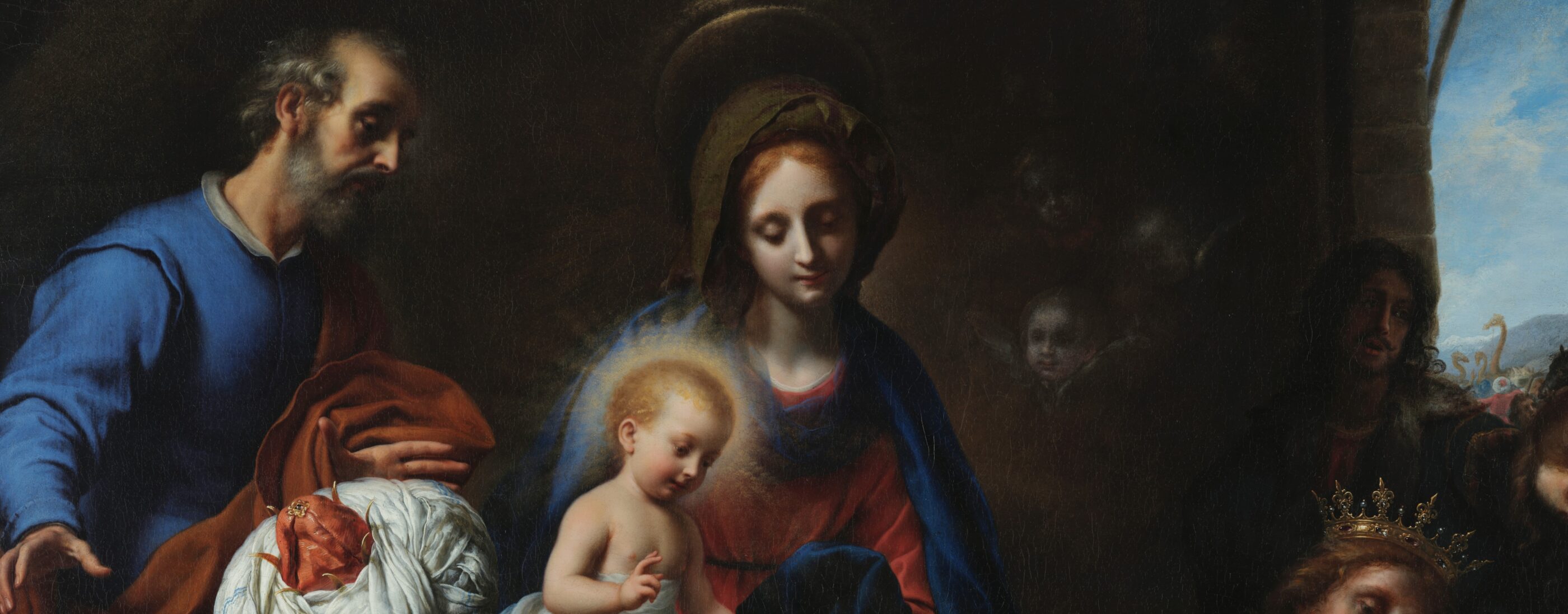
The Christmas season, too, constitutes a prolonged memorial of the divine, virginal, and salvific motherhood of her who gave the Savior to the world (Marialis Cultus 5), in which the liturgy remembers Mary, both with regard to Christ’s birth and in the present experience of the companionship of Emmanuel. Her mission is further exalted in the feasts of the Holy Family, the Mother of God, and the Epiphany.
The liturgy of the Lenten and Easter seasons, though discreet about Mary, is not silent: in addition to her mention in some intercessions of Lauds and Vespers, repeated weekly, the formularies provided in the Collection of Masses of the Blessed Virgin Mary are an example of this. We should recall here that throughout the year the memorial of Saint Mary in Sabato is celebrated without interruption.
Mary in the Celebration of the Sacraments and Sacramentals
It is not enough to consider the Marian feasts or the Marian emphases of the seasons of the year, for the Marian dimension of liturgical prayer must be weighed even before that. In reality, the Church, which, by the bonds that unite her to Mary, wishes to live the mystery of Christ with her and like her, continually experiences that the Most Holy Virgin is always at her side, but above all in the sacred liturgy, as mother and helper.
By ancient and universal tradition, the memory of Mary belongs to the celebration of the Eucharist. The link between the Incarnation and the Eucharist, and within it communion with her from whom the body and blood of Christ historically came to us, binds Marian piety to the Eucharistic celebration. From the virginal womb of the Daughter of Zion sprang forth He who nourishes us with the bread of angels. For this reason, in celebrating the Eucharist, the Church remembers Mary, praises her, and entreats her, experiencing communion with her. No one should think that her mention in the Eucharistic Prayer is devotional in nature: on the contrary, it is the sign that we cannot silence the memory of Mary in the remembrance of the mysteries of Christ. The event of the Word becoming body in the faithful Virgin, by virtue of the Holy Spirit, sheds light on the mystery of the Word becoming body in the praying Church, so that, by virtue of the same Spirit, she becomes one body, one spirit in Christ, as we pray in the Eucharistic Prayer.
The woman of Pentecost became the living temple of the eternal Priest who intercedes for us with the Father (cf. Heb 7:25). She is the mirror of the Church at prayer: the attitudes of Mary, the Virgin who listens, the Virgin of prayer, the Virgin Mother, the Virgin who offers, are examples for the Church in the exercise of worship.
Along these lines, the Magnificat is prayed daily at Vespers.
And the celebrations of the sacraments and sacramentals reveal or accentuate certain Marian resonances, which spring from the very core from which the sacrament derives: God among us. Finally, the number of blessings in which Mary is remembered is significant.
With Mary: why?
In intimate communion with the Virgin, therefore, and prolonging her attitudes of worship, the Church celebrates the divine mysteries, in which perfect glory is given to God and men are sanctified: joining the voice of the Mother of the Lord, the Church blesses God the Father and glorifies Him with her in the same canticle of thanksgiving and praise.
With Mary, she wishes to hear the word of God and to meditate on it assiduously.
With Mary, she desires to share in the paschal mystery of Christ and to associate herself with the work of redemption.
Like Mary, who in the Upper Room, together with the Apostles, awaited in prayer the coming of the Paraclete, she ceaselessly implores the gift of the Spirit.
With Mary, who watches over her path, she journeys with confidence toward Christ.
Moreover, in celebrating the various mysteries, the Church ceaselessly appeals to her intercession, takes refuge under her protection, and implores her to visit the Christian people and fill them with her gifts.
The image of Mary that we know in today’s Roman liturgy is the reflection of a renewed understanding, in both the biblical and the euchological texts. The enrichment of the Lectionary, like that of the Marian celebrations (including the broad selection of Sacred Scripture in the Collection of Masses of the Blessed Virgin Mary), corresponds to the expansion of the prayers and prefaces, carried out with a threefold line in mind: biblical inspiration, esteem for patristic thought, and reception of the Mariological vision expressed in Lumen Gentium.
The conciliar spirit therefore also produced, at the level of the faith as celebrated, a rereading of the Gospel witness and of tradition concerning Mary, favoring the recentering of her image in a Christological and ecclesiological light. This had the effect of exalting more fully the features of Mary’s mission in the history of salvation.
Postgraduate Program in Mariology
Would you like to deepen your formation in Mariology? Discover the Postgraduate Program in Mariology of Locus Mariologicus, an academic program that unites theological rigor, spiritual life, and the living tradition of the Church.




Responses