Mary in H. U. von Balthasar
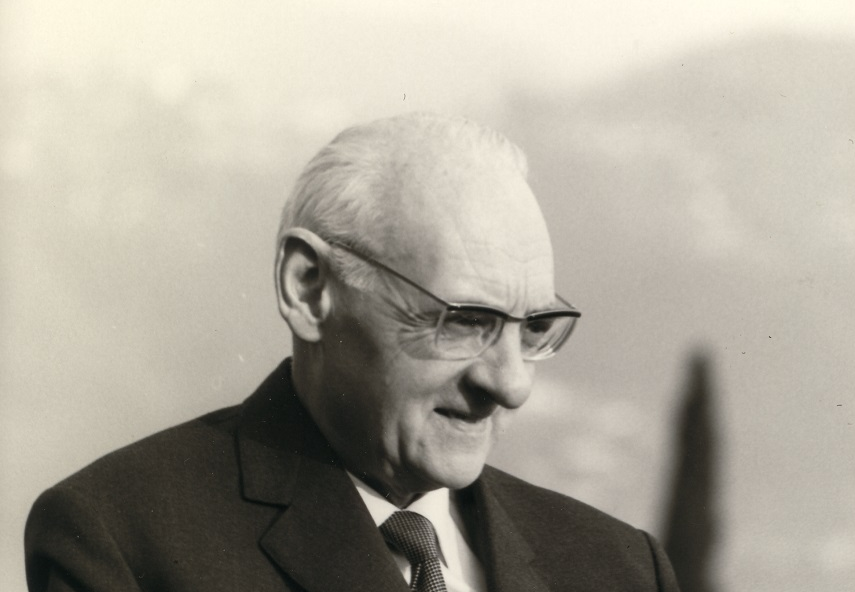
The theology of von Balthasar
Von Balthasar’s work gives ample space to the Mother of the Lord, and Mariology becomes in him a fertile field of applications and verifications of new paths, such as theological aesthetics and theo-dramatics. The whole of von Balthasar’s theology unfolds in a triptych comprising the following moments: 1. Theological Aesthetics, or theo-phany, as the perception of divine revelation in the world, and therefore vision of and encounter with God. 2. Dramatics, or theo-praxis, as the reality of God’s action in the world and upon the world. 3. Logic, or theo-logy, as the description of revelation and of God’s action in the form of concepts and words. We shall dwell on the first two parts in order to see how the author articulates his discourse on Mary. In Theology, vol. I and vol. II, in fact, the Marian reference is lacking.
Mary in theological aesthetics
Before setting out von Balthasar’s thought on Mary, it is necessary to frame his insights from the original perspective of his theology, presented in the fundamental work entitled “Herrlichkeit. Eine Theologische Aesthetik,” published in Einsiedeln in several volumes between 1961 and 1969. The work is published in German, in 5 volumes, by Herder. According to von Balthasar, theological aesthetics means “to contemplate God not insofar as He communicates the truth or insofar as He is goodness toward man, but insofar as He draws near to man in order to manifest Himself in the eternal splendor (Herrlichkeit) of His Trinitarian love.” The Christian message is therefore interpreted according to the category of the beautiful, and there are at least four reasons presented by von Balthasar for doing so:
- The aesthetic interpretation in no way modifies or diminishes revelation.
- If the prerogatives of the beautiful, of splendor, are lacking, no authentic knowledge is possible, because only in the luminous form of the beautiful does being become visible and desirable, and this holds for revelation as well.
- In aesthetic intuition one encounters the other as other, disinterestedly, which safeguards the transcendence of revelation.
- The Christian message is essentially a message of love, which is inseparable from beauty. The beloved object always appears stupendous, marvelous, all the more so when it is the divine Logos who manifests Himself as “Love,” “Agape,” and, as such, as glory and splendor.
The two Marian aspects that emerge in von Balthasar’s theological aesthetics are:
- Mary’s archetypal experience
- Mary, splendor of the Church
Mary’s archetypal experience and the Church
Our act of faith has at its origin an initial experience of immediate and sensible knowledge, in which the senses came fully into play. God manifested Himself to men through touching, hearing, seeing (1 Jn 1:1, 3). But beyond this typical and archetypal experience of the Apostles, the foundation of the Church’s faith (Eph 2:20), there is also a more mysterious and profound experience, which is the continuity between Mary’s maternal and spiritual experience and the maternal experience of the Church. Precisely at the crossing of all the paths of the Old Testament that lead to the New Testament stands the Marian experience of God, so rich and so hidden that it can hardly be described. It is, however, so important that it appears as the backdrop of everything that is visibly offered. In this experience, Zion passes over into the Church, the Word into flesh, the head into the body. It is the place of superabundant fruitfulness.
This Marian experience is distinguished from that of the Apostles by being deeper and trans-historical, and it is necessary to the Church so that she may give a total and all-embracing response. Far from abstraction, the experience accomplished by Mary has a Christological and ecclesiological function, for it is a fundamental experience of faith in a context of solidarity and contains in germ, and in a certain way physically, Christians with their faith. Mary is therefore “womb and prototype of the Church”; she represents the fruitfulness and the interior form of the Church: Mary’s response of faith is prototypical, because it includes and generates the faith of the Church. It follows that the Church, the more she is properly Church, the more she is immaculate, Christiform, Marian. The Church can in fact be regarded as “the union of those who, gathered and constituted by the ‘yes’ pronounced by Mary, are ready to welcome promptly God’s salvific will in relation to themselves and in relation to all their brethren.”
Marian spirituality is a factor of unity in the Church, because all other particular spiritualities must converge in it: it is ecclesial spirituality before any differentiation. Mary’s “yes” is the foundation and the essence of the New Testament Church: “Whoever unites himself in a living way to this yes is a living member of the people of God, and the more fully he can say it, the more ecclesial he becomes.” This “Marian principle” is the criterion of value for establishing the holiness of the Church.
Mary, splendor of the Church
Theological aesthetics seeks to perceive the figure concretely, without yielding to the reduction of logical procedures. In this conversion to the image, the idea shines forth in a visible and plausible way, and its meaning is intuited as in a work of art. In the Virgin Mary we have an image or figure of intense aesthetic value. A work of God’s art, Mary’s essence is like a malleable material at the disposal of the divine action: “One must see in Mary the prototype of what Divine Art can make of a human clay that does not oppose it.”
a) The figure of Mary reveals the reality of the Church, even though other archetypes exist (for example, Peter for the hierarchical function), and in order to make the Church herself recognizable one must have recourse to Mary, “who reveals the supreme beauty, that of the Bride-Church of the New Testament.” And further: “The Lord does not want the Church to stand before Him as a single manifest failure, but as a glorious bride worthy of Him. Here the Marian principle necessarily intervenes in the Church.” It is necessary, therefore, that Christians have before their eyes the interior image of Mary if they wish to be a holy and Christiform Church, capable of making the work of God shine forth in the world. “Insofar as the Church is Marian, she is a pure figure, immediately decipherable and comprehensible. Insofar as man were Marian, Christianity would be equally decipherable and comprehensible in him.”
b) Mary reveals the mystery of the creature’s cooperation with God, pointing out the infinite distance between the Lord and His handmaid, a distance that is expressed in everything that the Lord commands and the handmaid obeys. Such obedience, which characterizes not only Mary’s life but also that of the Christian, is the opposite of passivity and implies constant attention and the engagement of all one’s strength. Sharing in the kenosis of Christ, the light that shines in Mary is set within a condition of lowliness and obscurity: “She is deprived of visible miraculous works, of mystical phenomena. Men neither recognize her nor reject her; Mary is immersed in the chiaroscuro of grace and of faith. Her glorification is posthumous.” But even in this chiaroscuro Mary is a “figure of revelation,” not an allegory, but a real symbol of the bodily and spiritual Church conformed to the Word, and the educative force that comes from contemplating her is not negligible.
Mary in the Theo-Drama
After devoting 5 volumes to theological aesthetics, von Balthasar treats the Theo-Drama in 3 volumes. There too he reserves a notable space for Mary, because man is not a spectator but a co-actor in God’s drama. Without intending to propose a complete Mariology, von Balthasar touches on many points of Marian doctrine in a broad vision, where Scripture, patristics, the history of theology, and systematic reflection converge. From this context these aspects emerge, which we will briefly examine:
- Mary, theological person of the theo-drama
- Prolegomena to Mariology
- Mariology: the dramatic person of Mary
Mary, theological person of the theo-drama
Taking the category of theatrical drama as pre-understanding and point of departure, God’s action is seen by von Balthasar as “salvation accomplished, the reconciliation of the world in Christ with God by an initiative of love that only gives itself.” Therefore, men will be able to become actors in the theo-drama only if they are inserted into Christ and in response to a vocation. Precisely these two conditions are realized in Mary who, through a vocation beyond her expectation, is transferred into the dramatic space of Christ.
a) Mary is called to participate in the divine drama, so that her election makes her a theological and public person, available to the community. Mary becomes the archetype of all “theological” persons, of their vocation and of their mission.
b) With her election, Mary comes to find herself in a space impregnated by the real Person of Christ, and she belongs in a unique way and prior to all others to the “Christological constellation,” formed by those persons who are the true pillars of the Church (Peter, Paul, John, etc.). Mary’s mission, insofar as it represents a space open to other later figures, contemporary and future, is strongly theo-dramatic precisely because the Virgin is part of the “constellation of Christ.” Like all of us, she is committed to making her own self ever more limpidly isomorphic with the mission entrusted and given by God.
c) Mary is inserted as a woman into the Incarnation, and one would say necessarily so, through her motherhood in relation to the Son of God. This priority of Mary with a view to the birth of Christ is reflected in her relationship with the Church and the Church’s motherhood in relation to the faithful, which “always presupposes that Mary conceived and gave birth to the Messiah for the world.” Therefore Mariology too, even though intertwined with Ecclesiology, “must claim a priority insofar as it treats of the Mother of the Redeemer, without whom there would be neither a structured Church nor, in general, divine grace.”
Prolegomena to Mariology
Introducing his treatment of Mary, von Balthasar notes and opposes the tendency of Mariologists to reduce to a single firm principle everything that can be said of the Virgin, forgetting that she is a woman, that is, a mobile process not reducible to any univocity.
a) Reviewing the series of first principles proposed by theologians, the author does not consider them satisfactory: Scheeben’s “nuptial motherhood” is ambivalent. The “divine motherhood” of many obscures the role of the woman. “Mary archetype of the Church,” of Mueller, Semmelroth, etc., leads Mariology to dissolve into a global Ecclesiology. According to von Balthasar, one should attend first of all to Mary’s historicity as a woman (narrative Mariology), underscoring her freedom, which has an unrepeatable form in relation to every other human person.
b) Having identified the basic point of Mariology, von Balthasar does not hide the difficulty that exists for anyone who wishes to articulate the intimate closeness between Mother and Son and the infinite distance between Creator and creature, realities that historically caused the oscillation between praise and forgetfulness of Mary. Tracing the course of Mariology from this postulate, von Balthasar distinguishes three epochs, in which one passes from an ecclesiotypical image of Mary (the patristic age) to her emergence above the Church as mother of the faithful and bride of the Lord (the Middle Ages), and on to an “isolated Christotypology” that makes Mary the archetypal and teletypical (initial and final) image of the Church (the Second Vatican Council). The conciliar configuration remains a milestone that from now on will not be easy to displace, but a new and profound configuration is necessary, one that brings Mary onto the stage with a dramatic role in the theo-drama. Von Balthasar offers his contribution in this direction, situating Mary’s existence within the broad arc of salvific time.
Mariology: the dramatic person of Mary
The usual placing of Mary within a determined time is not satisfactory, because her story is broader and more problematic, such that she can be situated only in Christ or in a truly faithful Church. Consequently, the author articulates Mary’s presence in a threefold tension that runs from the earthly paradise to the time of salvation and, finally, to eschatology.
a) Between earthly paradise and the fall
This first placement sets Mary in the tension between her belonging to humanity and her holiness: “Mary must, as true mother of the Savior, truly belong to the human race in need of salvation and must nevertheless, in order to be that mother, be wholly holy and immaculate.”
b) Between the old and the new covenant
The second tension of Mary’s existence derives from the fact that she participates in two times of salvation: “As carnal mother she stands in direct continuity with the generations that come from Adam, passing through Abraham, while as virginal mother, made pregnant by virtue of the ‘yes’ to the Spirit who overshadowed her, she establishes a rupture and a new beginning.” This tension between the two Testaments becomes dramatic through the marriage to Joseph and is made explicit dramatically in the five episodes of Jesus’ “refusal”: “The twelve-year-old boy breaks with His lineage so harshly that His parents do not understand. The words of rebuff to His mother at Cana permit no sweetened interpretations. The refusal to receive her when she goes to look for Him and the reference to His hearers as the brothers, sisters, and mother of Jesus must have pierced her heart like a sword. The beatitude addressed to the maternal womb is once again redirected to the faithful. The act of withdrawing from her in the words ‘Woman, behold your son’ seals the long series of distancings.” The author explains that, in these episodes, Mary serves Jesus as a “demonstrative object” of the necessary transcending of flesh and blood in order to inherit the Kingdom of God. Such distancings are not absolute, but frequently constitute postponements and conceal a recovery: despite His “refusal,” the twelve-year-old boy returns with His parents and lives subject to them. At Cana, she is heard. The sending at Calvary underscores the expansion of physical motherhood into the spiritual and universal, and so on. In the visible humiliation, therefore, Mary’s secret glorification is hidden.
c) Between time and eternity
The two preceding tensions flow into the third, which characterizes Mary definitively: “The strongest tension is the last, the eschatological one, between time and eternity. It had to be reached if Mary is the true mother of the living who, from a reconquered earthly paradise (in the immaculate conception), gives birth to the shoot of the Messiah and to His brethren, but does so in the pains of childbirth upon the cross. What Mary brings forth in the virginal purity of paradise, yet in the pains of temporality and of the desert, is fruit for eternal life.” That said, von Balthasar underscores Mary’s profound bond with Christ and with the Church, of which she is “the personal center,” so that the Church is intelligible only “on the basis of Mary.” “Mary as Mother of Christ is the ‘carnal’ model of the Church, which spiritually gives birth to Christ, and she is furthermore the ‘individual, real, and universal’ model for all the faithful.” For this reason it can be affirmed that Mary subsists as the full synthesis of the faith of Abraham, as the perfect Daughter of Zion, in the passage from the Old to the New Testament and to the Church, as the personal quintessence of the New Testament Church.
Conclusion
Hans Urs von Balthasar’s reflection on Mary, set within the horizon of Theological Aesthetics and of the Theo-Drama, reveals a profoundly integrated understanding of the figure of the Mother of the Lord within the mystery of revelation and of salvation. Far from reducing Mary to a mere object of devotion or to an abstract principle of theology, the author presents her as a living theological person, situated at the center of the salvific drama, where God’s gratuitous initiative and the free response of the creature meet. Mary is not only contemplated as a beautiful and luminous figure of revelation, but as a real protagonist of the history of salvation, whose entire existence is shaped by the mission she received.
In Theological Aesthetics, Mary appears as the archetype of the ecclesial form, the image in which the Church recognizes her own deepest identity. In her, revelation takes on a concrete figure, sensible and intelligible, capable of manifesting the glory of God in the world. Her “yes” becomes the originating principle of the Church, the source of her spiritual fruitfulness and the criterion of her holiness. Marian beauty, far from being merely aesthetic, is theological, because it reflects the form of the Trinitarian love that gives itself to humanity.
In the Theo-Drama, Mary is inserted into the drama of salvation as a theological person fully committed to the mission entrusted by God. Her existence unfolds in a continuous tension between grace and freedom, closeness and distance, time and eternity. Mary’s motherhood, at once carnal and spiritual, indissolubly links Christ to the Church and makes her the personal center of salvation history. Through the trials, the distancings, and the apparent denials, the depth of her participation in the paschal mystery is manifested, where humiliation is converted into glorification.
Thus, for von Balthasar, Mary is not merely a theme of Mariology, but a hermeneutical key for understanding Christian theology itself. In her are united the beauty of revelation, the dramatic character of salvation, and the truth of faith. Mary remains, therefore, as the living synthesis of the human response to God’s love, model of the Church and eschatological figure of redeemed humanity, in whom the divine drama attains its most luminous and fruitful form.
For the magisterial framework of contemporary Mariology that complements Balthasar’s vision, John Paul II’s encyclical Redemptoris Mater deepens Mary’s role in the economy of salvation.
Deepen your studies: explore Mariology, Marian Theology, Marian apparitions, and the Postgraduate Program in Mariology.
Continue your Marian formation: Explore our resources on Mariology, Marian Theology, and Marian apparitions. Discover the Postgraduate Program in Mariology of the Locus Mariologicus Institute.
Postgraduate Program in Mariology
Would you like to deepen your formation in Mariology? Discover the Postgraduate Program in Mariology of Locus Mariologicus – an academic formation that unites theological rigor, spiritual life, and the living tradition of the Church.
Would you like to study Mariology seriously?
This article is born of the works in the library of Locus Mariologicus. The Postgraduate Program in Mariology brings you to the same source, with academic guidance: Scripture, the Fathers of the Church, and the Magisterium, from the first dogma to contemporary questions.




Responses