Mary, Teacher of Our Journey of Christian Life
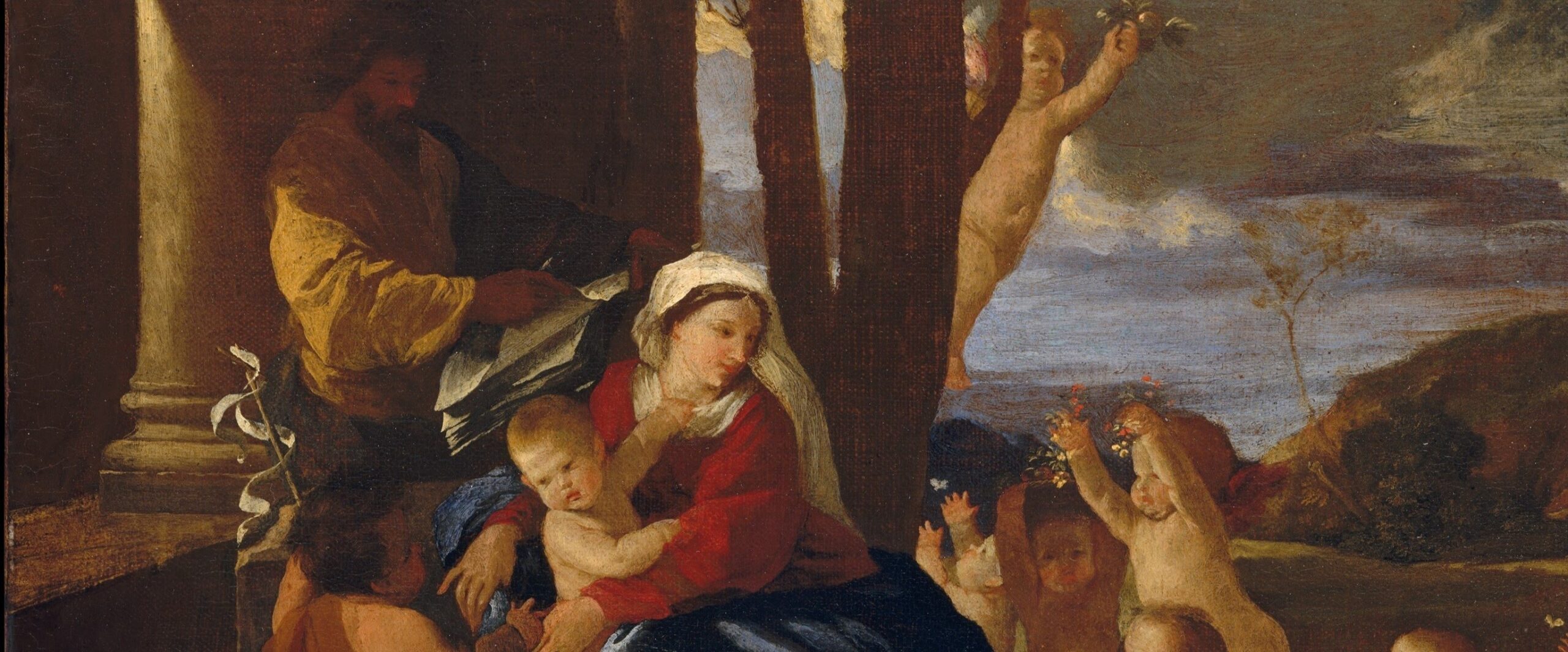
Mary teaches us to contemplate the wonders of God’s love
With her motherhood ever active on our behalf, Mary makes present anew the disconcerting presence of God in the history of men, with the aim of calling them and leading them back to salvation. To recognize that presence is to recognize that God works in an effective and decisive way in our life, that He breaks into the world with His power in order to save it. The Virgin, therefore, invites us to recognize that God is, lives, and acts from all eternity. In manifesting Himself, He shows Himself above all as a God who is Love, who wishes to communicate Himself and to dialogue with man. Through His wondrous works, the fruit of His self-giving, He asks for our adoration, our praise, our thanksgiving, so that we too, imitating the Virgin, may show the Lord our love and receive His with greater attentiveness. Mary teaches us that intelligence and heart are given to us precisely so that we may enter into harmony with our God and become the voice of all creation in magnifying Him, since material creatures cannot sing His infinite praise.
Through His works, and looking upon man made in His image, God shows Himself close to His creatures and intervenes to direct them to His glory, according to the designs of His divine wisdom. To recognize the irruption of God into history means opening oneself, like Mary, to the contemplation of His mystery and His glory: it means seeking God above all things, being and living seized by that ineffable presence, being nourished by Him, being penetrated by His splendor, being freed from the slavery of sin so as to be enveloped by His love, which conquers, redeems, and saves, feeding on the knowledge of God in the interior light of the Holy Spirit.
This prayerful opening to the contemplation of the mystery of God, who manifests Himself in His wondrous works, under the impulse of the Holy Spirit and with the help and the example of Mary, is necessary so that the reader may discover, with a free and attentive heart, the true face of God, who reveals Himself in love. Within the context of our existence, our worship of God must emerge forcefully and must be manifested continually, so that His glory may always remain the supreme reason for our existence, as it was for the Mother of the Lord.
Mary teaches us to be free in our choices
Our “yes” to God, like Mary’s, is born of submission to His will, which springs from our whole being as the supreme expression of our freedom sustained by His grace. Freedom, in fact, is the only gift that belongs to us and is inviolable: for this reason, it is the greatest gift that can be offered to God, the gift by which He becomes wholly omnipotent in us. This total adherence to God, like Mary’s free “Fiat”, inserts us into His design of love, on a path of growing fidelity, from fullness to fullness of love.
For this reason, the source of our happiness and our first duty as creatures is an incessant and loving search for God. But the Lord created us free and wants us to come to Him in full freedom. Although He has the absolute initiative in ordering and determining the plans of salvation and in carrying them out at the established times, on various levels and in manifold ways, He invites the human person, as He did with the Virgin of Nazareth, to receive His Word freely and to bear witness to it; but above all, and in a most special way in His interpersonal relationship with the human being, He invites each one to accept and to cooperate with His grace, respecting the dignity of the person, created free in His image and likeness. The response of freedom to God, as happened with Mary, fully involves the human person, who is called first of all to hold in faith as true everything that God manifests and to be ready to obey the design of His will manifested therein. Consequently, this faith entails a generous openness to God’s love and the sure hope that He will fulfill all that He promises. In this relationship of the creature who is free and open to salvation and to the glory of God lies the whole mystery that envelops responsible man and inserts him, like Mary, into the mystery of the Triune God.
Mary teaches us to carry Jesus in our heart
To open oneself, like Mary, to the mystery of God who reveals Himself in love also means belonging totally and completely to Christ. It is Sacred Scripture itself that teaches us that in Christ we have been made “partakers of the divine nature” (2 Pet 1:4), that we are “partakers of Christ” (Heb 3:14), that “we shall live with Christ” (Rom 6:8). Saint Paul repeats it more than seventy times. Christ Himself identifies with Christians when He rebukes Saul on the road to Damascus: “Saul, Saul, why do you persecute me?” (Acts 9:4) We belong totally to Christ because “we are in Christ as members of one body” (1 Cor 10:17; 12:12). We therefore form a unity; we have a full participation in the activity and in the destiny. We are the mystical body of Christ, so real that it unites us and incorporates us not only with the head, but also with the other members: “we are in Christ as branches on the vine” (Jn 15:5). Union and sharing of vital sap, a sharing in the bearing of fruit that takes place in the branches and through the sap of the vine.
To belong to Christ, to believe in Him, to follow Him along His paths of life, as Mary did and teaches, means letting oneself be instructed by Him and continually referring to Him so as to make our existence rich in holiness. But this implies, as an inescapable consequence, bearing witness to Him and proclaiming His Gospel to the world. The true Christian and the whole Church cannot remain standing still in motionless tranquility, having received from Christ the explicit mandate: “Go into all the world” (Mt 28:19). Mary invites Christians to become aware of their missionary vocation, which is to foster the spiritual regeneration of men, to bring them to birth as children of God in the new life in Christ. To proclaim Christ, loved, possessed, and followed, means to make others sharers as well; it means to promote man, because God wills his salvation. To bear witness to Christ and to be His disciples means contributing effectively so that all men may have a share in the salvation merited for them by the death and resurrection of Christ. Introduced to the contemplation of the risen Crucified One, the true Christian is the one who, having himself risen in Him, bears witness, to everyone in need of salvation, to His victory beyond the sorrowful pilgrimage of life, because he can no longer keep for himself the vital and transforming experience he has had of Christ, but must necessarily proclaim it to the world.
Mary teaches us to be docile to the Spirit
To know God and to be true disciples of Christ is possible only through the active and constant work of the Holy Spirit, who allows us to enter fully into the “divine family” and who accomplished in Mary the first great wonders of his grace. It is the Spirit, as Saint Paul affirms, who reveals Jesus to us and gives us the filial sense in relation to the Father: “Those who are born of Him are children of God” (Rom 8:14), and again: “You have received a spirit of adoption in which we cry out: Abba, Father” (Rom 8:15). This Spirit who worked fully and marvelously in Mary acts in us, directs our activity, sustains our weakness, prays in us with inexpressible groanings (Rom 8:26), makes us know our vocation as members of Christ, and guides us on the path of union with the Father in Christ, granting us the graces we need.
Although he does not show us his divine face, the Holy Spirit reveals himself to us in his action, as he did in Mary from the very moment of the immaculate conception of the Word of God, and he is the Person of the Most Holy Trinity who first enters our soul, touches our heart, dwells in us, introducing to us the Son and the Father. He is the one who animates our whole spiritual being; he is the mysterious voice of our conscience, the inspirer of our thoughts, the breath and the breathing of our love, the support of our will on the right path of salvation. Remaining in us as the most sweet guest of the soul, the Holy Spirit urges us to conform ourselves ever better, in our feelings and in our actions, to the love of Jesus, living that commitment which Jesus proposed to us at the Last Supper: “Love one another as I have loved you” (Jn 15:5). The new creature formed by the Spirit, as happened in Mary, is the creature in whom love reigns fully. In the Spirit and with the Spirit, this creature lives the new Covenant, for, won over by the newness of life, it loves, believes, and hopes, rising to the Father in the Spirit, offering itself for the salvation of the world, becoming in turn, as our mother Mary constantly shows us, father, brother, mediator, and consoler for all men.
Mary teaches us to be always animated by love
The path of the man who discovers and draws near to the mystery of God, who lets himself be animated, guided, and sanctified by the Holy Spirit, who receives and follows Jesus in perfect discipleship, can only ever be the path of love, because this is what he has learned in the school of his Divine Master. The Word of God, through whom all things were made, Himself made flesh, came to dwell in the land of men, entered the history of the world as perfect man, animating it and recapitulating it in Himself through a loving and sorrowful re-creation. It was He who revealed to us that “God is love” (Jn 4:8) and taught us that love is precisely the fundamental law of Christian perfection and, therefore, also of the transformation of the world. The path of man, made God’s path in Christ, is for this reason only the path of love. Looking to his Master, the Christian sees and understands that He, though King by nature and by vocation, did not wish to reign through His absolute power as Creator, but only through love, giving the greatest proof of it by accepting to suffer and to die for us.
To live in love means, as we contemplate in Mary and in her acting on our behalf, to open oneself totally to God and, in Him and through Him, also to others. All of this unites us to God and to our brothers, and its first vital element is prayer as contemplation-action: a prayer, therefore, that is not abstract, but one that, setting out from the transforming dialogue with God and from the meditation-acceptance of His Word, as happened in Mary, who meditated on and kept all things in her heart, returns to one’s own life and to the life of others in order to renew it and give it meaning.
Prayer, so understood, is above all to give glory to God, the giver of every good and of every consolation; it is to be always attentive to the salvation of others; it is to know how to listen; it is to feel loved and to let oneself be loved; it is to let God work within us; it is to let ourselves be led by Him; it is to become people animated by creativity, initiative, and organization for the benefit of the brothers and sisters who live at our side; it is to let oneself be led by the Truth in order to lead everyone to the Truth that unifies, saves, and transforms the world.
Living in love, always immersed in a prayerful attitude in the presence of the Triune God, transforms us into bearers of salvation and of joy in the world. Like Mary, the pure transparency through which God smiled upon the earth, sending His Son into the world, the source of joy, we too must be bearers of that saving joy which is born of faith and of full adherence to God and which springs from a heart that is pure and free from sin, the source of infinite sadness. The Virgin reminds us, in fact, that joy is possible only if we are free from the suffocating weight of our sins, so as to make room for the Spirit and to foster in us the ripening of his fruits of sanctification and joy. Union with God and joy, in fact, are equivalent. As we are converted and pass from the slavery of sin to the freedom of total belonging to God, we are clothed with joy and we water the world with joy. This joy that transforms us finds its nourishment in Christ, in the love of the Father, and in the fullness of the Holy Spirit. Mary teaches us that her being “All joy”, “All holy”, and “All grace” is the fruit of her belonging totally to God, of her going up to Jerusalem behind Christ in suffering and in prayerful love that becomes co-participation in the salvation of the world.
The Virgin invites us to clothe ourselves in the wedding garment with which we may be admitted to the banquet of joy in the kingdom of heaven, where it is fully realized and where we shall be satisfied with God Himself, the only true joy.
Mary asks us to entrust ourselves to her maternal heart
Spiritual Mother of the Church and mother of all men, deeply involved in the work of renewing the world in Christ, the Virgin frequently shows, in her apparitions, her Immaculate Heart in order to express, through a compelling iconic image, her universal mission: to cooperate apostolically in the invisible birth, in the flowering of the life of Christ in the heart of man.
The “consecration” repeatedly requested by the Virgin, that is, entrusting oneself fully to her maternal care, seeks to lead us to relive our consecration to God through Christ, in the Spirit, which already took place on the day of our Baptism. By her example and her intercession, the Mother of the Lord wishes to help us to live our baptismal consecration and to understand the profound meaning of the washing of regeneration and renewal in the Spirit (Titus 3:5) that made us children of God and partakers of the divine nature.
Saint John Paul II declared: “How can we live our baptism without contemplating Mary, the one blessed among women, so welcoming of God’s gift? Christ gave her to us as our mother. He gave her as mother to the Church. Every Catholic spontaneously entrusts his prayer to her and consecrates himself to her in order to consecrate himself better to the Lord” (Saint John Paul II, Angelus, Paris, June 1, 1980).
And Rahner writes: “What happens in us at Baptism has its origin and its initial power in the womb of the Virgin Mary. Beside every baptismal font of Mother Church stands the mother of Jesus” (Cf. Rahner H., Maria e la Chiesa, Jaca Book, Milan 1977, 68.)
The experience of the saints shows with great force and clarity that, through this entrusting of oneself to the Mother, Mary becomes ours and we are hers, and between her and us there is established an admirable intersubjectivity, a reciprocal attentiveness, a profound relationship, an exchange of goods, a friendly atmosphere, an influence and an oblative love. All of this should lead us to understand and to receive Mary not only as a mother in whose heart we take refuge, but also as teacher and model of life on the path of faith, in the total response to God, in readiness to cooperate in the plan of salvation.
It is understood, therefore, that the characteristic proper to devotion and dedication to Mary is that it is integrated into the Christian life as an essential condition of its full maturation and of its completion. To entrust oneself to Mary, to receive her as mother, means being inserted into the redemptive mystery of Christ. Mary’s task, in fact, is to help all who entrust themselves to her to fulfill their vocation in Christ, to rediscover and to live in the fullness of grace their belonging to God. By her presence and by receiving us as her children, Mary invites us to detach ourselves from our pride, the root and cause of every personal and social sin. She urges us along the path of holiness and of the evangelical virtues that she herself lived. She invites us to honor in ourselves the state of grace of which she is full and of which she is the perfect model, that is, to live in friendship with God, in communion with Him, in the indwelling of the Spirit, so as to reproduce in ourselves the spiritual features of the Firstborn Son, our Brother and Lord.
Let us be led by Mary our Mother
The Church teaches us that Mary is Mother and Associate of Christ the Savior: “Mother” binds her to her Son, who is the eternal Son of God incarnate in her; “Associate” binds her to the mission of the Savior. Associated with her Son, Mary gave herself entirely to Him with love and joy, but also with unheard-of suffering, adoring, in her self-giving to the Son and to His work, the mysterious design of the Father. In the work of the divine Redeemer, Mary therefore cooperated in a wholly special way, so that her merits, her virtuous works, and her sufferings are part of the mystery of our redemption. By consecrating herself wholly to the person and to the work of her Son, Mary in fact placed herself at the service of the mystery of salvation, under Him and with Him, with free faith and obedience. Her love, her faith, and her obedience to God are not like flowers scattered in a desert, but a germination that accompanies Mary’s whole life as a living and constant structure of her personality.
Awareness of all this should lead us to recognize Mary’s presence in our life, to act under her watchful and maternal gaze, following her example of total dedication to Christ, convinced that our heavenly Mother is always near us to encourage, console, sustain, and lead us to Him. The span of time that runs from the “fullness of time” to the end of our earthly history engages Mary’s spiritual motherhood without wearying it, weakening it, or diminishing her dedication. We must always depend on her throughout our earthly pilgrimage, asking her that, at the final goal, she may at last show us Jesus, the blessed fruit of her womb.
John Paul II’s encyclical Redemptoris Mater explores in depth Mary’s role as teacher and guide of the Christian journey, presenting her as the perfect model of the following of Christ.
Deepen your studies: explore Mariology, Marian Theology, Marian apparitions, and the Postgraduate Program in Mariology.
Continue your Marian formation: Explore our resources on Mariology, Marian Theology, and Marian apparitions. Discover the Postgraduate Program in Mariology of the Locus Mariologicus Institute.
Postgraduate Program in Mariology
Would you like to deepen your formation in Mariology? Discover the Postgraduate Program in Mariology of Locus Mariologicus, an academic formation that unites theological rigor, spiritual life, and the living tradition of the Church.
Would you like to study Mariology seriously?
This article comes from the works in the Locus Mariologicus library. The Postgraduate Program in Mariology takes you to the same source, with academic guidance: Scripture, the Fathers of the Church, and the Magisterium, from the first dogma to contemporary questions.

Responses