Mary at the Annunciation

Mary at the Annunciation: The Fiat That Changed History
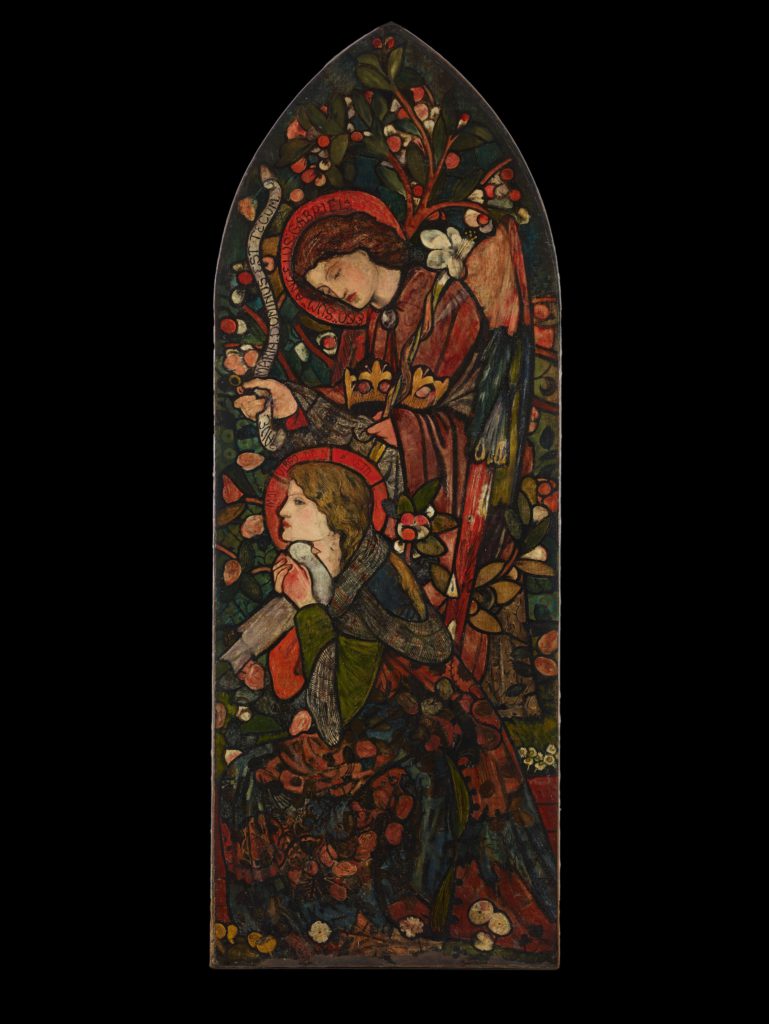
The Father of mercies willed that the acceptance on the part of her whom He had predestined to be mother should precede the Incarnation, so that, just as a woman contributed to death, so also another woman should contribute to life. This is fulfilled in a sublime way in the Mother of Jesus, who gave to the world Life itself, which renews all things. God adorned her with gifts worthy of so great a mission. And therefore it is no wonder that the holy Fathers frequently refer to the Mother of God as “all holy” and “free from every stain of sin”, since the Holy Spirit Himself fashioned her and made of her a new creature. Enriched from the first instant of her conception with the splendors of a singular holiness, the Virgin of Nazareth is greeted by the Angel, on God’s behalf, as “full of grace” (cf. Lk 1:28). And she answers the heavenly messenger: “behold the handmaid of the Lord; let it be done to me according to your word” (Lk 1:38).
Thus Mary, a daughter of Adam, by consenting to the divine word, became the Mother of Jesus and, held back by no sin, embraced God’s saving plan with her whole heart and consecrated herself totally, as the handmaid of the Lord, to the person and work of her Son, subordinate to Him and together with Him, serving the mystery of the Redemption by the grace of almighty God. Rightly, therefore, do the holy Fathers hold that Mary was not used by God as a merely passive instrument, but that she freely cooperated in the salvation of mankind through her faith and obedience. As Saint Irenaeus says, “by obeying, she became the cause of salvation for herself and for the whole human race”. That is why not a few Fathers assert with him in their preaching that “the knot of Eve’s disobedience was untied by Mary’s obedience; and what the virgin Eve bound by her unbelief, the Virgin Mary loosed by her faith”. And, comparing her with Eve, they call Mary the “mother of the living” and often declare: “death came through Eve, life came through Mary” (Lumen Gentium, 56)
For further reflection on Mary in the history of salvation, we recommend the encyclical Redemptoris Mater by John Paul II.
Deepen your studies: explore Mariology, Marian Theology, Marian apparitions, and the Postgraduate Program in Mariology.
Postgraduate Program in Mariology
Would you like to deepen your formation in Mariology? Discover the Postgraduate Program in Mariology of Locus Mariologicus — an academic formation that unites theological rigor, spiritual life, and the living tradition of the Church.
Would you like to study Mariology seriously?
This article grows out of the works in the Locus Mariologicus library. The Postgraduate Program in Mariology takes you to the same source, with academic guidance: Scripture, the Fathers of the Church, and the Magisterium, from the first dogma to contemporary questions.





Responses