Saint Justin Martyr and Mary: the Eve-Mary parallel in the apologetics of the second century
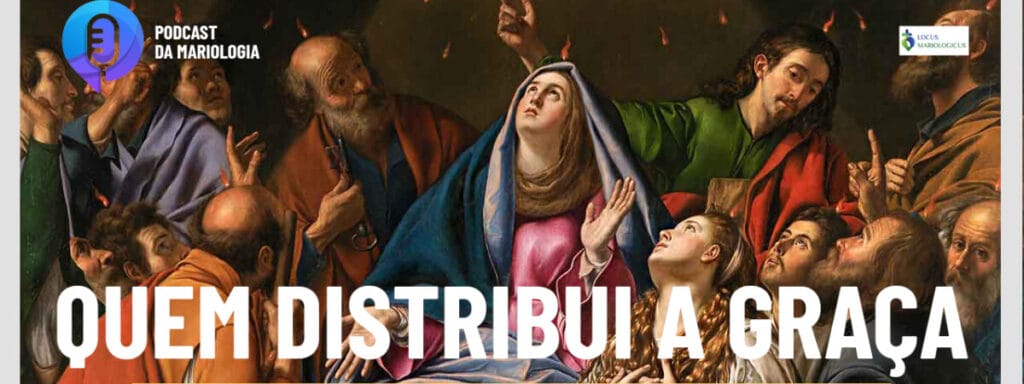
Saint Justin Martyr is the first to formulate explicitly the Eve-Mary parallel in Christian literature. In the sixth episode of the Mariology Podcast, Prof. Daniel Afonso analyzes the life and the works of Saint Justin Martyr, with particular attention to his Mariological contribution in the Dialogue with Trypho: Mary as the New Eve, obedient where the first disobeyed, fruitful with salvation where the other brought death.
I. Who is Saint Justin Martyr?
Saint Justin Martyr was born in Flavia Neapolis (present-day Nablus, in Palestine) around the year 100. A philosopher by training, he passed through several philosophical schools—Stoicism, Pythagoreanism, Platonism—before converting to Christianity. After his conversion, he continued to wear the philosopher’s cloak, convinced that Christianity was the true philosophy. He died a martyr in Rome around 165, during the reign of Marcus Aurelius.
II. The works of Saint Justin Martyr: apology and dialogue
The preserved works of Saint Justin Martyr are three: the First Apology (addressed to the emperor Antoninus Pius), the Second Apology (addressed to the Roman Senate), and the Dialogue with Trypho (an apology addressed to the Jews). The First Apology defends Christians against the accusations of atheism and immorality. The Dialogue with Trypho demonstrates that Jesus is the Messiah promised by the Hebrew Scriptures. It is in this dialogue that the most developed Mariological references of Saint Justin Martyr are found.
III. The Logos: Christ as universal reason and truth
The theology of the Logos is the center of the reflection of Saint Justin Martyr. For him, the Logos, the Word, the divine Word, did not begin to exist in Bethlehem: He existed from all eternity as the principle of reason and of truth. Everything true that the pagan philosophers said was said thanks to a participation in this seminal Logos (logos spermatikos). With the Incarnation, the eternal Logos enters into human history, being born of Mary. The Incarnation is not a rupture with reason, but its fullness.
IV. The Eve-Mary parallel in Saint Justin Martyr
The most original contribution of Saint Justin Martyr to Mariology is the Eve-Mary parallel, developed in the Dialogue with Trypho. The structure is that of a diptych: Eve, virgin and intact, received the word of the serpent and brought forth disobedience and death. Mary, virgin and intact, received the word of the angel and brought forth obedience and life. What Eve untied by her unbelief, Mary tied by her faith.
This parallel of Saint Justin Martyr inaugurates a tradition that Irenaeus of Lyons will develop in an even more systematic way. Its Mariological importance is decisive: it shows that Mary is not an accidental figure in the history of salvation, but the point of feminine recapitulation of fallen humanity. As Christ recapitulates Adam, Mary recapitulates Eve. Salvation is, from Saint Justin Martyr onward, understood as the work of a man and of a woman.
V. The history of humanity as a choice between Christ and the adversary
Saint Justin Martyr proposes a vision of human history structured by a fundamental choice: for or against Christ. This perspective is not an invention of his; it is rooted in the Gospel tradition, but Justin gives it a precise philosophical formulation. Humanity is divided between those who follow the Logos and those who reject Him. Mary belongs in a unique way to the first group: she is the first to say yes to the incarnate Logos, the first disciple, the perfect model of adherence to Christ.
VI. The Mariological legacy of Saint Justin Martyr
The legacy of Saint Justin Martyr for Mariology is twofold. On the one hand, the insertion of Mary into the theology of the Logos: she is the means by which the eternal Logos enters into time. On the other hand, the Eve-Mary parallel: she is the new woman who undoes what the ancient woman brought about. These two axes will continue to structure reflection on Mary for centuries. Whoever wishes to go deeper into this path will find at Locus Mariologicus the Postgraduate Program in Mariology, where the patristic texts are studied with rigor. Cf. Lumen Gentium, no. 56: “As Eve became a cause of death, Mary became a cause of salvation”.
Postgraduate Program in Mariology
Would you like to deepen your formation in Mariology? Discover the Postgraduate Program in Mariology of Locus Mariologicus, an academic formation that unites theological rigor, spiritual life, and the living tradition of the Church.
See also: Patristic Mariology: The Fathers of the Church and Mary (2nd-8th Centuries)
Would you like to study Mariology seriously?
This article grows out of the works in the Locus Mariologicus library. The Postgraduate Program in Mariology takes you to the same source, with academic guidance: Scripture, the Fathers of the Church, and the Magisterium, from the first dogma to contemporary questions.





Responses