Isidore Isolani and the “Summa de donis Sancti Ioseph”: the first treatise on Josephology
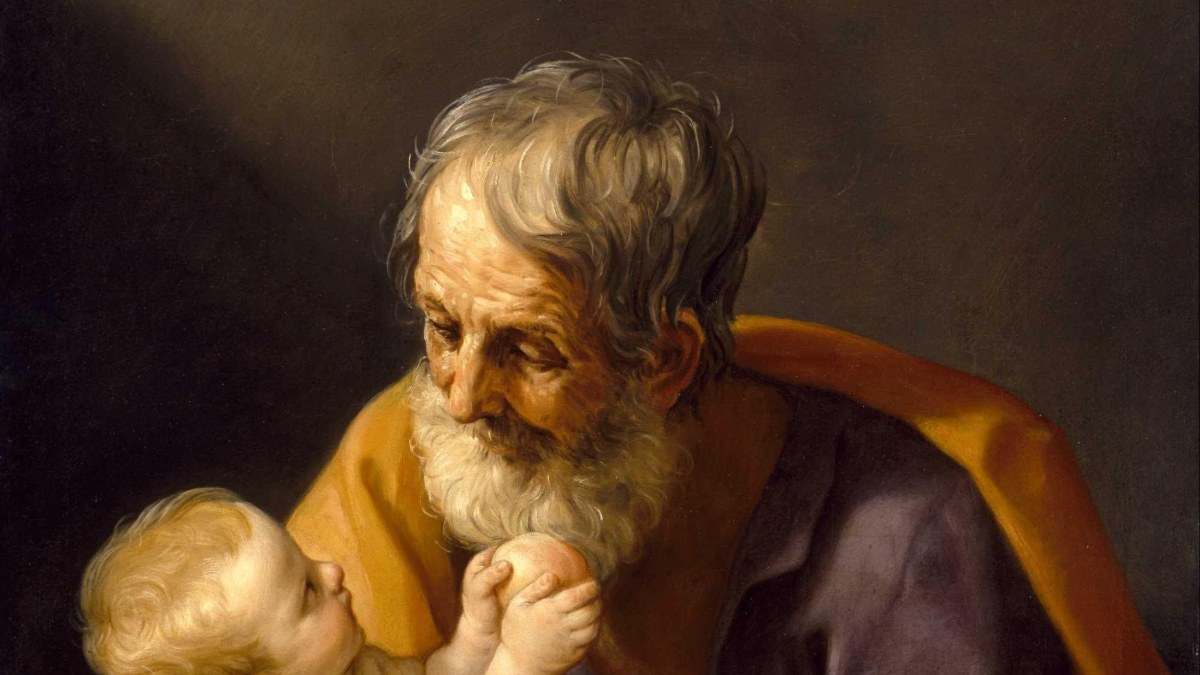
Iamque in partibus occidentis Spiritus Sanctus seminavit in mentibus populorum ut singulares sancto Ioseph exhibeant honores (And already in the regions of the West the Holy Spirit has sown in the minds of the peoples that they should render singular honors to Saint Joseph)
Isidore Isolani, Summa de donis Sancti Ioseph III, IV (1522)
How a Dominican of Milan, in 1522, gave Saint Joseph a place in theology and foresaw his glory in the Church
A study in historical Josephology
For many centuries the Church loved Saint Joseph without dedicating a treatise to him. The Fathers spoke of him when commenting on Matthew and Luke, the medieval preachers praised him, Jean Gerson defended his cult. But no one had yet gathered, with order and method, everything that theology could say about the spouse of the Virgin. That only happened in 1522, when the Summa de donis Sancti Ioseph (Summa of the gifts of Saint Joseph), by the Dominican Isidore Isolani, came off the presses of Pavia.
The author himself knew he was doing something new. In the title he calls it a “new work, unknown for many centuries,” although the mysteries it treats had not escaped the Catholic doctors. And in the proem to the fourth part he writes, addressing Joseph: “I am the first, O most blessed Joseph, to bring you the palms of your gifts” (Summa IV, Proem, apud REDIGONDA, 1977, p. 208). The scholar Tarcisio Stramare puts the question in its place: Isolani is not a pioneer of the cult of Joseph, which begins in the apostolic Church, but he was “the first to gather with order and method” the best of what had been written about him (STRAMARE. San Giuseppe nel mistero di Dio. 1992, p. 277).
I. A book written over eight years
The colophon of the first edition, transcribed by the Dominican Luigi Abele Redigonda, tells the story of the work. Isolani began it in March 1514, in Fontanellato, “in the place of Saint Joseph,” finished it in Pavia in 1521, on the feast of the apostles Simon and Jude, and printed it in Pavia, in the house of Jacob Paucidrapius, in 1522 (REDIGONDA. La “Summa de donis sancti Ioseph” di Isidoro Isolani. 1977, p. 203). On June 8, 1522, he wrote the dedication to Pope Adrian VI (p. 208). The editio princeps, today a bibliographical rarity, has eight opening leaves with title, dedication, prologue and index, one hundred leaves of text and, at the end, the Office and the Mass of Saint Joseph composed by Isolani himself (p. 203).
The man who wrote it was not a naive devotee. He taught in Pavia, Verona, Milan and Cremona, was a bachelor of theology at the University of Bologna, wrote against Luther, and was prior of Santa Maria delle Grazie in Milan (STRAMARE, 1992, p. 277). Redigonda endorses the judgment of another scholar: without being a theologian of the first rank, Isolani was one of the outstanding minds of the first half of the sixteenth century, and his greatest title to glory is to have been one of the precursors of the devotion to Saint Joseph (REDIGONDA, 1977, p. 208).
II. Four parts, like the seasons of the year
The Summa is divided into four parts, “like the seasons of the year,” and each part into chapters (REDIGONDA, 1977, p. 214). The first deals, in seventeen chapters, with the gifts of Joseph before his marriage to the Virgin: the name, the homeland, the genealogy, the nobility, the sanctification in his mother’s womb, the virginity, the carpenter’s art. The second, in fifteen chapters, studies the gifts that come from the marriage: justice, the first apparition of the angel, the gift of having been the first to adore the newborn Christ after the Virgin, the giving of the name of Jesus, the joy of living with Jesus and Mary. The third, in twenty-two chapters, reads in Joseph the blessings of the Old and New Testaments, the seven gifts of the Holy Spirit and the beatitudes. The fourth, in ten chapters, treats the death and glorification of Joseph and his feast (pp. 214-217).
There is a chapter that says much about the Marian angle of the work: De dono privilegii amoris quo Ioseph dilectus fuit a beata Virgine supra caeteros mortales (On the gift of the privilege of love by which Joseph was loved by the Blessed Virgin above all other mortals) (Summa II, IX, apud REDIGONDA, 1977, p. 215). Isolani does not think of Joseph apart from Mary. His Joseph is always the sponsus beatissimae Virginis Mariae (spouse of the most blessed Virgin Mary), as the title of the work itself says. And on the giving of the name of Jesus (Matt 1:21), he writes a sentence of rare beauty: the name of Jesus was given by God, by the Angel, by Mary and by Joseph, “God giving the reality of the name, the Angel foretelling it, Mary commanding it and Joseph carrying it out” (Summa II, XI, apud REDIGONDA, 1977, p. 216).
III. Theological rigor: what is faith and what is pious opinion
It would be easy to imagine a book of this kind as a heap of praises. That is not the case. Before treating the sanctification of Joseph in his mother’s womb, a thesis that came from Gerson, Isolani carefully distinguishes what is determined by Scripture, what is merely the opinion of the doctors and what may be piously believed. And he concludes with prudence: “I say, therefore, that it is not determined by the Catholic faith that Saint Joseph was sanctified in his mother’s womb. Holy Scripture does not affirm this, no necessary reason proves it, nor has the holy Roman Church, to which one must always have recourse, determined it.” The sanctification of Joseph, he adds, belongs to the number of things that are matters of opinion or piously credible (Summa I, IX, apud REDIGONDA, 1977, p. 210).
The same criterion governs the whole work. He asks the reader never to depart, even slightly, from the faith of Peter (Summa III, X). Modern criticism has pointed out defects in it: the accommodated use of Scripture and the abuse of arguments from fittingness. Redigonda answers that one must read the chapters in full and remember that Isolani is an author of the early sixteenth century (REDIGONDA, 1977, pp. 215 and 221). For the faithful of today, the lesson remains: devotion to Saint Joseph needs no exaggerations. The Gospel is enough for it, and it calls him simply “righteous” (Matt 1:19).
IV. A prophecy the Church fulfilled
What is most striking in the Summa is its vision of the future. Isolani writes that the Lord raised up Saint Joseph as “head and special patron” of the Church militant, that temples will be built in his honor and feasts will be celebrated, that men of great worth will investigate the gifts of God hidden in Joseph and will find in him a treasure, and that the Vicar of Christ, moved by the Holy Spirit, will order the feast of the putative father of Christ, spouse of the Queen of the world, to be celebrated in the whole Church (Summa III, VIII, apud REDIGONDA, 1977, p. 216). And, in the chapter in which he compares Joseph with the properties of the angels, he affirms that among the intercessors before God he considers Joseph the most effective, and the most excellent after the blessed Virgin Queen (Summa III, XIX, apud REDIGONDA, 1977, p. 217).
Redigonda shows that history proved him right. Gregory XV made the feast of Saint Joseph obligatory for the whole Church in 1621, Benedict XIII inserted the name of Joseph in the litany in 1726, and Pius IX proclaimed him Patron of the universal Church in 1870. These were, says the scholar, the three wishes expressed by Isolani (REDIGONDA, 1977, p. 221). The pharaoh’s word about the ancient Joseph, “Go to Joseph” (Gen 41:55), found its highest fulfillment in the Church. And the order that Isolani proposes, Joseph right after Mary, is the order of the Holy Family: the one whom God gave as spouse to the Virgin and as father to the Son follows her closely in glory as well.
* * *
The Summa de donis Sancti Ioseph marks the birth of Josephology as theology. In it, Joseph ceases to be merely a beloved figure of piety and becomes an object of ordered reflection, always linked to Christ and to Mary. Locus Mariologicus invites the reader to know Saint Joseph with the same seriousness with which Isolani studied him: to read chapters 1 and 2 of Matthew, where the righteous man obeys in silence, and to entrust his own family to him, in the certainty that the spouse of the Virgin remains, as the Dominican of Milan foresaw, patron of the whole Church.
Prof. Dr. Daniel Cerqueira Afonso
President of Locus Mariologicus
Rome, October 22, 2026
Main references
ISOLANO, Isidoro. Summa de donis Sancti Ioseph, sponsi beatissimae Virginis Mariae. Pavia: Jacob Paucidrapius, 1522. Cited through Redigonda (1977).
REDIGONDA, Luigi Abele. La “Summa de donis sancti Ioseph” di Isidoro Isolani. Cahiers de Joséphologie, Montréal, vol. 25, pp. 203-221, 1977.
STRAMARE, Tarcisio. San Giuseppe nel mistero di Dio. Casale Monferrato: Piemme, 1992.

Responses