Praedicate dicentes: Barnabas, Mary, and the Gift of the Apostolic Mission
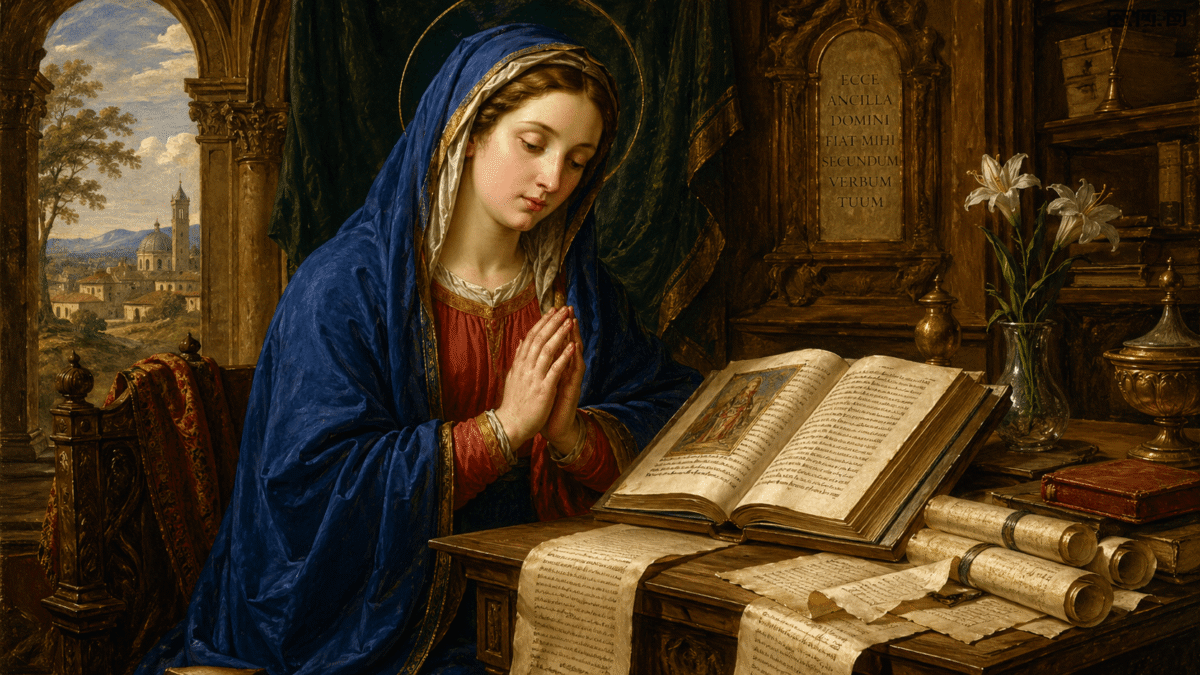
Euntes autem praedicate dicentes: Adpropinquavit regnum caelorum. Infirmos curate, mortuos suscitate, leprosos mundate, daemones eicite: gratis accepistis, gratis date.
Mt 10:7-8
The Memorial of Saint Barnabas, celebrated on June 11, honors one of the most generous and least celebrated figures of the early Church. Joseph of Cyprus, whom the apostles called Barnabas, Bar Nabas, “son of encouragement” (Acts 4:36), was a Cypriot Levite who sold his goods and laid the money at the apostles’ feet (Acts 4:36-37), who introduced Paul of Tarsus to the Jerusalem community when everyone feared him (Acts 9:27), who went to fetch him from Tarsus when no one else would (Acts 11:25-26), and who went with him on the first mission to the Gentiles (Acts 13-14). His separation from Paul (Acts 15:39), over John Mark, whom Paul wanted to abandon and Barnabas did not, was not weakness but compassion: Barnabas took a chance on those whom others cast aside.
The Gospel of this feast, Mt 10:7-13, is the mission discourse that Jesus addresses to the Twelve before sending them out through the villages of Galilee. In it, the urgency of the Kingdom justifies the radical character of the missionary style: no purse, no bag, no spare sandals, relying on the providence of those who welcome them. The central principle, “freely you have received, freely give” (gratis accepistis, gratis date), is the fundamental law of all authentic Christian mission: grace is neither bought nor sold, and it must circulate with the same gratuitousness with which it was received. Barnabas lived this principle. Mary, the first missionary, inaugurated it.
I. Barnabas: The Son of Encouragement
The epithet of Barnabas, uios parakleseos, son of encouragement or of consolation, is one of the most beautiful characterizations of any figure in the New Testament. The Paraclete, the Holy Spirit, is the Consoler, the Encourager of the Church on the path of mission. And Barnabas is described as the one in whom this gift became visibly present in the life of the community. His initial generosity, the sale of the field, is only the first in a series of acts of total availability in the service of the mission.
The role of Barnabas as mediator and opener of doors is a rarely celebrated but essential service in the life of the Church. Without Barnabas, Paul would have remained isolated from Jerusalem, and the history of Christianity might have been radically different. The generosity of Barnabas was not only material but relational: he took a chance on Paul when no one else would, and on John Mark when Paul was casting him aside. This apostolate of trust—recognizing the worth of those whom others cast aside, opening doors that fear or resentment have closed—is one of the most fruitful forms of apostolic mission in any age.
The separation of Barnabas and Paul in Acts 15:36-40 is recounted without judgment: Luke simply narrates that “the disagreement became so great that they separated.” Barnabas took John Mark to Cyprus. Paul chose Silas for Asia Minor. What might seem a failure of communion was in reality a multiplication of the mission: two groups instead of one, covering more territory and reaching more people. This “providence in ruptures,” in which even human conflicts serve the spread of the Gospel, is a recurring pattern in the history of the Church, and Barnabas is its first apostolic example.
II. “Freely You Have Received, Freely Give”
The principle of missionary gratuitousness, “freely you have received, freely give,” counters the constant temptation to turn grace into a business. Simony—the term derives from Simon Magus (Acts 8:18-24), who sought to buy the gift of the Holy Spirit—is not merely the buying and selling of sacraments that canon law forbids: it is any attitude that makes ecclesial service conditional on a return, that turns mission into an instrument of power or influence. Grace, by definition, overflows. The authentic missionary is the channel, not the owner.
The Second Vatican Council’s theology of mission, developed in Paul VI’s Evangelii Nuntiandi (1975) and in John Paul II’s Redemptoris Missio (1990), recovered this gratuitousness as a central criterion of missionary authenticity. A mission that seeks power, cultural influence, or numerical success has betrayed its own nature. Authentic mission plants without waiting for the harvest, serves without calculating the return, and sows on the margins, where the human return is minimal. This style, the style of Barnabas, who went to Cyprus without knowing whether the fruit would be visible, is that of all Christian mission faithful to the discourse of Mt 10.
The connection with Mary is immediate: the Visitation is the Gospel archetype of gratuitous mission. Mary, who went “with haste” into the hill country of Judah, neither calculated the cost of the journey nor charged for her presence. Her service to Elizabeth, being with her for three months of the pregnancy, was a gift with nothing asked in return, one that sought no recognition. This style of the Visitation is the model of the discourse of Mt 10: entering houses, giving peace, serving, departing, without purse or bag, trusting in providence. Mary was the first to live this missionary style that Jesus would teach the Twelve.
III. Mary and Barnabas: Openers of Doors
There is a deep affinity between the spirituality of Barnabas and Marian spirituality. Both Mary and Barnabas are figures who “open doors,” not on their own initiative, but as instruments of the grace that opens unexpected paths. Mary opened the door of the Incarnation with the “fiat” that made the presence of God in the world possible. Barnabas opened the door of the mission to the Gentiles by taking a chance on Paul, the most unlikely figure for the apostolate to the nations. Both said “yes” at a moment when fear or human calculation would have said “no.”
The Marian missionary tradition, from the Oblates of Mary Immaculate (founded by Eugene de Mazenod in 1816 specifically for the mission to the poor and to those on the peripheries) to the women’s missionary congregations, sees in Mary the model and protectress of mission. This veneration is not empty devotionalism: it is the recognition that the missionary style of Mt 10—gratuitous, itinerant, vulnerable, trusting in providence—was lived in an unsurpassable way by Mary of Nazareth. The missionary who “set out with haste” without purse or plan is the icon of all authentic mission.
John Paul II, in Redemptoris Mater (1987), developed at length the image of Mary as the first “missionary”: “just as she went to Elizabeth with the precious gift she had received at the moment of the Annunciation, in the same way she continues to go out to meet the people of every age, bringing them the same gift” (RM 22). This continuing mission of Mary, not only as a historical model but as an active intercessor with her Son, is the theological foundation of the Marian missionary devotion that animated Barnabas and that animates the Church in every generation.
IV. The Gift of Encouragement: The Church That Takes a Chance on the Discarded
The charism of Barnabas—recognizing and betting on the worth of those whom others discard—is needed in every generation of the Church. In a Church tempted by efficiency and by the logic of success and visibility, the charism proper to Barnabas is that of taking a chance on those on the peripheries: on those who fail, on those who need a second chance, on the Pauls of Tarsus whom the community fears. This apostolate of trust—giving credit where fear withholds it—is one of the most fruitful and least celebrated forms of the Church’s mission.
Popular tradition recognizes in Mary the universal “Barnabas” of the life of the Church: the one who intercedes for those for whom no one else intercedes, the one who opens doors that sin has closed. In the invocations of the Salve Regina, “to thee do we send up our sighs, mourning and weeping in this valley of tears… show unto us the blessed fruit of thy womb, Jesus,” it is precisely the charism of encouragement that resounds: Mary as the one who leads the discarded to meet her Son, who gives up on no lost cause, who remains at the side of those whom human logic has already abandoned.
The feast of Saint Barnabas invites every Christian community to ask: who are its Barnabases, those who open doors for the excluded, who trust those who fail? And who are its Pauls of Tarsus, those who need someone to take a chance on them? This invisible apostolate of encouragement, which rarely makes headlines and is seldom recorded in ecclesiastical annals, is perhaps the most necessary and most fruitful form of mission in the Church of the twenty-first century, and it has its unsurpassable models in Mary and in Barnabas.
Postgraduate Program in Mariology
Would you like to deepen your formation in Mariology? Discover the Postgraduate Program in Mariology of Locus Mariologicus, an academic formation that unites theological rigor, spiritual life, and the living tradition of the Church.
Would you like to study Mariology seriously?
This article grows out of the works in the Locus Mariologicus library. The Postgraduate Program in Mariology takes you to the same source, with academic guidance: Scripture, the Fathers of the Church, and the Magisterium, from the first dogma to contemporary questions.





Responses