Mary’s Vocation: A Response of Faith to the Word

What is Mary’s vocation?
By this term we mean the act by which God calls Mary to place her life and her person totally at the disposal of His love. Such a call does not imply the annulment of Mary’s freedom, will, and intellect (in a word, of her personality) but rather a profound restructuring of her whole life.
Mary’s personality is free self-determination, but she freely keeps it at the disposal of Trinitarian agape. Her human world, her body, and her feelings are neither annulled nor replaced, but are animated from within, so that she can proclaim and manifest her adherence to the will of God, an absolute and unconditional adherence even where she is not fully aware of what awaits her. Her here I am is certainly preceded and animated by the work of that Spirit who equips her for a singular motherhood, but it remains an expression of her free personality. Mary’s amen to God’s yes in Christ is unique and at the same time a model for every disciple and for the life of the Church.
To explore this alignment of Mary with the will of God more deeply, we can start from the text of the Annunciation in Lk 1:26-38. There is nothing in this narrative to suggest that we are facing a simple proposal. It is in reality the announcement of a divine decree which, as such, cannot fail to be fulfilled. In similar passages, such as ‘Sarah’s laughter’ or the unbelief of Zechariah, the very unbelief of the one addressed did not lead to the cancellation of God’s promises but to their confirmation, because, as the text of Luke also recalls, nothing is impossible for God.
Moreover, the whole history of salvation is brought about by God in spite of the infidelity of the people. In this case, however, the model the evangelist uses to describe Mary’s conduct is Abraham, the one who believed God.
As with Abraham, for Mary too faith is expressed in the existential terms of those who trust in God totally and freely.
Dei Verbum 5, of the Second Vatican Council, states:
“The obedience of faith is due to God who reveals (Rom 16:26; cf. Rom 1:5; 2 Cor 10:5-6).
By faith, man entrusts his whole self freely to God, offering “the full submission of intellect and will to God who reveals”, and freely assenting to His revelation. To give this assent of faith, one needs the prior and concomitant help of divine grace and the interior aids of the Holy Spirit, who moves and converts the heart, opens the eyes of the understanding, and gives “to all the sweetness of accepting and believing the truth”. So that the understanding of revelation may become ever deeper, the same Holy Spirit constantly perfects faith by His gifts.
Some decades later, almost as a commentary on this text, Saint John Paul II’s Redemptoris Mater states that Mary
“responded with her whole feminine being, and this response of faith contained a perfect cooperation with the grace of God that precedes and assists, and a perfect openness to the action of the Holy Spirit. Faith, in fact, is a contact with the mystery of God: Mary is constantly, daily, in contact with the ineffable mystery of God who became man”.
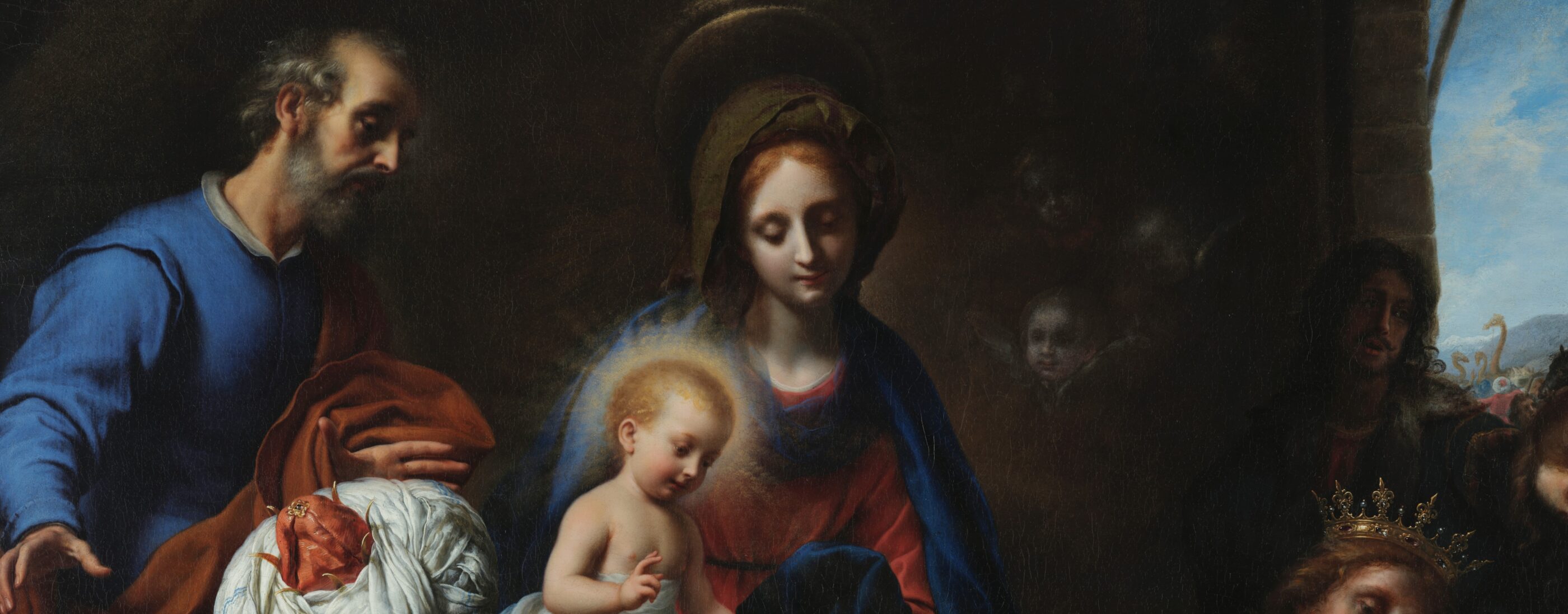
In the Ecce ancilla, that is, in the behold the Handmaid, Mary builds the fiat mihi. Mary does not merely observe what is happening, but places her will, her consent, and her personal stance at the service of this event. The fiat mihi keeps God’s action at the center, and in it she takes on the role of a partner in her own right: she lets what God wills come about in her.
The fact that Marian faith is here the response to a divine self-communication that founds the entire saving history of humanity means that Mary’s faith takes on the role of an all-embracing anticipation of the free human response. This is what patristic thought will develop with the Eve–Mary parallel: as Eve brought death, Mary brought life, to the point that Irenaeus speaks of Mary as
“the cause of salvation for herself and for the whole human race”.
Although philosophy has not yet clearly elucidated the relationship between irreplaceable individual freedom and the solidarity that belongs to a communal life, the fact is that the Scriptures teach that
“as all die in Adam, so all will be made alive in Christ” (1 Cor 15:22).
In the context of Mary’s full adherence to the mystery of the Word made flesh, her role was to bring about the first and decisive encounter of the grace of Christ with humanity. From then on, the encounter of the grace of Christ with humanity will always have the structure of a synthesis of grace and faith, along the lines of abandoning one’s own life into the hands of God.
The grace of Christ is where “the fullness of divinity” is found (Col 2:9). Therefore, there is no other way of sharing in this grace than the abandonment of one’s life, through faith, into the hands of the God of Jesus. The point at which this awareness is most evident is the Magnificat: this canticle, in fact, celebrates Mary’s jubilation, both at the awareness that God has looked upon the lowliness of His Handmaid and done great things in her, and at the certainty that from now on all generations will call her blessed.
If we were to complete the account of Mary’s motherhood, we should not pass over in silence the interventions of Simeon, a righteous and God-fearing man who was awaiting the consolation of Israel, and of the prophetess Anna: the meaning of their intervention is to reiterate once again that this Son is not for the mother, but for the work that the Father wills to accomplish for the benefit of humanity. In parallel, Mary’s destiny is presented as a self-surrender to the mission of the Son and to its singular moments. We thus have in Mary the representative of the Church and of humanity: since Mary represented all men, the sacrifice of redemption was universal and perfect for all humanity, because humanity belongs wholly to her.
The relationship between Christ, Mary, and humanity can be expressed through the notion of representation, a category which, by linking the mystery of that One and the salvation of the many, relates the mystery of Christ to the function of the Church. In His mission, Christ is the representative of God to humanity and the representative of humanity to God. While the Christological use of the notion of representation is relatively widespread, the Mariological use of this category is almost unknown. Mary is the representative of Christ to humanity and the representative of humanity to Christ. The Mother of the Word is the type and model of that new humanity which is the Church, and in this sense the work of Christ finds its fulfillment in her.
It must be borne in mind that Mary has no part in the constitution of grace, but rather in its communication, and that her representation of the Church allows us to think through the communication of grace. The Church possesses the fullness of the means of grace in the following terms: the mystery of the Church refers to the dialogue of love and faith that God has with Mary, and not to a primarily institutional logic. If, then, we bear in mind that the notion of representation has developed the theme of social solidarity by moving from a substitutive dynamic (or instead of) to a participatory dynamic (or for the sake of), then it is indisputable that the representative exercises his function not by releasing others from the mission, but by making them share in his journey in an anticipatory way.
The fullness of a love that is expressed in the abandonment of oneself to the Father and in the gift of oneself to one’s brethren represents the path that Jesus walks and traces out for all His disciples. His grace, which goes beyond the visible boundaries of the Church to spread in the hearts of all people the semina Verbi and the values of the Kingdom, is what makes it possible for the Church to recognize that
“God shows no partiality, but welcomes those who fear him and practice justice, whatever the nation to which they belong”.
If there is here a way in which grace acts that Gaudium et Spes 22 recognizes as a way the Spirit uses to “come into contact, in the manner known to God, with the paschal mystery”, and if there is in this “a mysterious relationship with the Church”, should we not think that there is also here a mysterious Marian capacity to anticipate the mystery of Christ and to communicate His grace? This is a topic still waiting to be studied. What does this mysterious relationship with the Church, and its Marian anticipation, imply? To what capacity for faith and love does it open? What capacity does it give us to stand before Christ (cf. Mt 25:40, 45) as those who, in love, recognize Him in His human brotherhood?
In any case, making Mary the representative of the new humanity does not spare anyone the commitment of faith and charity: only communion with the faith and charity of Mary, which is in turn communion with Christ, allows us to give our life its meaning. In Mary, persons are not replaced but placed before their duty to be. Indeed, in her relationship with Christ, Mary not only makes room for the Son but also anticipates humanity’s response to His grace. For this reason, her dedication to Christ does not have a merely provisional representative value; rather, as a participant in the Christian event, she introduces us into the saving event and its fullness. In Mary, therefore, every finitude of the creature, conceived in contrast with the infinity of God, is overcome: her dedication to the Son implies the tracing of a path of full correspondence with Him. On her face faith and love shine forth like a radiance, illuminating her singular maternal role and extending her vocation to the whole of the Church and of humanity.
To deepen the reflection on Mary’s vocation and her response of faith to the Word, consult the encyclical Redemptoris Mater of John Paul II, which sheds light on Mary’s fiat as an exemplary response of faith to the divine call.
Deepen your studies: explore Mariology, Marian Theology, Marian apparitions, and the Postgraduate Program in Mariology.
Postgraduate Program in Mariology
Would you like to deepen your formation in Mariology? Discover the Postgraduate Program in Mariology of Locus Mariologicus — an academic formation that unites theological rigor, spiritual life, and the living tradition of the Church.
Would you like to study Mariology seriously?
This article grows out of the works in the Locus Mariologicus library. The Postgraduate Program in Mariology takes you to the same source, with academic guidance: Scripture, the Fathers of the Church, and the Magisterium, from the first dogma to contemporary questions.




Responses