“And he was incarnate of the Holy Spirit from the Virgin Mary.”

“And He became incarnate: the Marian heart of the Creed”
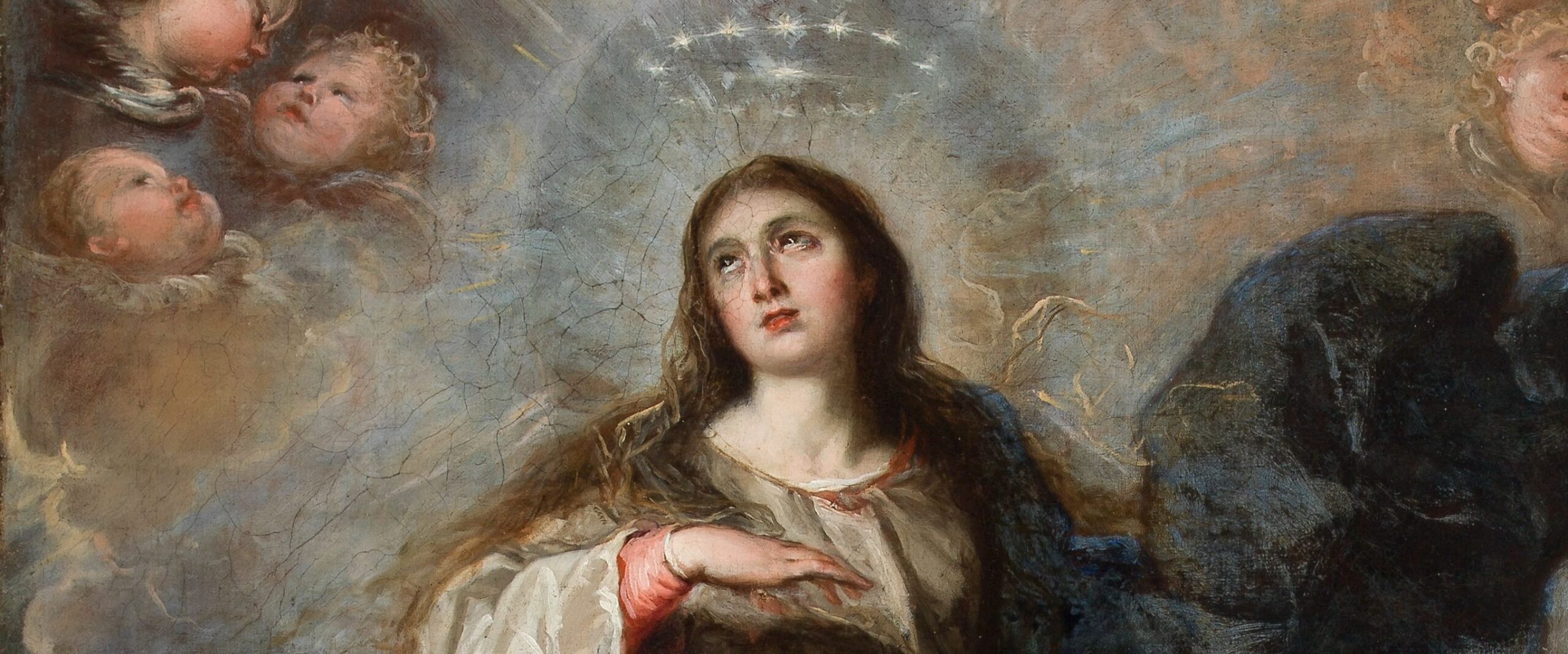
The (The) Et incarnatus est “De Spiritu Sancto ex Maria Virgine” is one of the densest formulas of the Creed. Joseph Ratzinger (1995) reminds us that in these words, “Et incarnatus est,” the whole Marian mystery is condensed: Mary is the door of the flesh through which the Word enters the world.
Introduction
Mary, the Virgin, and the Incarnation of the Word: the theology of Ratzinger
The Nicene Creed, like all the great creeds of the ancient Church, is fundamentally a confession of the Trinity. Its essential content is to declare: “Annunciation”“sim” (yes)“Mariology, angelology, demonology, josephology” To the Living God, our Creator, from whom our life proceeds and to whom it returns. It is a confession of God, but what does it mean to call God, the Living God? It means that God is not a conclusion of our thought, that now, with the awareness of our knowledge and understanding, we will present to others. If it were merely this, God would remain a thought of the minds, and every attempt to turn to Him could be a constant search for hope and expectation, but it would still lead to uncertainty.
The fact that we speak of the Living God means: God shows Himself to us, turning from eternity to time and relating Himself to us. We cannot define Him according to our tastes. He Himself defined Himself and now stands before us, above us and among us as our Lord. This self-revelation of God, by which He is not the fruit of our reflection but our Lord, constitutes precisely the central point of the confession of faith. The recollection of the story of God within the history of the world does not complicate the simplicity of the confession of God, but is its inner condition.
Therefore, the center of all our confessions of faith is the “Annunciation”“sim” (yes)“»” To Jesus Christ “Annunciation”He was incarnate by the power of the Holy Spirit in the Virgin Mary’s womb and became man.“»”Before this sentence, we bow down, for the sky, the veil of the hiding place of God, is rent, and the mystery touches us immediately. The distant God becomes our God, becomes Emmanuel. “Annunciation”God with us“Mariology, Angelology, Demonology, and Josephology”“And (the angel) said to her: ‘The Holy Spirit will come upon you, and the power of the Most High will overshadow you'” (Luke 1:35)
The great masters of sacred music, in a way always new, in addition to everything that can be expressed in words, have given this phrase that resonance through which the inexpressible touches our ears and hearts. Such compositions are a “Annunciation”Exegesis“Mariology, angelology, demonology, josephology” of the mystery, which penetrates deeper than all our rational interpretations. But as the Word, who became flesh, we too must continually strive to translate this original creative Word, which “Annunciation”“I was with God”“Mariology, Angelology, Demonology, and Josephology” “Short Title/Phrase” “Annunciation”Is it God?“Mariology, angelology, demonology, josephology”In our human words, so that we may hear the Word in the words.
Grammar and meaning in the phrase of the profession of faith
If we now examine the phrase first of all according to its grammatical structure, we will see that it includes four subjects. The Holy Spirit and the Virgin Mary are expressly mentioned. But there is also the subject “God the Father.”
He became flesh. This He, first called by various names: Christ, the only-begotten Son of God, God true of God true, consubstantial with the Father. Thus, in this He — inseparable from Him — another Self is included: the Father, with whom He is of the same substance, so that He can be called God of God. This means: the first and true subject of this phrase is — as one would expect after what has been said — God, but God in the Trinity of subjects, which are, however, one: the Father, the Son, and the Holy Spirit.
However, the drama of the phrase lies in the fact that it does not formulate an assertion about the eternal being of God, but an assertion of action, which, upon closer examination, reveals itself as even a declaration of passion — as a passive. This assertion of action, in which the three divine persons participate — each in their own way — depends on the expression “from Mary, virgin,” indeed, it depends on the drama of the whole. Without Mary, God’s entry into history would not come to an end. What matters in the confession of faith would not be achieved: that God is a God with us and not just a God in Himself and for Himself. Thus, the woman who qualified herself as humble, that is, as an anonymous woman (Lk 1:48), is placed at the center of the confession in the living God, who cannot be thought without her.
She belongs inalienably to our faith in the living God, in the God who acts. The Word becomes flesh, the eternal and fundamental meaning of the world enters into her. He does not merely look from outside, but He himself becomes an active subject in her. For this to happen, it was necessary for the Virgin to make her whole person available, becoming the place of God’s dwelling in the world. Incarnation needed acceptance.
Only then can the unity of the Logos and the flesh be truly verified. “He who created you without you did not want to redeem you without you,” Augustine said about this. The world to which the Son comes, the “flesh” He assumes, is not just any place and thing: this world, this flesh, is a human person, an open heart. The Letter to the Hebrews, drawing from the Psalm, interpreted the process of Incarnation as a true divine dialogue: “You prepared a body for Me,” the Son says to the Father. But this preparation of the body is realized to the extent that Mary also affirms: “Sacrifice and offering you did not want, a body you prepared for me… Behold, I come to do your will” (Heb 10:5; Ps 40:6-8). The body is prepared for the Son when Mary gives herself entirely to the Father’s will and thus makes her body available as a tent for the Holy Spirit.
2. The Biblical Foundation of the Phrase
To fully understand the central phrase of the faith confession, we must go beyond the Creed to its source: the Sacred Scriptures. Looking closer, the profession of faith reveals itself at this point as a synthesis of the three great biblical testimonies to the Incarnation of the Son:
Mt 1,18-25. Lc 1,26-38. Jo 1,13. Let us endeavor — without delving into a meticulous interpretation of these texts — to grasp their specific contribution to the understanding of the Incarnation of God.
2.1. Mt 1,18-25
Matthew writes his Gospel for a Jewish and Judeo-Christian audience. He thus has the concern to highlight the continuity between the Old and New Testaments. The Old Testament points to Jesus, with promises fulfilled in him. The inner bond of expectation and fulfillment becomes, at the same time, a demonstration that God truly acts here and that Jesus is the world’s savior sent by God. Primarily from this perspective, Matthew develops the infancy narrative starting with Saint Joseph: to show that Jesus is the son of David, the promised one, who continues the Davidic dynasty and transforms it into the kingship of God over the world. The Davidic lineage leads to Joseph: the angel addresses him in a dream as the son of David (Mt 1,20). Thus, Joseph becomes the one who names Jesus: “The adoption as son takes place with the imposition of the name” (J. Gnilka, Das Matthäusevangelium I, Freiburg 1986, 19).
Because Matthew wants to show the correlation between promise and fulfillment, the Virgin Mary appears alongside the figure of Joseph. She was still unknown, and the promise made through the prophet Isaiah to the skeptical king Ahaz, who did not want to ask God for a sign when enemy armies were drawing near, remained incomprehensible. “The Lord himself will give you a sign: behold, a virgin shall conceive and bear a son, and shall call his name Emmanuel” (Is 7,14). No one is able to say what this sign meant in the historical context of King Ahaz; it went far beyond that time. The promise continues to shine as a star of hope, guiding the altar into the future, into the still unknown. For Matthew, with the birth of Jesus from the Virgin Mary, the veil is lifted: the sign is given. The Virgin who gives birth by the power of the Holy Spirit is herself the sign. Now, a new title is linked to this second prophetic sign, which gives Jesus’ name all its meaning and depth. If, starting from Isaiah’s promise, the child is called Emmanuel, at the same time the scope of David’s promise is broadened.
The kingdom of this child goes beyond what one could expect from David’s promise: it is the kingdom of God. It participates in the universality of God’s rule, because in it God enters into the history of the world. The announcement, which manifests itself in the narrative of Jesus’ conception and birth, is taken up only in the final verses of the Gospel. During his earthly life, Jesus feels closely linked to the house of Israel, not yet sent to the nations of the world. But after his death on the cross, as the risen one, he proclaims:
“Make disciples of all nations… for I am with you always, to the end of the age” (Mt 28:19). Here He reveals Himself as God with us, whose new kingdom includes all peoples. In accordance with this, Matthew, in his account of Jesus’ conception, modifies the word of Isaiah in one point. He no longer says: She (the virgin) will call him Emmanuel, but: they will call him Emmanuel, God with us. This “they” announces the future community of believers, the Church, which will invoke Jesus by this name. In Matthew’s narrative, everything is oriented towards Christ, because everything is oriented towards God, hence the profession of faith rightly comprehended it and transmitted it to the Church.Since God is now with us, the human carriers of the promise are also of essential importance: Joseph and Mary. Joseph represents God’s faithfulness to Israel, Mary is the hope of humanity. Joseph is the father according to the law, Mary is the mother with her body: through her, God became truly one of us.
2.2. Lk 1:26-38
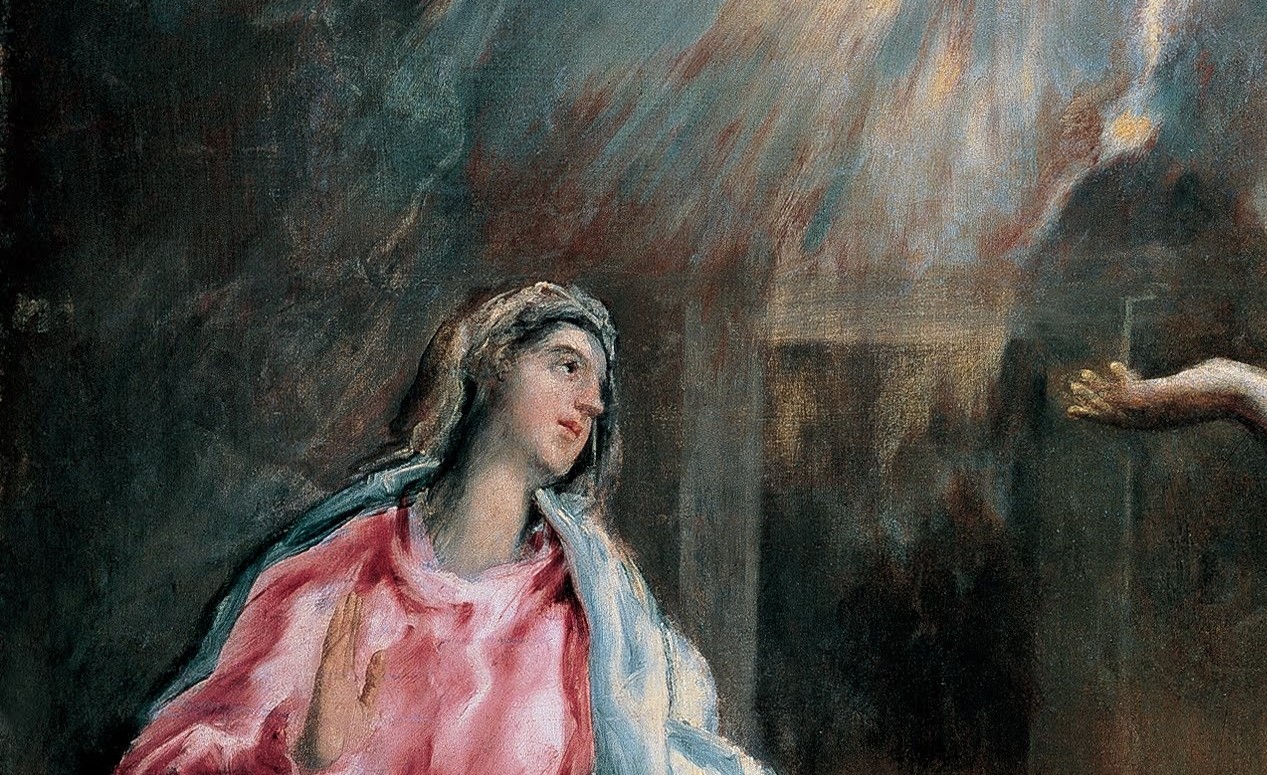
Vejamos agora a apresentação que Lucas faz da condição e do nascimento de Jesus, não para fazer uma exegese deste texto denso, mas para captar a sua particular contribuição para a profissão de fé. Limito-me à passagem do anúncio do nascimento de Jesus pelo Archangel Gabriel “Short title/phrase – translate without context or commentary”Luke In (Luke 1:26-38), Luke reveals the Trinitarian mystery in the angel’s words, thereby giving the event its theological center, to which the entire history of salvation also refers, including the profession of faith. The child who is to be born will be called the Son of the Most High, the Son of God. The Holy Spirit, as the power of the Most High, will mysteriously bring about his conception: thus we speak of the Son, and indirectly of the Father and the Holy Spirit.
For the descent of the Holy Spirit upon Mary, Luke here uses the word “Annunciation”to cover with shadow“»” Thus, he alludes to the Old Testament story of the holy cloud, which hovered over the Tent of Meeting, signifying the presence of God. Thus, Mary is characterized as the new holy tent, the living space of the covenant. Her ‘yes’ becomes a place of encounter where God meets the world. God, who does not dwell in stone houses, lives in this given ‘yes’ of body and soul. He, who the world cannot contain, now resides in a human person. Luke resonates this theme of the new temple, the true ark of the covenant, especially in the angel’s greeting to Mary: “Rejoice, full of grace. The Lord is with you” (1:28). Now, it is almost universally recognized that this word of the angel conveyed by Luke reprises the promise of Zephaniah 3:14, addressed to: The filter of Zion It proclaims the dwelling place of God among them. With this salutation, Mary is presented as: the Daughter of Zion in person and at the same time as dwelling place, as holy tent, upon which rests the cloud of the presence of God. The Fathers of the Church, taking up this idea, which then also determines the paleochristian iconography. Saint Joseph is indicated, through the flowering staff, as high priest, as archetype of the Christian bishop. Mary, on the contrary, is the living Church. Upon her descends the Holy Spirit, who makes her the new temple of God. Joseph, the righteous, is presented as administrator of the mysteries of God, as superintendent and guardian of the sanctuary, which is the bride and the Logos within her. Thus he becomes the image of the bishop, to whom the bride is entrusted. He does not have it at his disposal, but under his protection. Everything is oriented towards the Trinity, but precisely for this reason in the mystery of Mary and the Church his “To be in the history becomes particularly evident and understandable.
Another point in Luke’s account of the Annunciation seems important to our question. God requires a yes from Mary. He does not simply dispose of it with an act of his power. He created for himself a free interlocutor in the human creature, and now needs the freedom of that creature, so that his kingdom, which is not based on external power but on freedom, can become reality. Bernard of Clairvaux, in one of his sermons, dramatically represented this expectation of God and humanity:
«The angel waits for his answer, for now is the time to return to him who sent him… Lady, give this answer, for the earth, indeed, the underworld, too, and even the heavens are waiting. Just as the King and Lord of all longed to see her beauty, he longs for her affirmative response… Why do you hesitate? Why fear?… Behold, he who is expected by all is knocking at your door. Woe to him if, through your hesitation, he should pass by… Arise, run, open! Arise with faith, hasten with your offering, open with your consent»! (Bernard of Clairvaux, In Laudibus Virginis Matris Hom, IV, 8).
God cannot make himself present without Mary’s free consent. Certainly, this yes of Mary is entirely grace. The dogma of the Immaculate Conception of Mary, in fact, has only this specific meaning, to show that it is not a human being who sets in motion redemption by its own power, but her total yes, from the beginning and prior to it, in divine love, which already surrounds her, even before being conceived. Everything is grace. But grace does not take away freedom; on the contrary, it creates it. The whole mystery of redemption is present in this narrative and is reduced to the figure of the Virgin Mary: «Behold, the handmaid of the Lord. Let it be to me according to your word» (Lk 1:38).
2.3. Prologue to the Gospel of John
Now let us turn to the Prologue of the Gospel of John, on which the Creed is based. “The Word became flesh and dwelt among us“. The Logos becomes flesh: we are so accustomed to this phrase that it no longer impresses us with the divine synthesis that apparently separated what was absolutely distinct, a synthesis in which the Fathers of the Church identified themselves step by step. Here lay and still lies the true Christian novelty, which seemed senseless and unthinkable to the Greek spirit. What is said here does not derive from a particular culture, such as the Semitic or Greek, as is often carelessly affirmed. It is contrary to all known cultural forms. It was as alien to the Jews as, for entirely different reasons, it was to the Greeks or Indians, and also to the modern spirit, for whom this synthesis of the phenomenal and numinous world seems completely unreal, and is the subject of renewed questioning with all the self-awareness of modern rationality. What is said here is new because it comes from God and could only be done by God. For all periods of history and all cultures, it is absolutely new and unknown, to which we can access through faith and only through faith. It opens up entirely new horizons for thinking and living.
John, however, has a very particular emphasis in mind. The phrase of the Logos becoming…
“Flesh” (sarx) is a prelude to the sixth chapter of the Gospel, which in its entirety develops this half-verse (R. Schnackenburg, The Johannine Gospel I, 243).Jesus says to the Jews and the world: “The bread that I will give (that is, the Logos, which is the true food of souls) is my flesh for the life of the world” (John 6:51). The word “flesh” already expresses, at once, the gift even to the sacrifice, the mystery of the cross, and the mystery of the paschal sacrament that flows from it. The Word does not become flesh in some way, to have a new condition of existence. The dynamic of sacrifice is included in the incarnation. Again, the words of the psalm resound: “A body you have prepared for me… (Hebrews 10:5; Psalm 40).” Thus, in this short phrase, the whole Gospel is contained. One feels the call to the words of the Church Fathers: “The Logos has condensed, has become small. This holds in two ways: the infinite Logos has become small, a child. But also the incommensurable Word, all the fullness of Scripture, is contracted into this single phrase, in which the Law and the Prophets are synthesized” (H. U. von Balthasar, Das Wort verdicttet sich selbst in Communio 6 (1977), 397-400). Being and history, cult and ethics converge here at the Christological center and are present without interruptions.
A second indication close to my heart can be brief. John speaks of God’s dwelling as a consequence and purpose of the incarnation. For this, he uses the word “tent” and refers again to the tent of encounter from the Old Testament, to the temple theology, which finds its fulfillment in the Word made flesh. In the Greek word used for “tent” – skené – also resounds the Hebrew word stekînat, that is, the sacred cloud of primitive Judaism, which then became the name of God and indicated “the gracious presence of God, with whom the Jews gathered to pray and study the law” (R. Scnackenburg, Das Johannesevangelium I, 245). Jesus is the true stekînat through which God is among us, when we gather in his name.
Finally, we must once again offer a sacrifice, in verse 13. To those who received him, he – the Logos – gave the power to become children of God: “to all who believe in his name, who were not born of blood, or of the will of the flesh, or of the will of man, but born of God” (John 6:53-54). There are two different textual traditions for this verse, and it is no longer possible to discern which is the original. Both seem to be practically of the same antiquity and with the same authority. Therefore, there is a version in the singular: “who was not born of blood, nor of the will of the flesh, nor of the will of man, but born of God.” However, alongside it is the version used by the Latin tradition in the plural: “who were not born… but were born of God.” This dual tradition is understandable, because the verse refers to both matters. In this sense, we must, in fact, always read both textual traditions together, because only then does the full meaning of the text emerge. If we take the plural version as the original, then we speak of the baptized, who participate in the divine rebirth from the Logos. But the mystery of the virgin birth of Jesus – the origin of our divine rebirth – shines so clearly that only a prejudice can deny this correlation. Even if we consider the singular version as the original, the connection with
“«All those who received him».”
It is clear that the conception of Jesus from God, his new generation, is directed towards this, to take us in, to give us a new generation. Just as verse 14, with the word of the incarnation of the Logos, foreshadows the eucharistic chapter of the Gospel, here too the anticipation of the conversation with Nicodemus in the third chapter is evident. Christ tells Nicodemus that the generation of flesh is not enough to enter the kingdom of God, a new generation from above, a regeneration by water and Spirit (3:5) is necessary. Christ, conceived by the Virgin through the work of the Holy Spirit, is the beginning of a new creation, a new form of existence. To become Christian means to be received into this new beginning. To become Christian is more than seeking new ideas, a new ethos, a new community. The transformation that takes place here has the radical nature of a true rebirth, a new creation. Thus, the Virgin Mother is once again at the center of the redemptive event. She guarantees with all her being the novelty that God has accomplished. Only if her story is true and at the beginning, is what Paul says valid: «Therefore, if anyone is in Christ, he is a new creation» (2 Corinthians 5:17).
Conclusion: The Footprints of God
God is not confined to stones, but is connected to living people. Mary’s “yes” opens up space where God can set up his tent. She herself becomes the tent and the beginning of the holy Church, which in turn is a foreshadowing of the new Jerusalem, where there is no temple, because God dwells there. Faith in Christ, which we confess in the Creed of the Baptized, is therefore a spiritualization and purification of all that religious history has said and expected about God’s dwelling in the world. But it is also an incarnation and concretization that goes beyond any expectation regarding God’s presence with humanity.
«God is in the flesh»: this indissoluble bond of God with his creature forms the center of Christian faith. If that is the case, it is understandable that Christians from the beginning considered sacred the places where this event occurred. They became the permanent guarantee of God’s entry into the world. Nazareth, Bethlehem, and Jerusalem became places where, in a certain sense, the footsteps of the Redeemer can be seen, where the mystery of God’s incarnation touches us closely.
Regarding the narration of the Annunciation, the Protoevangelium of James—dating from the 2nd century and, despite its many legendary elements, possibly preserving also real records—divided this event into two places. Mary:
«She took the jar and went out to draw water. And behold, a voice said: ‘Hail, full of grace, the Lord is with thee, blessed art thou among women.’ She turned around to the left and to the right to see from whence the voice came. And she was troubled, went into the house, left the jar, took the veil, sat down on the chair, and spread it out. And behold, an angel of the Lord appeared suddenly to her, and said: ‘Do not be afraid, Mary, for you have found favor with God, and the Holy One shall be born of you’» (11,1ss).
To this dual tradition correspond the two shrines, the eastern shrine of the well and the Catholic basilica, built around the grotto of the Annunciation. Both have deep significance. Origen noted that the well’s motif informs the entire story of the Fathers of the Old Testament.
To deepen the theology of the Incarnation and the role of the Virgin Mary, consult the encyclical Redemptoris Mater by John Paul II, on Mary and the mystery of the Incarnation.
Deepen your studies: explore MariologyMarian theologyMarian apparitions and the Postgraduate Program in Mariology.
In summary, the “Et incarnatus est” underscores the indispensable maternal mediation of Mary in the mystery of the Incarnation. To delve deeper into the “Et incarnatus est” is to contemplate the concrete reality of Christian faith and mariology. For further reading on the Incarnation, see the encyclical “Redemptoris Mater” (https://www.vatican.va/content/john-paul-ii/pt/encyclicals/documents/hf_jp-ii_enc_25031987_redemptoris-mater.html).
Postgraduate Program in Mariology
Would you like to deepen your formation in Mariology? Get to know the Postgraduate Program in Mariology from Locus Mariologicus, an academic formation that combines theological rigor, spiritual life, and the living tradition of the Church.
Would you like to study Mariology seriously?
This article arises from the works in the Locus Mariologicus library. The Postgraduate Program in Mariology takes you to the same sources, with academic guidance: Scripture, the Fathers of the Church, and the Magisterium, from the first dogma to contemporary issues.
Responses